
JAMAICA | PNP Salutes Nkrumah as Ghana Marks Restored Founder's Day
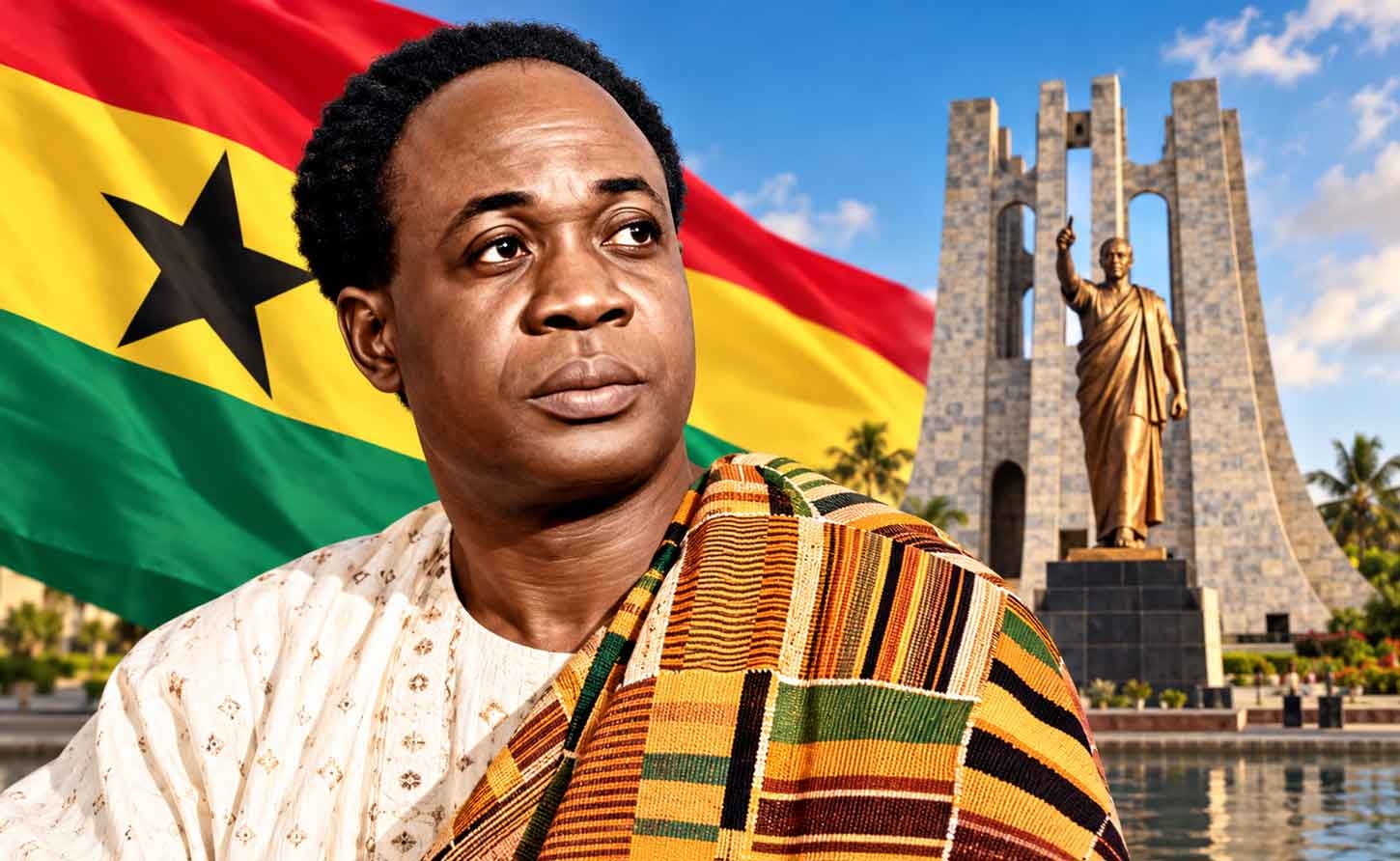
Osagyefo Dr. Kwame Nkrumah
The People's National Party joined Ghanaians and Pan-Africanists worldwide in honouring Kwame Nkrumah on the 117th anniversary of his birth — and traced a line from Marcus Garvey's Jamaica straight to Ghana's independence.
DIASPORA - Jamaica September 26, Calvin G Brown | On Monday, September 21, as Ghana shut its offices, banks and schools to honour the man who led it out of colonial rule, a salute arrived from the other side of the Atlantic.
The People's National Party (PNP) observed Kwame Nkrumah Day with a statement from its Old Hope Road headquarters, describing Ghana's first president as a monumental visionary whose life and leadership transformed the course of African history and galvanised the global Pan-African movement.
The release, issued through the party's Culture and Heritage Commission, chaired by I.B. Konteh, remembered Nkrumah as the architect of Ghana's independence in 1957 and a founding figure of the Organisation of African Unity in 1963. It returned to one of his most famous lines, delivered on the night of independence: "Our independence is meaningless unless it is linked up with the total liberation of the African continent."
From Garvey to Accra
The heart of the tribute was a claim Jamaicans can hold with pride: that Nkrumah's vision was built directly on the teachings of Marcus Garvey. The PNP credited Garvey with igniting Pan-African consciousness and argued that Nkrumah turned the call for "Africa for the Africans, those at home and those abroad" into institutional reality.
History supports the claim. In his 1957 autobiography, Nkrumah wrote that of all the literature he studied as a student in the United States, Garvey's Philosophy and Opinions inspired him most. Independent Ghana later named its national shipping line the Black Star Line, echoing Garvey's own venture, and a black star still sits at the centre of the Ghanaian flag.
The party went further, formally endorsing Nkrumah's declaration in Class Struggle in Africa (1970) that all people of African descent — whether in the Americas, the Caribbean or anywhere else — "are Africans and belong to the African nation." It closed by pledging to help dismantle remaining structural barriers and to advance sovereignty, decolonisation and African dignity worldwide.
How Ghana Marked the Day
In Ghana, the day carried particular weight. The Ministry of the Interior, in a statement signed by Minister Muntaka Mohammed-Mubarak, declared September 21 a statutory public holiday, and government offices, financial institutions, businesses and schools across all 16 regions closed for the commemoration.
It was only the second observance since Parliament restored September 21 as Founder's Day in June 2025, reversing a 2019 change under President Nana Akufo-Addo that had moved Founders' Day to August 4 to honour the wider "Big Six" and renamed Nkrumah's birthday a memorial day.
The Kwame Nkrumah Memorial Park in Accra, where Nkrumah is buried, has long been the focal point of wreath-laying ceremonies, lectures and cultural performances on the day. This year, Accra also hosted a Global Peace Cultural Festival on the holiday.
The sharpest reflection came from the academy. Professor Samuel Ntewusu, Director of African Studies at the University of Ghana, told the Ghana News Agency that "celebration is not an event." The true measure of honouring Nkrumah, he argued, lay in studying and applying his ideas on economic independence, natural resources, education, agriculture and energy. He urged Ghanaians of every political persuasion to set partisanship aside and examine those policies critically.
A Legacy Still Contested
That appeal was pointed, because Nkrumah's legacy remains a live political question in Ghana. The back-and-forth over the holiday's date reflects a long rivalry between Nkrumah's political heirs and those who argue independence was a collective achievement. Critics also point to the authoritarian turn of his later years, including a one-party state, before he was overthrown in a military coup in February 1966. He died in exile in Bucharest in 1972.
Yet even his detractors rarely dispute his place on the continental stage. In 2000, BBC World Service listeners voted him "African Man of the Millennium."
Why It Matters Here
For the PNP, the tribute sits within a long tradition. The party of Norman and Michael Manley has consistently framed Jamaica's story as part of a wider African and Global South narrative — a thread that runs through Jamaica's Garvey heritage, its role in the anti-apartheid struggle and CARICOM's ongoing campaign for reparatory justice.
The PNP's statement said the day should serve as a reminder to Africans at home and abroad of their shared heritage and united power. Professor Ntewusu offered the test of that sentiment: whether Nkrumah's ideas are studied and put to work, not merely saluted once a year.
On both sides of the Atlantic, the answer will be written long after the wreaths have wilted.
— 30 —
