
TRINIDAD | First in Line: T&T Signs Washington’s Terror List as the Sea Keeps Its Dead
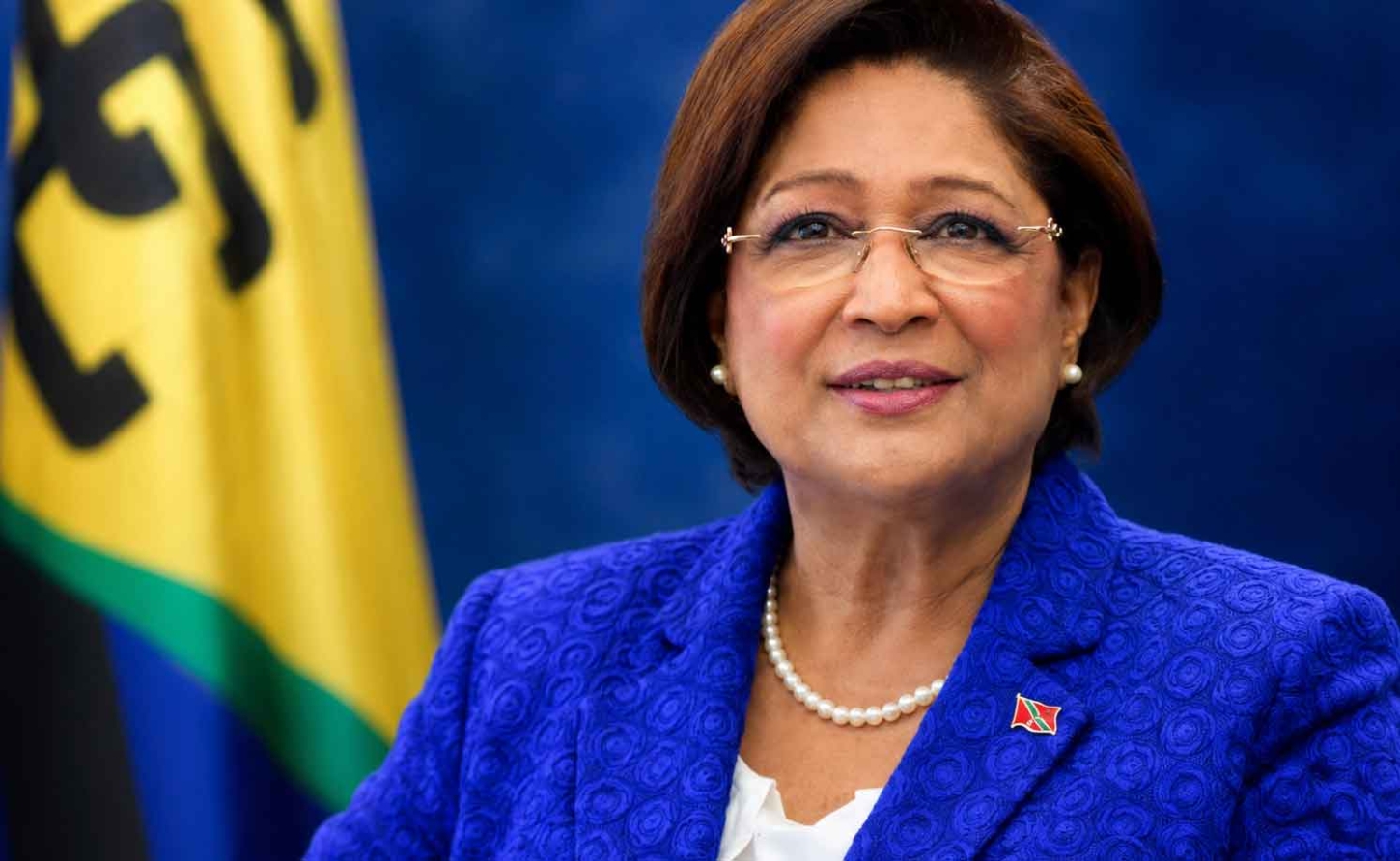
Prime Minister of Trinidad and Tobago, Kamla Persad Bissessar
Port of Spain has become the first Shield of the Americas member to formally adopt Washington’s list of “narco-terrorist” organisations. The designation carries no legal licence to kill. But in waters where US missiles have already claimed 234 lives, it may supply something almost as useful: political cover.
KINGSTON, Jamaica, September 29, 2026- Calvin G. Brown | The applause came from Washington before most Trinidadians had heard what their government had done. On Monday morning, the United States Embassy in Port of Spain announced on social media that Trinidad and Tobago had become the first member of the Shield of the Americas to join Washington in designating 25 criminal organisations as foreign terrorist organisations.
Juan Pablo Segura, the US Assistant Secretary of State for Western Hemisphere Affairs, quickly hailed it as “another major step forward” in confronting what he called the scourge of narco-terrorism. It was a diplomatic gold star. For a twin-island republic sitting seven miles off Venezuela, in waters where US forces have been firing on small boats for a year, it may prove a costly one.
What Port of Spain Signed
The list is not a register of local gangs. It mirrors organisations already designated by the US State Department: MS-13, Venezuela’s Tren de Aragua, Mexico’s Sinaloa Cartel and Cartel Jalisco Nueva Generación, Haiti’s Viv Ansanm and Gran Grif, Ecuador’s Los Choneros, Colombia’s ELN guerrillas and others operating across the hemisphere.
The move follows a 22 September Shield of the Americas meeting on the margins of the UN General Assembly in New York. There, President Donald Trump urged members to apply “crushing sanctions” to the groups. Fifteen governments, including Guyana, the Dominican Republic and Trinidad and Tobago, endorsed a joint statement of intent to impose asset freezes, visa bans and criminal liability.
Only Port of Spain has moved from intent to formal designation. Three Caribbean leaders stood with Trump at his Doral golf resort on 7 March: Guyana’s Irfaan Ali, the Dominican Republic’s Luis Abinader and Prime Minister Kamla Persad-Bissessar. So far, she alone has crossed that line. Jamaica, The Bahamas and Belize signed an earlier security declaration in March, but none has followed.
There is also an arithmetic puzzle. The government’s own statement last week spoke of 24 organisations, the number in the New York declaration. Washington now says 25. Which is the 25th, and when did Trinidad and Tobago agree to add it? As of publication, neither government has said.
The Power and the Paper Trail
Some critics argue that Trinidad and Tobago has no business branding foreign organisations as terrorists. The law says otherwise. The Anti-Terrorism Act, Chap. 12:07, allows the Attorney General to pursue designation of individuals and entities, wherever they are based, where there are reasonable grounds to believe they are involved in terrorism.
This administration has used that power before. In April, Attorney General John Jeremie designated Hezbollah, Hamas and Iran’s Islamic Revolutionary Guard Corps. Two High Court judges granted orders freezing any local assets, and those orders were published in the Gazette, as the Act requires.
That precedent is what makes the present silence so conspicuous. As of publication, WiredJa has found no published High Court order or Gazette notice for the 25 organisations. If the designations have not gone before a judge, what legal force do they carry at home? If they have, what evidence did the State put forward, and why has the public not seen the orders?
These are not technicalities. In April, legal observers questioned the absence of public intelligence behind the Middle East designations. The stakes are higher now. Hezbollah does not fish the Gulf of Paria. Trinidadian fishermen do.
The Government’s Case
The Persad-Bissessar administration’s position is rooted in real pain. Trinidad and Tobago has lived under repeated states of emergency since 2025, and its murder rate ranks among the highest in the world. Addressing the UN General Assembly last week, the Prime Minister said small states face an asymmetric fight against sophisticated networks moving people, weapons, narcotics and illicit money across borders. She pledged to press for stronger action when T&T takes its Security Council seat in 2027.
Venezuelan gang networks are not an abstraction in Port of Spain. Tren de Aragua’s reach into Trinidad has been widely reported. For a government whose citizens bury the young victims of gun violence every week, standing beside the world’s most powerful military can look like simple common sense.
Regional security consultant Dr Garvin Heerah told the Express that the country should seize the security opportunities the Shield offers, provided it does not compromise its sovereignty or its own national security priorities.
That proviso is where the argument begins.
A Label, Not a Licence
Here the story turns from paperwork to gunpowder.
In US law, a foreign terrorist organisation designation is a financial and immigration tool. It freezes assets, bars entry and criminalises material support. It does not authorise anyone to fire a missile. Even American reporting on last week’s New York meeting noted that point, while observing that the terror labels could still help give the public a rationale for military strikes.
That is the danger in Port of Spain’s signature. Washington has justified its year-long campaign against small boats by calling their crews “narco-terrorists” in an armed conflict. Each government that formally adopts the same list lends that framing a regional seal of approval.
It becomes evidence that the neighbourhood agrees. Trinidad and Tobago’s designation gives the United States no new legal power. What it offers is something Washington has struggled to secure elsewhere: political cover from a Caribbean partner.
“Such attacks amount to serial extrajudicial killings in violation of the right to life.”— UN Special Rapporteur Ben Saul, September 2026
The campaign that cover protects has come under scrutiny. Last week, UN Special Rapporteur Ben Saul reported that between September 2025 and August 2026, US forces struck at least 68 vessels in the Caribbean and Eastern Pacific, killing at least 223 people.
He described the attacks as “serial extrajudicial killings in violation of the right to life.” He found they were neither a last resort nor proportionate, because interception and boarding were available. He also warned that they could amount to crimes against humanity. Two more strikes in September have raised the reported toll to 234 dead in 70 attacks.
Washington rejects that reading. It maintains that its intelligence confirms each vessel’s role in trafficking. It has not made that evidence public for any individual boat.
The Human Ledger
Behind the numbers are names. Chad Joseph was 26 and Rishi Samaroo was 41. Their families say both men had been working as fishermen and farmers in Venezuela and were heading home in October 2025 when a US strike destroyed their boat. Neither has been heard from since.
Supported by the American Civil Liberties Union and the Center for Constitutional Rights, the families filed the first wrongful-death lawsuit of the campaign in a US federal court. The complaint notes that Trinidad and Tobago’s own government had no information linking either man to criminal activity.
The case now waits on a determination by the courts in Trinidad and Tobago. As the first anniversary of their disappearance approaches, the families are still waiting for answers.
The Prime Minister’s position has not softened. Weeks before the men vanished, she greeted the first Caribbean strike with a blunt verdict: “I have no sympathy for traffickers; the U.S. military should kill them all violently.” In June, at the CARICOM Heads of Government meeting in St Lucia, she said local investigations had turned up “nothing” to support claims of the “alleged murders.”
“I have no sympathy for traffickers; the U.S. military should kill them all violently.” - Prime Minister Kamla Persad-Bissessar, September 2025
Those two statements may be consistent in logic. Together they point to an uncomfortable fact. The state says it has no evidence the men were criminals, and also no evidence they were killed. Their families are left with an empty space where both answers should be.
The Caribbean Question
Unease has moved well beyond the courtroom. Fishermen along Trinidad’s southern and western coasts have reported staying ashore for fear of being mistaken for smugglers. Opposition figures criticised the government’s handling of the April designations.
Legal observers have repeatedly asked to see the intelligence behind them. In Caracas, Venezuelan officials called the Prime Minister’s earlier rhetoric a self-fulfilling prophecy once Trinidadians appeared among the dead.
Regionally, T&T’s course has set it apart from its CARICOM partners. The Community has long defended the Caribbean as a Zone of Peace. Persad-Bissessar has openly rejected that idea. She hosted the US warship Gravely, questioned CARICOM’s usefulness and now leads the regional line-up behind Washington’s terror list.
Guyana and the Dominican Republic signed the same statement of intent in New York but have not yet followed her into formal designation. Whether that reflects caution, sequencing or quiet dissent, the result is the same: Trinidad and Tobago stands at the front of the line alone.
What Port of Spain Owes Its People
Supporters of the government will say a small, violence-weary nation cannot afford neutrality between its citizens and the cartels, and that argument deserves respect. But alliance is not the same as abdication. A sovereign state can stand with Washington against the cartels and still insist on due process, evidence and the lives of its own fishermen.
So the questions remain. Which 25 organisations, and who added the last one? Was the High Court consulted, as the Anti-Terrorism Act requires, and where is the Gazette notice? What assurance has Port of Spain sought that its signature will not be cited to justify the next strike in the Gulf of Paria? And when will the families of Chad Joseph and Rishi Samaroo receive the one thing both governments have withheld: evidence?
Until those answers come, Trinidad and Tobago has lent Washington its name. The sea still keeps its dead.
— 30 —
