
JAMAICA | Who Is Auditing Jamaica’s Ports — And Why It Matters More Than You Think
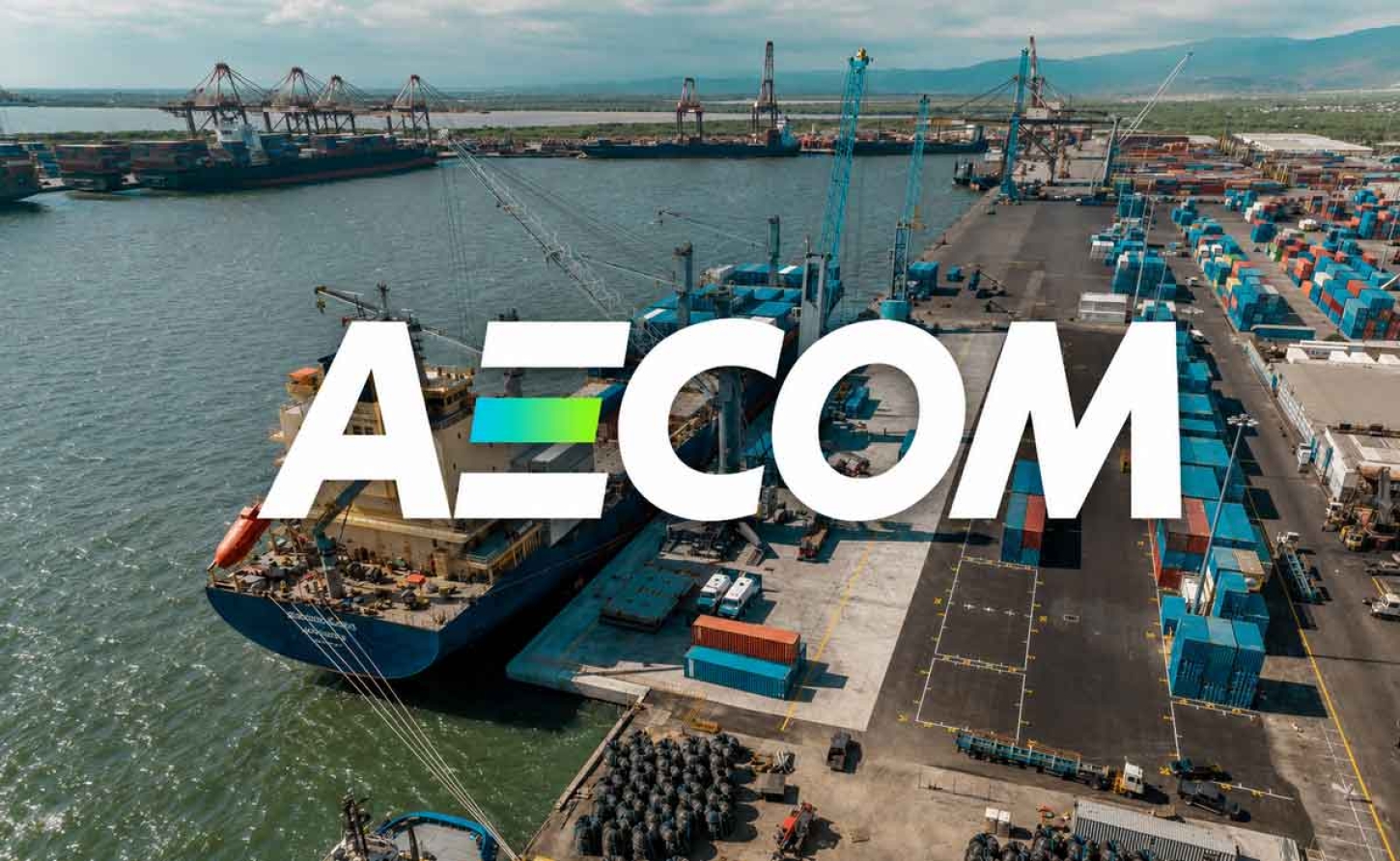
Kingston, Wharf, Kingston, Jamaica
An American firm hired by Washington is quietly mapping every vulnerability in the ports that carry more than 90 per cent of Jamaica’s trade. The help is real — and so is the price.
KINGSTON, Jamaica, June 29, 2026 - Calvin G. Brown | When a foreign government offers to help fix your locks, it is worth asking who keeps the spare key. That is the quiet question hanging over Jamaica’s three principal commercial ports, where an American firm has begun a comprehensive security assessment with the blessing of the Jamaican Government.
The Government has approved United States company AECOM to assess Kingston Wharves, Kingston Freeport and Montego Bay — a development first surfaced in a Gleaner report. WiredJa has since gathered additional detail on the players involved and the larger game being played.
A Tier-1 firm, and a State Department pen
Start with who is actually doing the work. AECOM is not a guard-dog-and-fence security outfit. It is a Dallas-headquartered multinational infrastructure consultancy — a Tier-1 global firm with deep, long-standing ties to the U.S. government’s defence and diplomatic machinery. That distinction matters, because this audit did not arrive through the ordinary commercial channels you might expect.
According to an April 29 letter from the Ministry of Foreign Affairs and Foreign Trade to Port Authority of Jamaica Chairman Professor Gordon Shirley, the U.S. Department of State — through its embassy in Kingston and its “contracted implementer” AECOM — will lead the effort.
In plain terms: Washington is paying for, organising and executing a top-to-bottom examination of the digital and physical arteries through which the overwhelming majority of Jamaica’s trade flows. The Port Authority will receive the reports. But the State Department is holding the pen.
A total scope — and one telling phrase
The scope is total. The assessment covers physical security infrastructure, cargo and container systems, maritime operations, IT and communication networks, and workforce management.
All recommendations are to align with the International Ship and Port Facility Security (ISPS) Code and, in the letter’s own words, “trusted vendor solutions that meet rigorous cyber supply chain security standards.” The process is slated to run two months, is already under way, and concludes with comprehensive reports, gap analyses and a phased implementation roadmap.
It is that one phrase — trusted vendor solutions — that should make Jamaican policymakers sit up.
The China subtext
In the language of contemporary great-power competition, “trusted vendor” is widely read as diplomatic shorthand for not Chinese. Over the past decade, Beijing has poured investment into Caribbean infrastructure, logistics and telecommunications, and Kingston sits at the heart of regional transshipment.
By setting the technical benchmarks for the island’s port IT and scanning systems, the United States is, in effect, drawing the boundary lines of who may and may not supply Jamaica’s most critical trade chokepoints — companies such as Huawei or the Chinese scanner-maker Nuctech among the likely casualties.
This is analysis, not the letter’s stated text; but it is the obvious subtext of a cyber-supply-chain framing imposed by one superpower in the thick of its rivalry with another.
None of this is happening in a vacuum, and Jamaica is no passive victim. The island faces a genuine, bloody crisis driven by the flood of illegal firearms and ammunition — much of it trafficked from the United States — through porous coastlines and ports.
The familiar bargain on offer echoes the old Shiprider Agreement: Washington helps secure the borders, and in exchange helps dictate the architecture of that security.
The bargain, and its hidden cost
The sovereignty risk here is not gunboats in Kingston Harbour. It is subtler, and arguably more durable. Rebuild a nation’s port networks on proprietary, U.S.-approved architecture and you create a digital leash — dependency on foreign contractors for maintenance, updates and operational continuity.
Allow a superpower’s implementer to map every vulnerability and data pathway of your economic lifeline, and you have handed over a detailed blueprint of your own weak points. And once the “phased roadmap” lands, the pressure to implement it exactly — lest preferred trading status or smooth U.S. clearance be jeopardised — narrows Jamaica’s freedom to choose alternative partners or homegrown solutions.
That is the trade-off in full. Jamaica gains real technical capacity to police its borders and harden strategic assets it could not easily afford to assess on its own. The price of admission is a standing American hand in designing, monitoring and constraining the country’s commercial nerve centre.
It may well be a defensible bargain. But it is a bargain — and Jamaicans deserve to see the terms, including the parts written between the lines.
-30-
© WiredJa Online. Reporting verified against the April 29 Ministry of Foreign Affairs and Foreign Trade letter as reported by the Jamaica Gleaner, June 29, 2026.
