
JAMAICA | Byles’s Last Stand: BOJ Freezes Rate at 5.5% as Inflation Creeps Toward the Ceiling
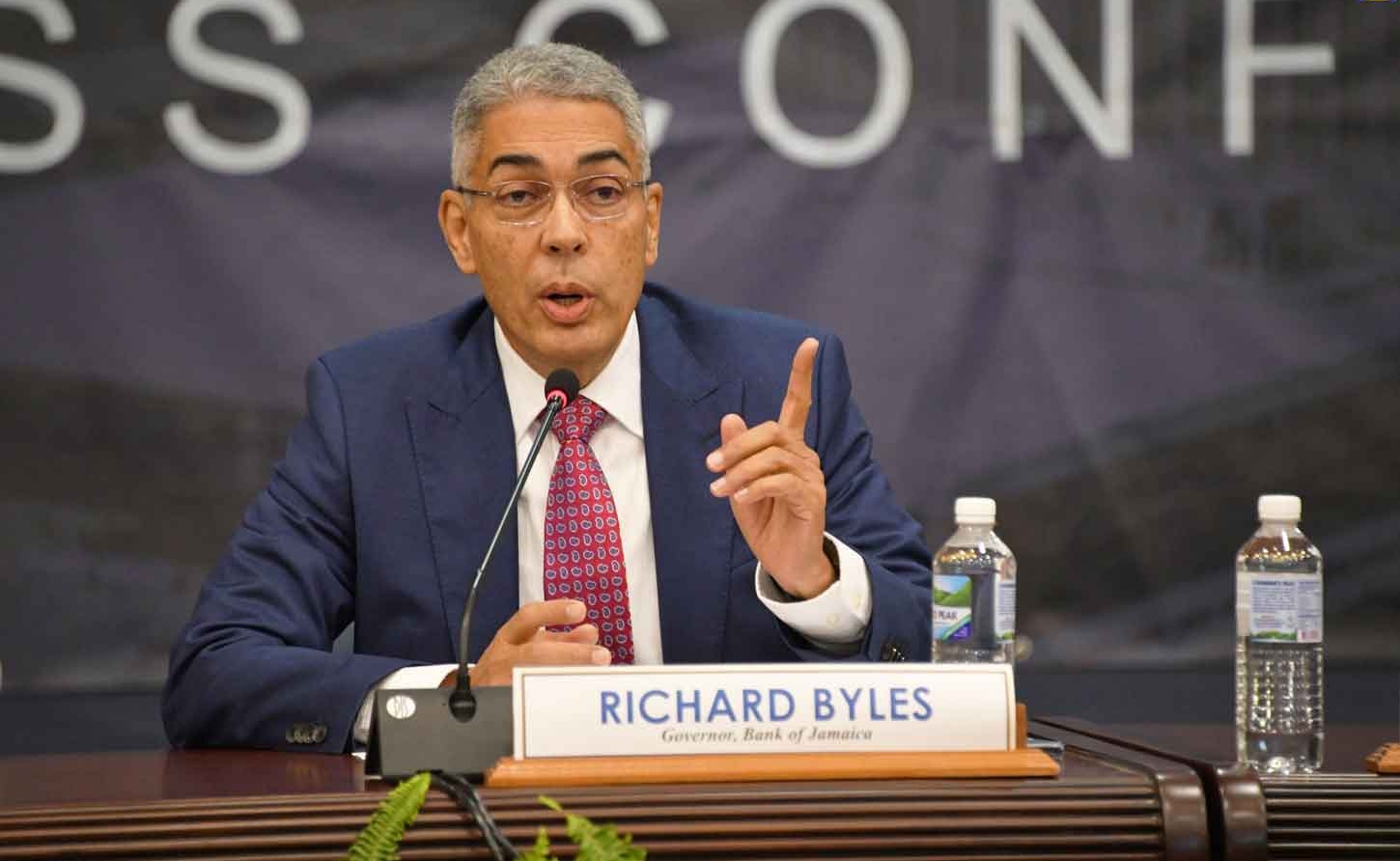
Outgoing Governor of the Bank of Jamaica, Richard Byles
In the last monetary policy decision of Richard Byles’s near seven-year governorship, the Bank of Jamaica held its benchmark rate at 5.50 per cent. The hold reads as caution; the data beneath it reads as warning — and the warning is now his successor’s to heed.
KINGSTON, Jamaica — The Bank of Jamaica’s Monetary Policy Committee did the predictable thing on 29 June. It did nothing.After meetings on 25 and 26 June, the Committee announced it would hold the policy rate — the interest paid to deposit-taking institutions on their current account balances at the central bank — at 5.50 per cent, and continue to defend relative stability in the foreign exchange market.
The decision was unanimous. It was also, in a quiet but consequential sense, historic: it is the final monetary policy verdict to be issued under Richard Byles, who demits the governorship on 18 August after nearly seven years. The next rate announcement, set for 19 August, will fall to whoever inherits his chair.
That timing lends the routine an unusual weight. A central banker’s legacy is written in the decisions he does not get to revisit, and Byles leaves office with the inflation needle pointing the wrong way.
The Numbers Beneath the Calm
The Committee’s own language is studiously measured: inflation has stayed within the 4.0 to 6.0 per cent target band for three months, it noted, even as the outlook “remains uncertain.” But the figures it cites tell a less comfortable story. Headline inflation reached 5.5 per cent in May — above the Bank’s own projection, and the fourth consecutive month of 2026 in which the rate has climbed.
Core inflation, which strips out volatile food and fuel, rose to 4.7 per cent from 3.9 per cent in January. And the Committee concedes outright that headline inflation will “temporarily breach” the 6.0 per cent ceiling in the near term.
In plain terms: prices are accelerating, the central bank expects them to break through its own upper limit, and its response is to keep the brake exactly where it has been.
A Small Economy at the Mercy of Larger Storms
The Caribbean reality the BOJ does not state outright is that little of this pressure is homegrown. The forces pushing Jamaican prices upward originate far beyond the island’s shores. The Committee points to elevated and volatile international commodity prices, to a Middle East conflict whose resolution it cannot guarantee, and to tightening financial conditions in the United States — where inflation itself accelerated to 4.2 per cent in May. The US Federal Reserve held its own rate at 3.50 to 3.75 per cent in the same month.
Jamaica, in other words, is doing the disciplined thing demanded of a small, open, price-taking economy — holding the line, guarding the dollar, waiting out a storm it did not summon. The marginal appreciation of the exchange rate over the calendar year, and reserves the Bank calls healthy, are the modest rewards of that discipline. They are also the buffer his successor will be grateful to inherit.
The Inheritance
Layered atop the imported pressures is a domestic one: the recovery from Hurricane Melissa. The Committee expects recovery spending by the Government, and the gradual normalisation of activity across battered sectors, to add their own upward push to prices. Growth is forecast at a guarded 1.0 to 3.0 per cent for the 2026/27 fiscal year, with the risks “skewed to the downside” — even as inflation risks tilt the other way. It is the central banker’s least enviable bind: a slowing economy and quickening prices at once.
Tellingly, businesses still expect 7.0 per cent inflation a year out — a full point above the ceiling, and a signal that the public has not yet been convinced the Bank will win this round.
The June summary carries one final, understated marker of the handover under way. It was signed not by Byles but by Senior Deputy Governor Dr Wayne Robinson, “for and on behalf of” the Governor. The man who steered the BOJ through pandemic, war-driven inflation and the wreckage of Melissa is already stepping back from the page.
He leaves a central bank that has held its nerve. Whether holding was enough — or whether the next governor must finally tighten the screws — is the question Byles bequeaths, unanswered, to a successor not yet named.
— 30 —
