
JAMAICA | Is Cow's Milk at 5% Per Cent Still Called Milk? Jamaica's Quiet Redefinition of Dairy
JAMAICA | Is Cow's Milk at 5% Per Cent Still Called Milk? Jamaica's Quiet Redefinition of Dairy
MONTEGO BAY, June 26, 2026 - When the Senate took up amendments to the Jamaica Dairy Development Board Act on May 22, the changes arrived wrapped in the comfortable vocabulary of progress: modernisation, international alignment, diversification, food security.
Stripped of the slogans, however, the legislation does something far more consequential and far less reassuring. It rewrites what the word "dairy" is allowed to mean in Jamaican law — and it lowers the bar dramatically.
Under the old Act, a dairy product had to be manufactured wholly or mainly from milk, containing more than 50 per cent milk solids on a dry-weight basis. Milk itself was defined as the product of cows.
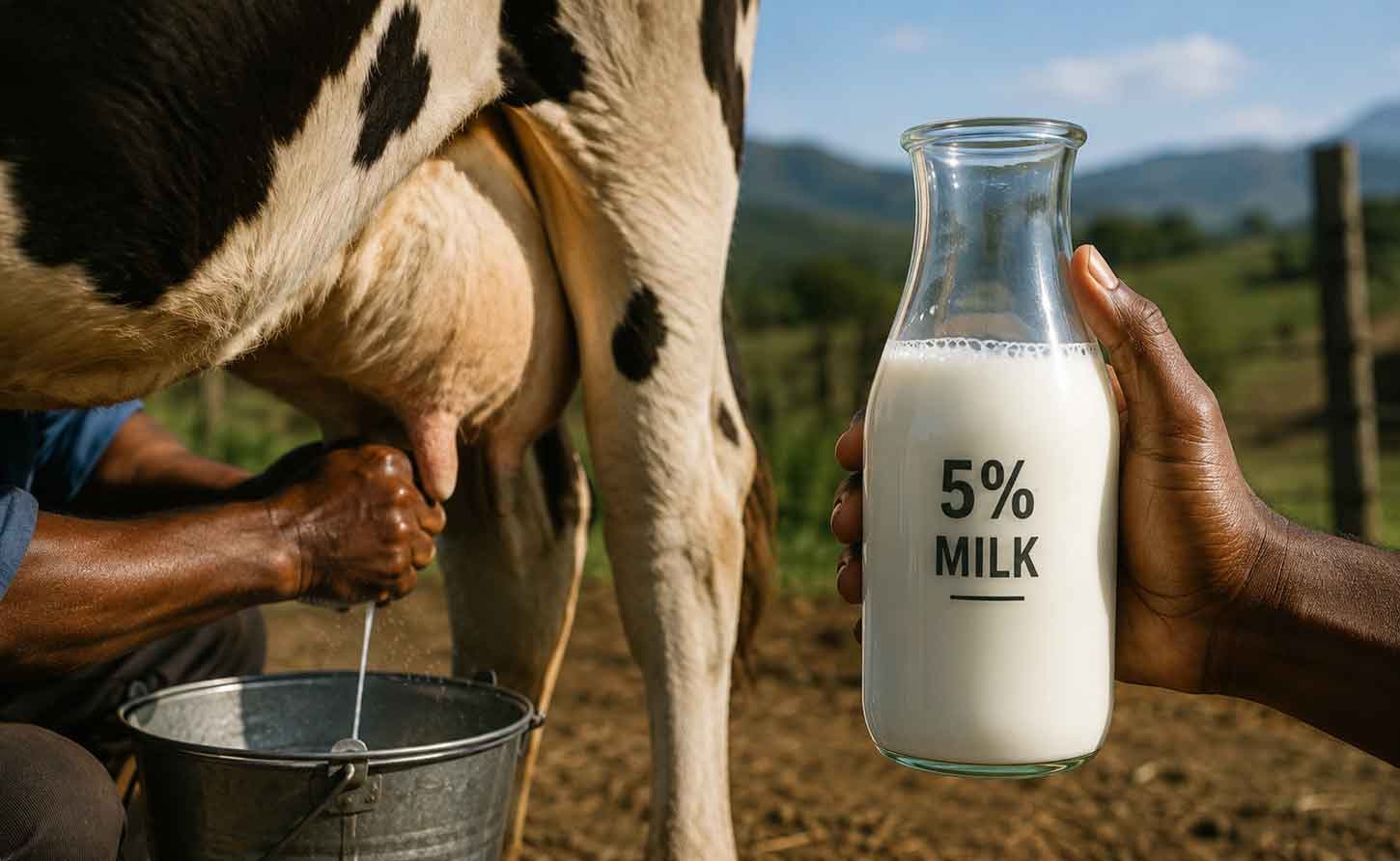
The amendment collapses both standards at once. A product now needs only five per cent milk to carry the trusted "dairy" label, and milk may now be derived from "any animal.
People's National Party Senator Allan Bernard, who led the Opposition's contribution to the debate, put the matter bluntly: this is not modernisation, it is dilution. And the question that follows is the one the Government has not convincingly answered — dilution in whose interest?
Who actually benefits?

Senator Allan Bernard
Diversification is a genuinely worthy goal, and a broader dairy framework that recognises goat milk, sheep milk, and other legitimate streams could create real income for rural communities.
But here is the problem Bernard identified, and it is a serious one: the legislation contains none of the machinery that would actually deliver those benefits.
There are no incentives for local goat or sheep production, no protections for farm-gate prices, no commitment to expand domestic processing capacity. What the Bill does immediately and concretely is lower the threshold for what may legally be sold as dairy.
Dropping the milk requirement from over 50 per cent to just five per cent does not strengthen the roughly half of the island's small dairy farmers concentrated in St. Thomas, nor the registered producers in Clarendon and St. Elizabeth, nor the large operations and processing plants in St. Catherine and St. Ann.
What it does is roll out the welcome mat for imported milk derivatives, powdered substitutes, vegetable-fat blends, and ultra-processed analogues — products that can now claim the credibility of "dairy" while bearing only a trace of the real thing.
The likely winners, then, are not Jamaican farmers already squeezed by rising feed costs, land pressure, and climate-stressed pasture. They are the importers, processors, and distributors positioned to bring cheaper substitutes to shelf and stamp them with a word consumers trust.
A nutritional sleight of hand
The consumer-protection implications are sharp. Most Jamaicans hear "milk" and think protein, calcium, and essential fats. A product that is 95 per cent something-else can now wear the same label — and many such products carry more added sugar, more vegetable and hydrogenated fats, more stabilisers, lower protein density, and reduced calcium availability than genuine milk.
That risk lands hardest where it matters most: on children in their formative years, on the elderly who depend on adequate calcium, on low-income households that lean on dairy for nutrition, and on the school feeding programmes, hospitals, and institutional kitchens that could unknowingly procure diluted products under a Dairy Board classification.
As Bernard argued, food security is not merely a question of volume on a shelf. It is a question of nutritional integrity. A country cannot credibly claim to be strengthening food security while weakening the very standards that define the food being eaten.
"Any animal" and the cultural blind spot
The most contested phrase in the amendment is the smallest: milk "from any animal." The Government grounds it in international standards. But legislation does not operate in a cultural vacuum, and the wording leaves obvious questions unanswered.
Which animals are contemplated? Who decides? What stops future expansion, and where is the parliamentary check?
Food in Jamaica is identity and tradition, not just commerce, and Jamaicans hold deep-seated understandings about which animal products belong in the food chain. International norms can inform policy without automatically overriding cultural reality and public confidence.
Bernard's proposed fix is precise rather than alarmist: define milk specifically as the secretion of cows, goats, sheep, and "such other animals as may be specifically prescribed by regulations subject to affirmative resolution of Parliament." If the real intent is goats and sheep, the law should simply say so.
What a balanced Bill would have done
The remedies on the table are not radical. Restore a meaningful minimum milk threshold. Create distinct legal categories for dairy substitutes and analogues so they cannot pass as the real product.
Mandate front-of-package disclosure where milk content is low or substitutes are used. Require country-of-origin labelling on imports. Protect institutional nutrition standards. Each measure preserves room for genuine innovation while defending transparency.
The amendment has passed. The national conversation it should have triggered — about food integrity, consumer rights, cultural identity, and the future of Jamaican agriculture — is only beginning.
Jamaicans are now surely entitled to ask whether milk should still mean milk.
-30-
