
BARBADOS Banks a US$257-Million IMF Insurance Policy — and Hopes It Never Cashes It
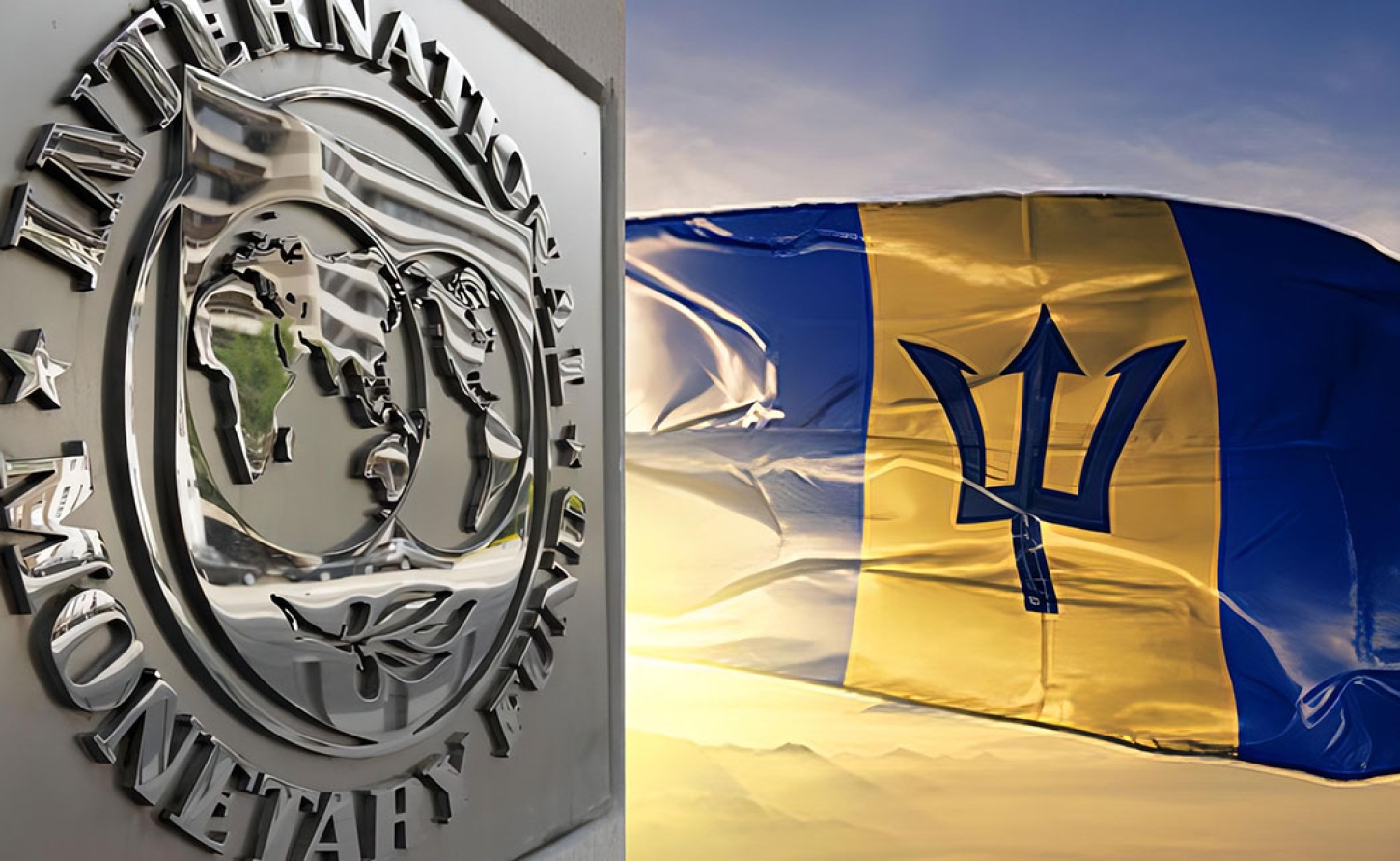
BARBADOS Banks a US$257-Million IMF Insurance Policy — and Hopes It Never Cashes It
The Mottley government has the Caribbean’s enviable numbers. So why reach for a Fund safety net? Because in a region of hurricanes and geopolitical shocks, strong fundamentals are no longer enough.
BRIDGETOWN / WASHINGTON —June 23, 2026 - Barbados has been handed a US$257-million vote of confidence by the International Monetary Fund. The twist: it is a safety net the Mia Mottley government insists it has no intention of using.
The IMF Executive Board on Sunday approved a 36-month precautionary Stand-By Arrangement worth SDR 189 million — 200 per cent of Barbados’s quota in the Fund — and wrapped up its 2026 Article IV review of the economy.
The decision freed up about US$64 million for immediate drawdown. Bridgetown says it will leave every dollar untouched unless a shock tears a hole in its balance of payments.
In plain terms, this is insurance, not a bailout. And that distinction is the entire story.
So why buy cover at all?
Because, on paper, Barbados barely looks like a candidate for Fund support. The IMF pegs 2025 growth at a healthy 2.7 per cent. Inflation has been tamed to an average of 0.9 per cent.
The government banked a primary surplus of 4.2 per cent of GDP in 2025/26 — the kind of fiscal discipline most of the hemisphere can only envy — fattened by strong corporate tax receipts.
Reserves sat near US$1.5 billion at year’s end, roughly six months of imports, comfortably enough to defend the Barbados dollar’s peg to the greenback.
These are not crisis numbers. They are bragging numbers. Which is precisely why the arrangement matters: Barbados is not borrowing because it is weak, but insuring because it knows how fast Caribbean fortunes can turn.
It is a remarkable turn. Barely seven years ago Barbados was a cautionary tale, forced into a sweeping debt restructuring in 2018 with its debt burden approaching 175 per cent of GDP.
The BERT plan, born of that reckoning, has since become the Fund’s regional poster child. This new arrangement is the dividend of that hard decade: a country once locked out of capital markets now being offered money it is strong enough to refuse.
A Jamaican hand on the gavel
The verdict was delivered by one of the region’s own. Dr. Nigel Clarke — Jamaica’s former finance minister and now the IMF’s Deputy Managing Director — chaired the Board as Acting Chair, the first Jamaican, and first Caribbean or Central American national, to sit at that altitude in the Fund’s history.
Clarke knows this script intimately; he ran Jamaica’s own precautionary arrangements from the borrower’s chair. He credited Barbados’s “strong implementation” of its homegrown BERT recovery plan for putting debt on a firm downward path, rebuilding reserves and restoring access to capital markets.
The new facility, he said, hands Bridgetown “insurance in a shock-prone external environment.” That phrase — shock-prone — is doing heavy lifting.
The decade-long bet
The arrangement is welded to an unforgiving target: cutting public debt to 60 per cent of GDP by the 2035/36 financial year. That is a ten-year march, and it commits the Mottley administration — and whoever follows it — to sustained, high primary surpluses well into the next decade.
The Fund wants any revenue windfalls poured into resilience and fiscal buffers, not giveaways, and any relief measures kept “temporary and targeted.”
The reform list attached is long and politically delicate: a new tax-exemption framework, tighter control of loss-making state enterprises, a functioning deposit-insurance scheme, sharper bank supervision, a tougher anti-money-laundering regime, and — pointedly — pressure to scrap the foreign-exchange fee the Fund views as a market distortion. None of it is free, and some of it will bite.
The risks no budget can price
Here is the uncomfortable truth the IMF stated plainly: the gravest threats to Barbados are almost entirely outside its control. Geopolitical tension, global policy uncertainty, and the relentless arithmetic of climate — where a single major storm can erase years of surpluses in an afternoon. That is the real reason the safety net exists.
So Barbados has done the prudent thing and bought a US$257-million umbrella while the sky is clear. The measure of success will be strange: this arrangement works best if the money is never spent.
Whether it stays in the drawer depends not on Bridgetown’s discipline — which the Fund has just publicly endorsed — but on a hurricane season and a world economy that no recovery plan, however homegrown, can tame.
— 30 —
