
JAMAICA | Half a Kingdom for Three Billion: Butch Stewart’s Sandals Empire Sets Sail
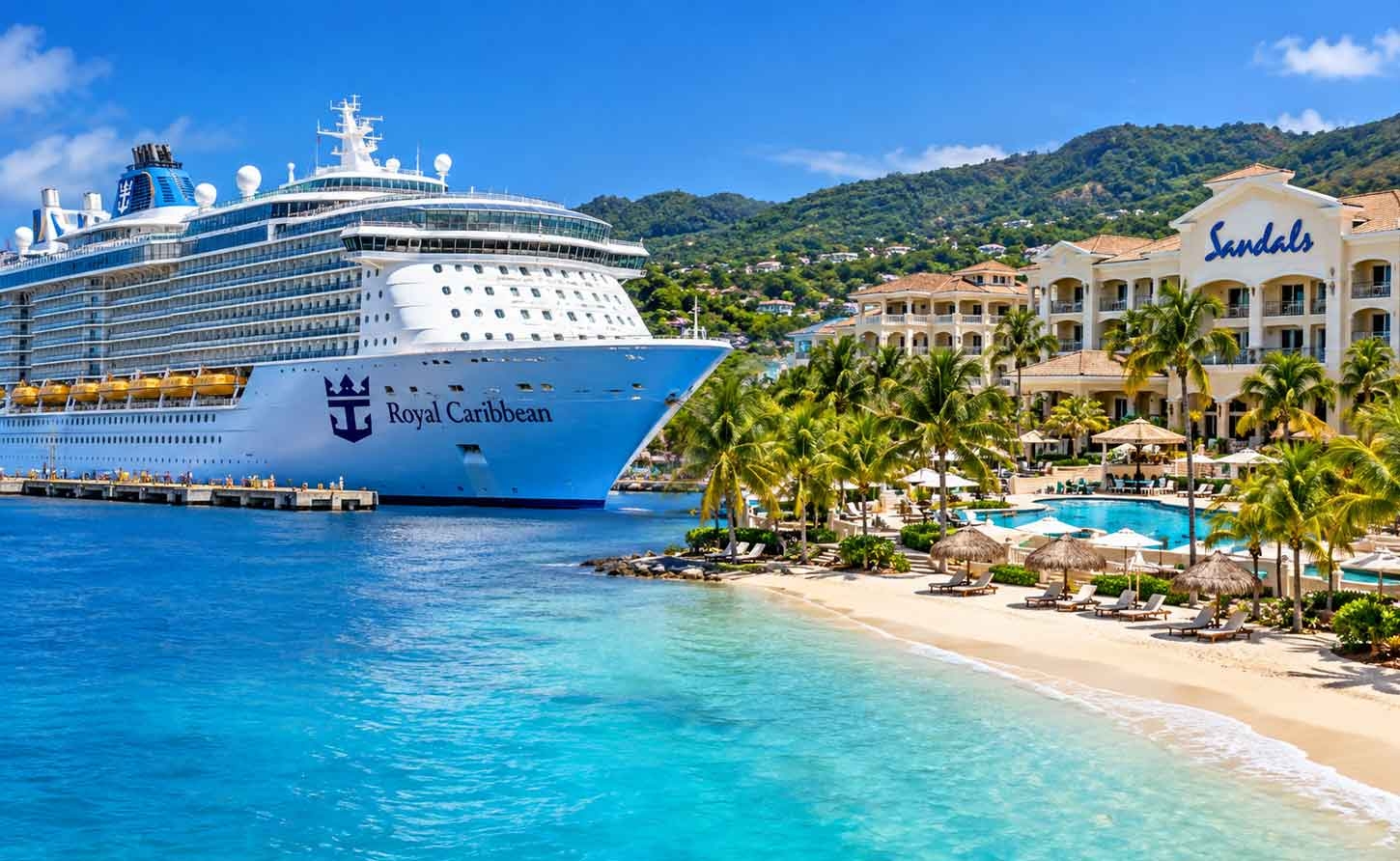
JAMAICA | Half a Kingdom for Three Billion: Butch Stewart’s Sandals Empire Sets Sail
Royal Caribbean’s US$3-billion stake in Sandals is being sold as a partnership of equals. The Caribbean should read the fine print before it applauds.
MONTEGO BAY, Jamaica, September 24, 2026 |Calvin G. Brown| - The pen touched paper in Miami, not Montego Bay.
On Wednesday, September 23, Royal Caribbean Group chairman and CEO Jason Liberty and Sandals executive chairman Adam Stewart signed away half of the most successful hotel company the Caribbean has ever produced. They did it at the cruise giant’s new headquarters, with the Miami skyline as the backdrop.
The timing carries its own irony. The Montego Bay resort that bore the name Sandals Royal Caribbean, closed after Hurricane Melissa, reopens this December under a new name: Sandals Caribbean Cay. The words “Royal Caribbean” come off one hotel in the same season Royal Caribbean buys half of all of them.
The price of a legend
Royal Caribbean will pay approximately US$3 billion for a 50 per cent equity interest in Sandals and Beaches Resorts, roughly ten times forward earnings before interest, tax, depreciation and amortisation, funded by committed debt financing from Morgan Stanley. That values the company Gordon “Butch” Stewart founded in Montego Bay in 1981 at about US$6 billion. Closing is expected in early 2027, subject to approvals.
Why now? Follow the cruise line’s own numbers. CNBC reports that Royal Caribbean’s stock has fallen roughly 25 per cent over the past year after the company trimmed its revenue growth forecast on softer demand for European sailings, while pointing to strength in the Caribbean. When Europe falters, Miami looks south.
Fifty per cent — for now
The official word is “partnership”. The earlier reporting told a different story. Before the signing, the Financial Times reported that Royal Caribbean was negotiating to become the controlling shareholder, with full ownership possible later. The Gleaner reports that the final 50-50 structure ended that speculation. The joint venture will be run by a board under the shared leadership of Liberty and Stewart. On paper, that is parity. Whether a New York-listed company with 71 ships stays content as an equal partner is a question nobody has yet answered.
A Caribbean crown jewel
Sandals mattered because it broke a pattern. For generations the Caribbean supplied the sunshine, the beaches and the labour, while foreign capital owned the brands and banked the margins. Butch Stewart proved a Jamaican company could become the multinational.
Adam Stewart calls the deal “the natural next step” in his father’s conviction that a Caribbean company could stand with the world’s best. There is a real case for that. The new capital backs Beaches’ US$1-billion regional expansion plan and a US$200-million overhaul of three flagship Jamaican resorts.
But capital from Miami also deepens a dependency. The Jamaica Tourist Board said in 2025 that the United States supplied nearly 70 per cent of the island’s arrivals. Now Jamaica’s signature hotel brand is half-owned by a Miami-based cruise company as well.
Ships and beds
This is where the region’s tourism planners should pay closest attention. Cruise and stayover tourism have long competed for the same visitor, and Caribbean governments have long courted the stayover guest who sleeps, eats and spends on the island.
Travel Weekly reports that analysts at Cleveland Research found more than a dozen Sandals resorts within a 30-minute drive of ports where Royal Caribbean calls. They see an opportunity to “better leverage idle resort capacity”. Liberty has spoken of linking the two loyalty programmes and, further down his list, of making use of “existing available land”. Royal Caribbean already runs Perfect Day at CocoCay and private beach clubs in The Bahamas and Greece, destinations designed to keep passenger spending inside the company.
The craft vendor, the taxi operator and the roadside jerk centre cannot be left standing on the dock.
The optimistic reading is that cruise passengers sample a Sandals resort, fall for an island and return as stayover visitors. The pessimistic reading is an island holiday packaged, sold and paid for inside one corporate ecosystem, with local businesses left on the outside.
The workers’ question
After Melissa, Stewart said 100 per cent of the Sandals team remained on payroll, whether their resort was open or closed. That commitment deserves credit. It was made by a family company answerable to itself. From 2027, half the board will answer to a company with Wall Street shareholders.
What must be asked
Before this deal closes, every government where Sandals and Beaches operate should be asking pointed questions. Which regulators must approve it? Will headquarters and senior management remain in Montego Bay? What protects the jobs of the staff who carried these resorts through the storm? Will cruise integration send guests into local economies, or around them? None of those answers has yet been made public.
Butch Stewart built a Caribbean empire on land. The question now is whether it will be steered from the sea.
— 30 —
