
GUYANA| Ali to the UN: The World Has Moved On From 1945 — So Must the Security Council
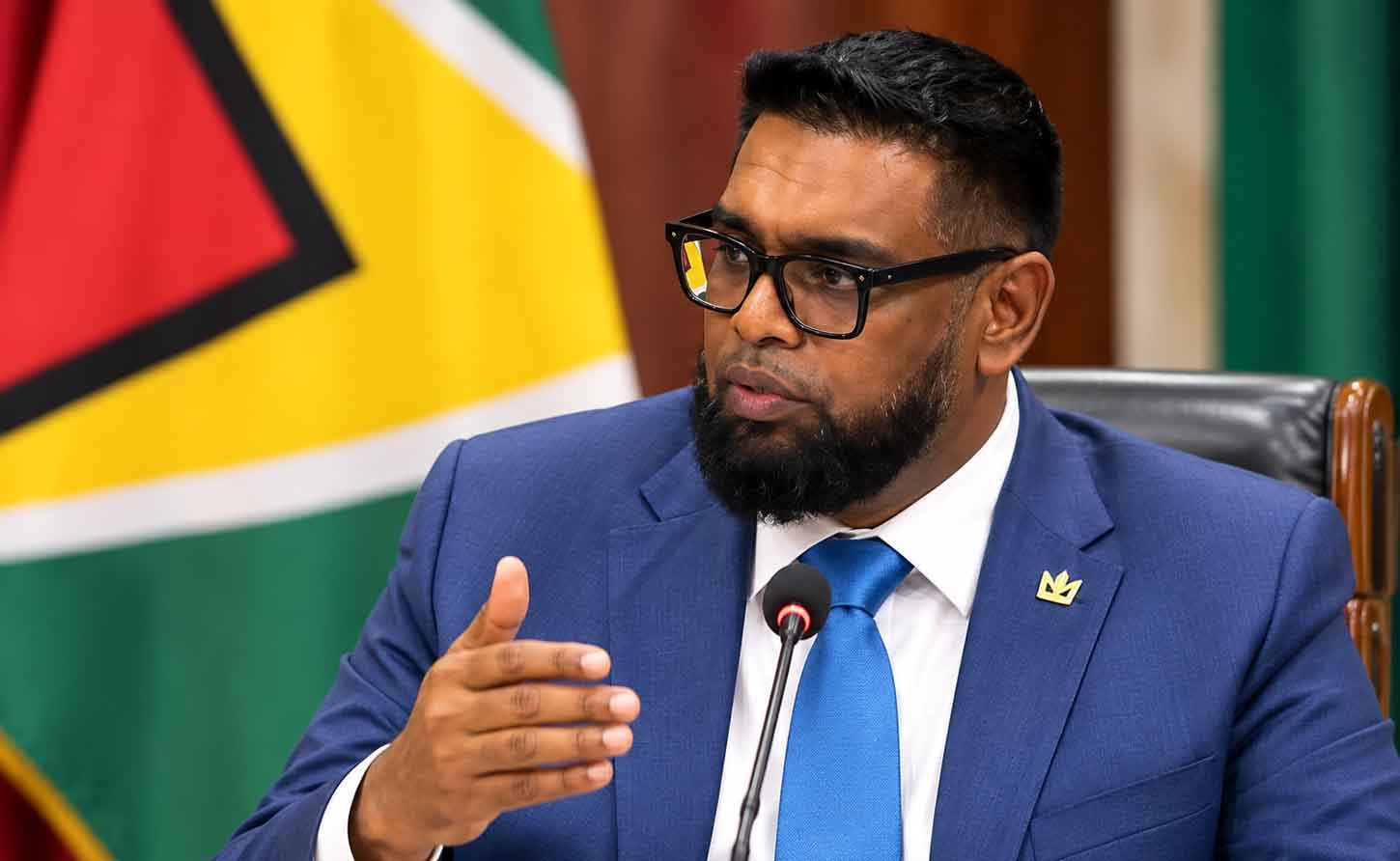
Guyana's President President Dr Mohamed Irfaan Ali
Guyana’s President uses the world’s biggest stage to demand permanent Security Council seats for Africa, Latin America and the Caribbean — and to urge Venezuela, which has vowed not to abide by the ICJ’s ruling, to obey whatever the court decides on Essequibo.
KINGSTON, Jamaica, September 25, 2026 - The United Nations was built from the rubble of 1945. On Thursday, President Dr Mohamed Irfaan Ali stood at the General Assembly rostrum in New York and, in effect, asked the world to notice that the rubble was cleared long ago.
“We need a Security Council that reflects the geopolitical realities of the 21st century, not the power structures of 1945.”— President Dr Mohamed Irfaan Ali, 81st UN General Assembly
It was a speech with two targets: the architecture of the UN itself, whose five permanent seats still mirror the victors of the Second World War, and Guyana’s western frontier, where a century-old border controversy with Venezuela awaits the verdict of the International Court of Justice (ICJ).
A seat at the table, not a seat in the gallery
Ali’s central demand was permanent Security Council representation for Africa, Latin America and the Caribbean. The arithmetic helps him: the two regions account for 87 of the UN’s 193 member states, yet hold none of the five veto-wielding permanent seats.
Guyana speaks from experience, having completed a two-year term as a non-permanent member of the Council in 2025.
The President framed reform as a rescue mission for multilateralism itself, listing weakening cooperation between nations alongside war, climate change and rising inequality as defining threats of the age. He also called for a more transparent, accountable UN and a strengthened General Assembly — the one forum where every member state carries an equal vote.
“The United Nations must not be a monument to the past. It must become an instrument for the future.”
The long road to reform
The applause should not be mistaken for momentum. Council reform is among the UN’s oldest unfinished business: negotiations have run since 2009 without agreement, and any change requires a Charter amendment ratified by two-thirds of member states — including all five permanent members.
The reformers are also divided. The African Union seeks two permanent African seats with veto power; the G4 of Brazil, Germany, India and Japan backs its own bid; and the Uniting for Consensus group opposes new permanent seats altogether. For CARICOM, a quieter question lingers: would a permanent Latin American and Caribbean seat ever go to a Caribbean state rather than a regional heavyweight?
Changing the guard
Ali linked reform directly to this year’s race for Secretary-General, arguing that institutions do not reform themselves and need leadership capable of driving change. Guyana has nominated its Permanent Representative, Ambassador Carolyn Rodrigues-Birkett, and CARICOM has endorsed her candidacy. No Caribbean national has ever held the post.
“This is not the hour to retreat from multilateralism. This is the hour to reclaim and to renew it.”
Essequibo: law over leverage
The border section of the speech was delivered less than a day after Venezuela’s acting President, Delcy Rodríguez, used the same podium to urge Guyana to return to negotiations under the 1966 Geneva Agreement. Ali’s reply was that negotiation had already been tried — for decades.
“Recourse to the ICJ came after decades of efforts to resolve the controversy bilaterally, including through a mixed commission and the good offices of the UN Secretary-General.”
He described the 1899 Arbitral Award as the “full, perfect and final settlement” of the border, and said Guyana had endured “long and repeated provocations and aggression.” In his first Assembly address since the ICJ closed hearings in May 2026, he put Guyana’s pledge on record: “We urge Venezuela to abide by the forthcoming ruling in accordance with their obligation under the UN Charter, as Guyana will do.”
The legal track record favours Georgetown so far. Since Guyana filed in 2018, the Court has twice affirmed its jurisdiction and twice granted provisional measures — most recently ordering Venezuela in 2025 not to hold elections in the disputed region. Guyana’s government expects a ruling between November 2026 and January 2027.
Caracas sees it differently. Venezuela regards the 1899 Award — decided by arbitrators from Britain, Russia and the United States — as illegitimate, insists the Geneva Agreement is the only valid framework, and rejects the Court’s jurisdiction despite arguing its case at the hearings. Rodríguez, who has led Venezuela since January following the US operation that removed Nicolás Maduro, told the judges in May that negotiation, not a ruling, would settle the matter.
The stakes are hardly abstract. Essequibo makes up more than two-thirds of Guyana’s territory, and the dispute shadows the offshore oil wealth that has transformed the country’s fortunes.
Why the Caribbean should be listening
The two halves of Ali’s address are one argument. For small states without large armies or permanent seats, international law is the great equaliser — the promise that rights do not shrink with size. An exclusive Council and a neighbour that rejects the court test that promise from different directions.
“We look forward to a new era of neighbourly relations in the interests of our peoples, the development of our countries, and the stability and prosperity of our region.”
Whether that era arrives will depend on a ruling in The Hague, a vote for a new Secretary-General, and the willingness of powerful states to share power. Guyana has made its position plain. The world’s answer is still pending.
— 30 —
