
JAMAICA | Forward Ever: PNP Youth Organisation Past Members Welcome Mahama Home
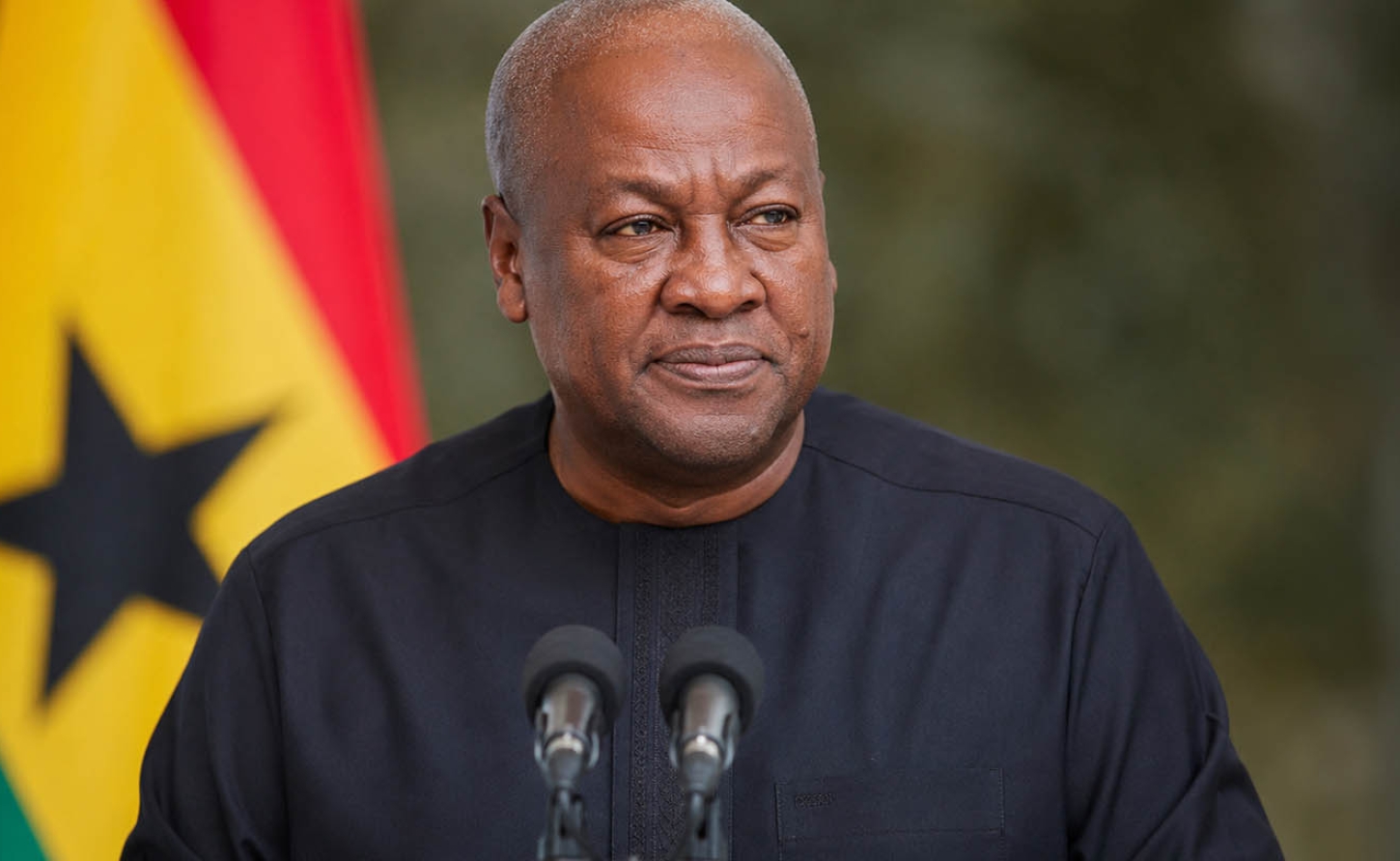
His Excellency John Dramani Mahama, President of the Republic of Ghana
A generation of PNP Youth Organisation veterans — schooled in the 1970s when Nkrumah’s books were compulsory reading — has opened its arms to Ghana’s President as Emancipation season meets the reparations fight.
KINGSTON, Jamaica | 2 August 2026 - The men and women who ran the People’s National Party Youth Organisation through its most militant decade have issued a public welcome to His Excellency John Dramani Mahama, President of the Republic of Ghana, framing his arrival in Kingston not as a matter of protocol but as a homecoming.
“The PNPYO Past Members open our hearts and arms,” their statement begins, before registering a complaint that doubles as a compliment. Four days, the veterans say, will not allow a visiting African head of state to fully feel “the deep love of our African Jamaican people towards Africa and particularly, for our Progressive African Anti-Imperialist Leaders.”
Mahama landed in Kingston today at the head of a four-day official visit running through Wednesday, 5 August, as a special guest of Jamaica’s Emancipation and Independence celebrations. Accra has framed the trip as a continuation of the relief Ghana extended after Hurricane Melissa — solidarity offered in the wreckage, now returned as a ceremony.
The Resolution the Empires Would Not Vote For
The PNPYO veterans single out one achievement above all others: the resolution Ghana carried at the United Nations declaring the transatlantic slave trade and chattel enslavement the gravest crime against humanity. They call it a landmark, and it is. But the statement is generous where it could have been surgical.
The General Assembly adopted the declaration on 25 March 2026 — the International Day of Remembrance of the Victims of Slavery — by 123 votes in favour, 52 abstentions, and three against. The three were Argentina, Israel and the United States. The 52 abstentions included the United Kingdom and the entire European Union bloc.
That column of abstentions is the reparations question in miniature. Not one of the European powers that built its wealth on the trade could bring itself to vote yes to a text that merely names what happened. Mahama, who spoke ahead of the vote on behalf of the 54-member African Group, secured a text that urges member states towards formal apologies, the return of stolen artefacts, financial compensation and guarantees of non-repetition. The resolution is not legally binding. It is politically unavoidable.
When Nkrumah Was Compulsory Reading
The heart of the statement is not diplomatic at all. It is a memoir.
The veterans recall Dr Kwame Nkrumah — first President of Ghana, founding architect of the Organisation of African Unity — as a man whose books were required study inside what they describe, without apology, as a “strongly anti-imperialist and militant youth organization.” They name him among the principal fathers of Pan-Africanism. They credit him with educating, inspiring and motivating a Jamaican generation in the Black liberation struggles and in the vision of a united Africa.
And they record the borrowing that mattered most: in the mid-1970s the PNPYO took Nkrumah’s slogan as its own. Forward Ever, Backwards Never. A Ghanaian phrase, shouted in Jamaican meeting halls, by young people who had never seen Accra.
This is what the tribute is actually documenting: a transatlantic intellectual supply line, running east to west, at a moment when the Caribbean left was building its politics out of African material. The 1970s PNPYO did not admire Nkrumah from a distance. It studied him, argued him, and organised by his light.
Two Parties, Two Augusts
The statement then reaches for a detail most Jamaicans have forgotten and most Ghanaians no longer discuss: that Ghana, too, once had a People’s National Party.
Founded in 1979 by Haji Imoru Egala on explicitly Nkrumahist ground, Ghana’s PNP claimed the Nkrumah inheritance, carried Hilla Limann to the presidency, and governed the Third Republic until it was swept away by the coup of December 1981. Two parties, one name, one ideological wellspring — the coincidence the veterans point to is real.
There is a second correspondence the statement gestures towards. It speaks of Jamaican soil soaked with African blood for emancipation from chattel slavery, and dates that emancipation to August. Full freedom came on 1 August 1838, when the apprenticeship system finally collapsed. A century later, in the summer of 1938, Jamaican workers rose in the labour rebellion that produced the trade union movement — and, that September, the People’s National Party itself.
Two Augusts, a hundred years apart, both bought with the same currency. The PNPYO’s history sits inside that sentence whether the drafters intended it or not.
“May this visit strengthen the bridge across the Atlantic, unite our people, and inspire the next generation to continue carrying the torch of Pan-African solidarity forward.”
A Programme Built for Ancestors
Mahama’s itinerary reads as though it were drafted by the same instinct that produced the PNPYO statement. He is to join Sir Hilary Beckles — Vice-Chancellor of the University of the West Indies and Chairman of the CARICOM Reparations Commission — for a high-level Reparations Dialogue at Mona. He will lay a wreath at the shrine of Marcus Mosiah Garvey at National Heroes Park. He will travel to St Ann to walk among the preserved Ghanaian Village Houses at Seville Heritage Park.
The working half of the visit is no less pointed: an address to a joint sitting of Parliament at Gordon House, bilateral talks with Prime Minister Andrew Holness on trade, culture and South-South cooperation, a trade and investment dialogue, a tour of the Kingston Freeport, and a separate engagement with Opposition Leader Mark Golding. He will attend Mello-Go-Roun as Jamaica marks 64 years of independence, and a state dinner at King’s House hosted by the Governor-General, Sir Patrick Allen, and Lady Allen.
The Garvey wreath is the sharpest item on the list. Garvey’s movement gave Nkrumah his first political vocabulary; Nkrumah gave the PNPYO theirs. A Ghanaian president standing at that shrine closes a circuit that took a full century to complete.
Akwaaba, in Both Directions
The veterans close by telling Mahama he is among family, and by asking that the visit inspire a next generation to carry the torch forward. It is a handover as much as a greeting — an older cohort acknowledging that the Pan-Africanism they learned from imported paperbacks now needs someone younger to carry it.
Whether Jamaica’s current youth movements have read Nkrumah is another question, and not one the statement asks. What it does establish is that the ideas travelled, took root, and are still standing well enough to greet a Ghanaian head of state at the door.
Welcome to Jamaica, President Mahama. Akwaaba.
— 30 —
