
DIASPORA | Jamaica Asks Its Diaspora to Bankroll a Hurricane Rebuild That Took a Year to Organise
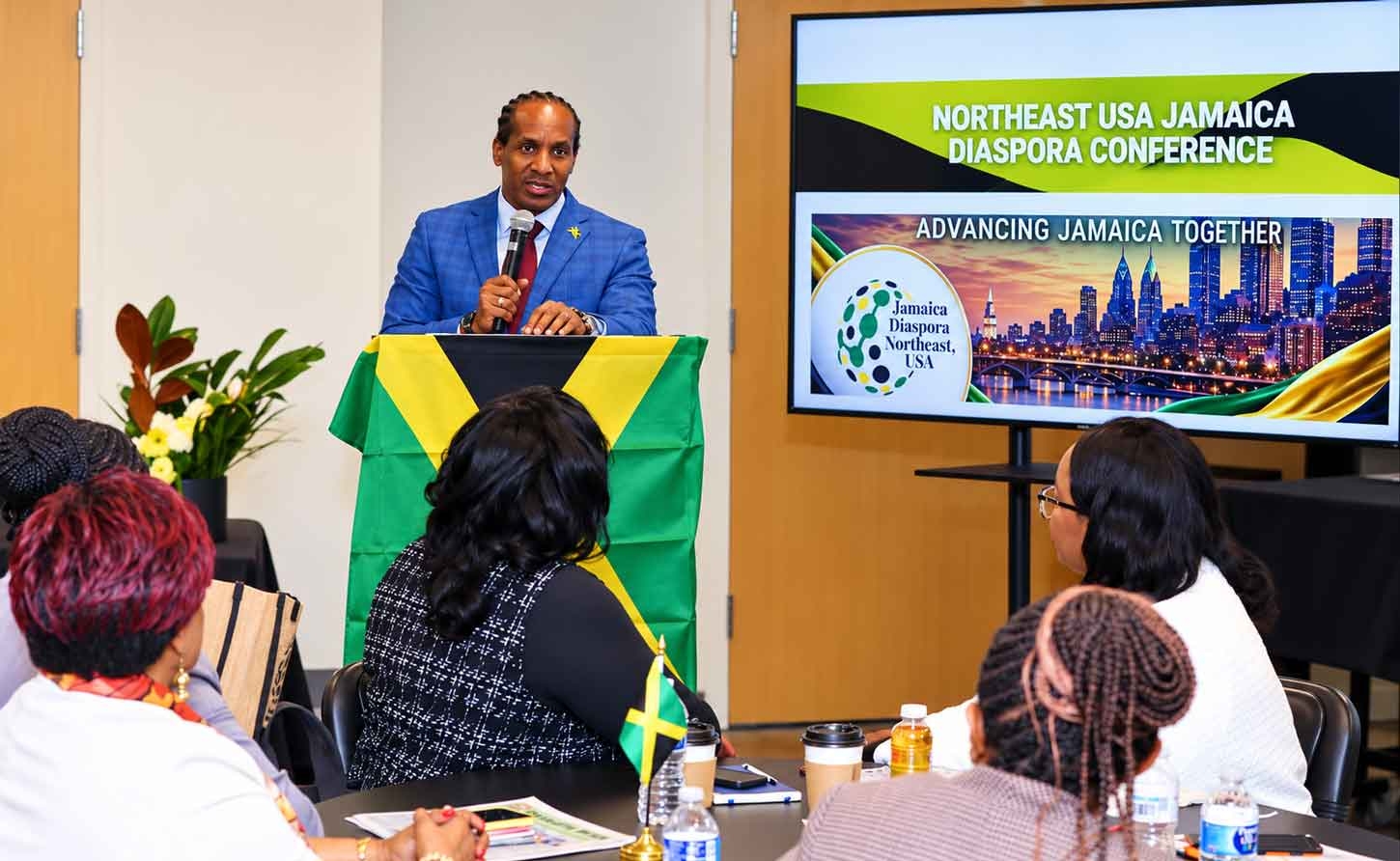
Minister of State in the Ministry of Foreign Affairs and Foreign Trade, with responsibility for diaspora affairs, Hon. Alando N. Terrelonge, delivers the keynote address at the opening of the second Jamaica Diaspora Northeast USA Conference at Temple University in Philadelphia, Pennsylvania, on Friday, October 23, 2026. Photo by Derrick Scott.
Minister of State Alando Terrelonge told 300 delegates at Temple University that Jamaicans abroad hold the keys to post-Melissa reconstruction. The numbers say they have been paying the mortgage all along.
MONTEGO BAY, Jamaica, OCTOBER 26, 2026 -Calvin G. Brown | Diaspora | WiredJa— When the second Jamaica Diaspora Northeast USA Conference closed its two-day run at Temple University in Philadelphia on Saturday, delegates left with an unambiguous assignment from Kingston: come home with your chequebooks, your engineering degrees and your Washington address books, because Jamaica cannot rebuild from Hurricane Melissa alone.
The messenger was Alando Terrelonge, Minister of State in the Ministry of Foreign Affairs and Foreign Trade, who used Friday’s opening session to list the sectors where the Government wants diaspora money and muscle: housing, renewable energy, electricity and water systems, climate-smart agriculture, logistics, digital services and tourism. That is, give or take, the entire economy.
It was a confident pitch, delivered to more than 300 professionals, investors, educators and community leaders gathered under the theme “One Diaspora, One Vision: Advancing Jamaica Together”. It was also an audacious one, because the people in the room had already paid.
The bill has already been settled
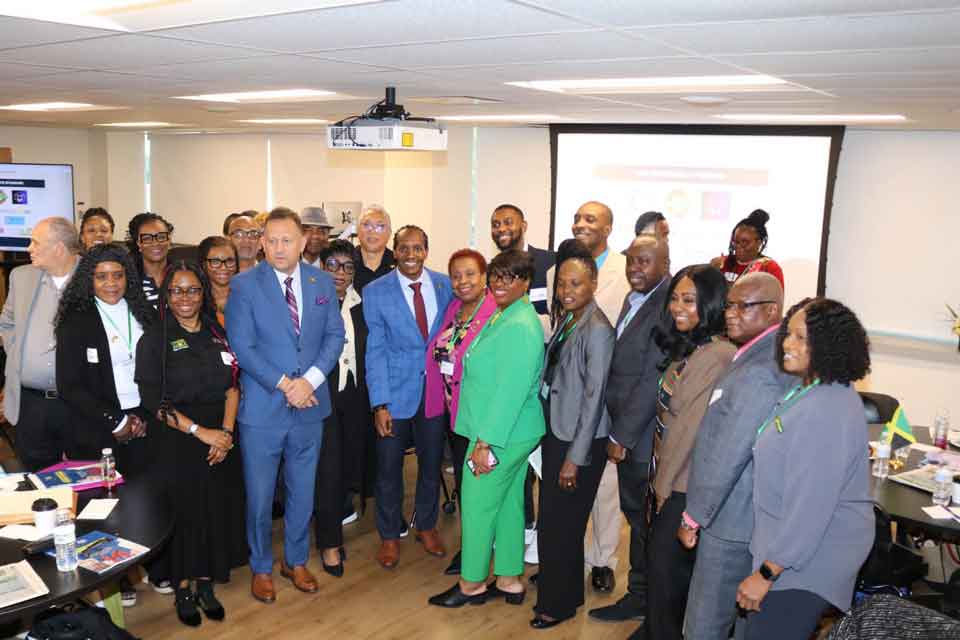
Minister of State in the Ministry of Foreign Affairs and Foreign Trade, with responsibility for diaspora affairs, Hon. Alando N. Terrelonge, Center poses for a group photograph with participants at the second Jamaica Diaspora Northeast USA Conference at Temple University in Philadelphia, Pennsylvania, on Friday, October 23, 2026. Photo by Derrick Scott.
Set that against the industry it is quietly replacing. Tourism earned US$2.5 billion in the first eight months of 2026 — down 18 per cent on last year, with first-quarter stayover arrivals off 27.5 per cent. Remittances brought in US$1.78 billion in the first six months alone, growing while tourism shrank. On current pace the diaspora will out-earn the hotels this year.
The money does not reach the Treasury directly; it reaches the kitchen table, where it pays the rent and buys the food that a lost tourism pay packet no longer covers. That is not charity from abroad. It is Jamaicans investing in the place most of them still call home.
Those are not pledges. They are transfers already made — the kitchen-table economics of nurses in the Bronx and bus drivers in Newark sending money to a mother whose roof is now in a neighbour’s yard. The diaspora did not wait for a conference to respond to Melissa. It responded the week the storm hit.
The diaspora did not wait for a conference to respond to Melissa. It responded the week the storm hit.
So the question hanging over Temple University was never whether the diaspora will give. It is what Jamaica is offering in return — and on that score, the minister was candid to the point of self-incrimination.
The Government, he said, is “examining ways” to make it easier for Jamaicans overseas to participate in national development by reducing institutional barriers to trade, investment, business and philanthropy. Also “under consideration”: improved access to investment opportunities and seats on advisory boards, knowledge-transfer programmes and policy committees.
A year after a Category Five hurricane, the barriers are still being examined and the seats are still being considered. The diaspora, meanwhile, has been asked to deliver first and wait for the paperwork.
An authority that opens on November 1
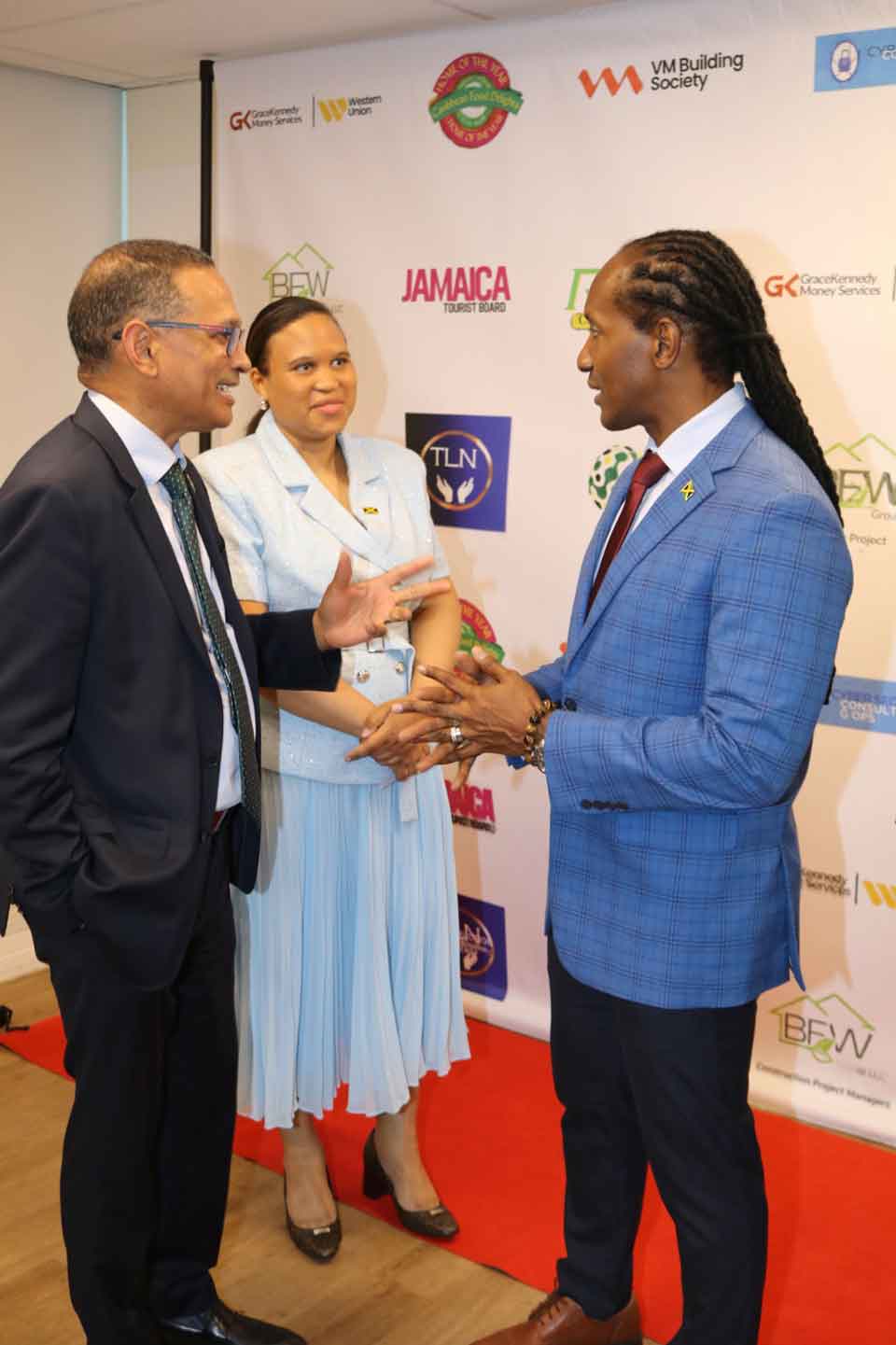
Minister of State Alando N. Terrelonge, Brian Wallace, Jamaica’s Ambassador to the United Nations; and Lishann Salmon, Chargé d’Affaires at the Embassy of Jamaica in Washington, D.C., share in a discussion during the second Jamaica Diaspora Northeast USA Conference. Photo by Derrick Scott.
NaRRA was announced in November 2025. Its enabling Act was tabled in March, passed by the House of Representatives in April and by the Senate in May. This month the authority signed a five-year lease on a downtown Kingston headquarters while recruitment continued.
A year from catastrophe to an office with a door is not a scandal by regional standards. But it is a sobering backdrop to a speech that invited diaspora engineers and architects to “explore opportunities” inside an agency that, on the day he spoke, had not yet opened for business.
The case Kingston can actually make
To be fair to the minister, he brought a serious economic argument to Philadelphia, and it deserves a hearing. Jamaica’s debt-to-GDP ratio fell from 144 per cent a decade ago to 62.4 per cent before the hurricane.
It now stands near 70 per cent — a rise that would have been ruinous in 2013 and is survivable in 2026. International reserves stand at US$6.64 billion.
Moody’s and S&P Global have kept positive outlooks. The Bank of Jamaica projects growth of one to three per cent for 2026/27, and the Planning Institute of Jamaica expects a return to quarterly growth between October and December.
“I would rather have one per cent growth than minus two per cent growth every day,” Terrelonge said. It is the voice of a country that earned its credibility the hard way, under a fiscal programme whose transparency was policed by the Economic Programme Oversight Committee — the very model on which JAMRROC is built.
A diaspora investor can bank on that record, and the Government is right to put it front and centre.
Lobby Washington for us
The sharpest ask was also the least examined. Noting that 82.1 per cent of Jamaicans live within five kilometres of the coast, Terrelonge declared climate change “an existential threat” and urged Jamaican-Americans to use their professional networks to press for stronger international action.
In plain terms, Kingston is asking its citizens abroad to do the diplomatic lifting that Jamaica’s own embassy cannot — in a capital where the Trump regime has pulled the United States out of the Paris Agreement for a second time. It is a reasonable request. It is also a measure of how little leverage a small island has, and how much it is now borrowing from its sons and daughters in the north.
Give back — but to what?
The conference closed with an invitation to Jamaica’s 65th Independence celebrations next August, themed “Celebrate, Connect, Experience, Give Back”. The last two words carry the weight. Through Adopt-a-Clinic and diaspora-backed farm projects, Jamaicans abroad have already shown they will build as well as send.
The test is not their generosity. It is whether, when NaRRA’s doors open on November 1, there is a chair at the table with a diaspora name on it — or merely a donation box by the door.
— 30 —
