
DIASPORA | A Billion-Dollar Ask: Agro-Invest Turns to the Diaspora a Year After Melissa
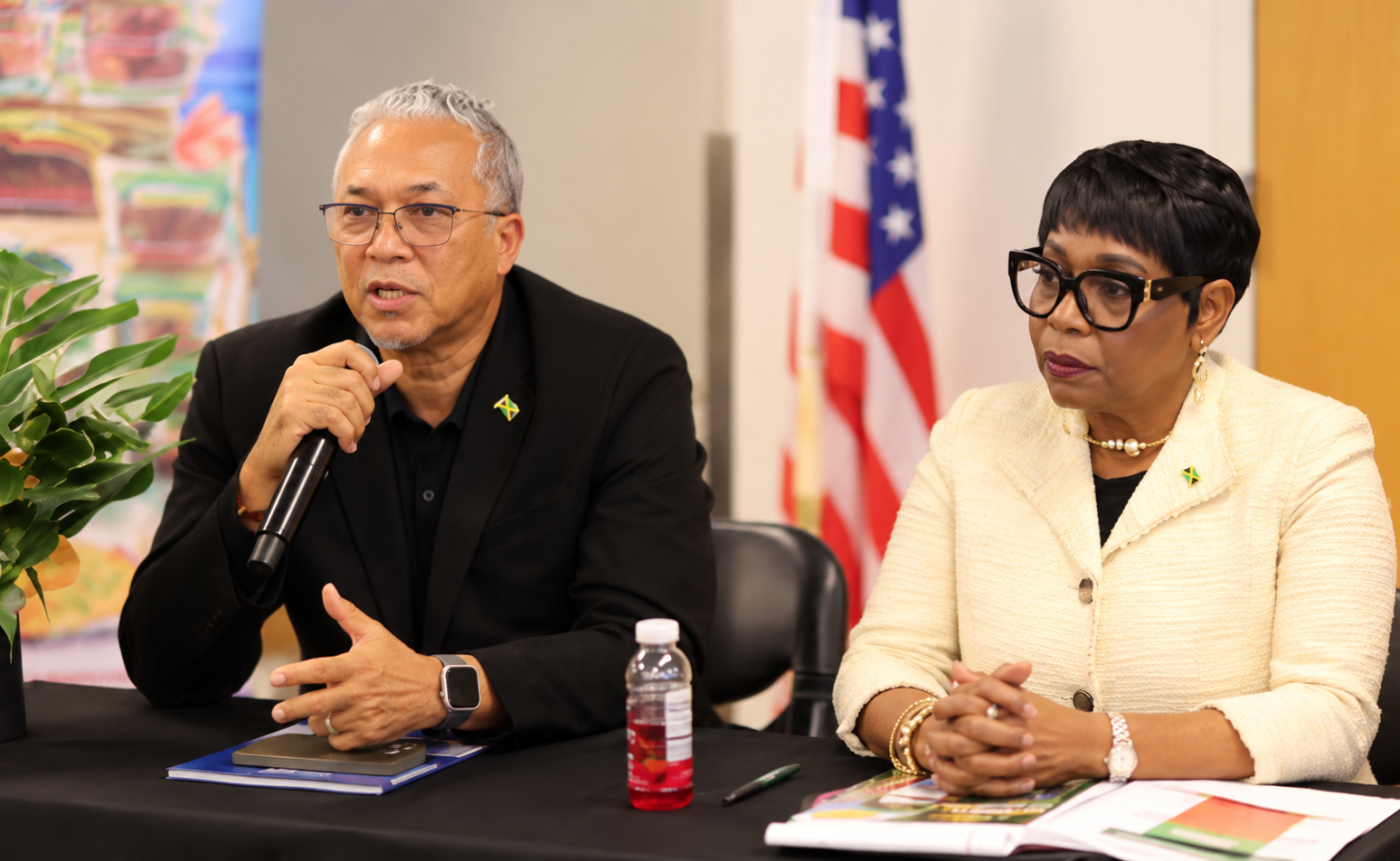
Agro-Invest CEO Vivion Scully inviting diaspora investors and professionals to partner in an ambitious drive to mobilise US$1 billion in investment for the island’s agricultural sector over the next decade.
A year after Hurricane Melissa flattened the breadbasket of St Elizabeth, Jamaica's investment agency has asked overseas Jamaicans for a billion US dollars over ten years. The money is needed. The follow-through is the question.
MONTEGO BAY, Jamaica, October 26, 2026 — Two days before the first anniversary of Hurricane Melissa tearing through the farm belt of St Elizabeth, the yam fields of Trelawny and the hillside holdings of South St James and Hanover, Jamaica's Agro-Investment Corporation stood before a hall of Jamaicans in Philadelphia and asked them for a billion US dollars.
Not all at once. Over ten years. And not merely cash — Agro-Invest CEO Vivion Scully was careful to say — but the business know-how, supply contracts and buyer relationships that overseas Jamaicans have accumulated over decades of making a living abroad.
The pitch came on Friday, October 23, at the Second Annual Jamaica Diaspora Northeast USA Conference at Temple University, held under the theme "From Diaspora Capital to National Impact: Investing in Jamaica's Future." By Scully's account it was an open invitation: bring Agro-Invest a specific interest, a market connection or an investment proposal, and the agency will help assess it and move it forward.
"The diaspora brings more than money. It brings customer relationships, business experience and technical expertise that can help Jamaican enterprises grow," Scully told the gathering. "We want to connect those strengths with credible projects and capable operating partners."
The arithmetic of the ambition
The billion-dollar figure is not plucked from the air. Jamaica's food import bill reached an estimated US$1.46 billion in 2025, with roughly 40 per cent of it sourced from the United States — much of that feeding tourists in hotels that import what Jamaican farmers could grow. CARICOM's "25 by 2025" pledge to cut the regional food import bill by a quarter came and went. Jamaica missed it.
Then came Melissa. The Category 5 storm made landfall on October 28, 2025, and the Ministry of Agriculture's assessment put sector losses at J$29.5 billion — roughly US$192 million — with some 32,400 hectares of vegetables destroyed and 47,500 farmers affected. Coffee lost 40 per cent of its trees. Orchards, apiaries and the island's largest egg farm were all hit. Agriculture had been on course for a record 930,000-tonne crop year. Instead, the minister conceded Jamaica would be buying fruit and vegetables abroad to fill the gap.
Against that backdrop, US$100 million a year in new money for production, agro-processing, cold storage, distribution and technology — the five areas Scully named — would be transformational. Cold storage alone has long been the missing link between a St Elizabeth harvest and a Philadelphia supermarket shelf.
Pledges are not ploughs
To his credit, Scully did not oversell. He said success would be judged not by what is pledged but by capital actually deployed and results on the ground: businesses built, jobs created, reliable markets for farmers, exports shipped. Projects, he said, will be screened for demonstrated customer demand, sound business plans, appropriate financing and clear accountability.
Pledges are not ploughs. The diaspora has sat through two decades of investment conferences and gone home with glossy brochures.
That is the right language. It is also language the diaspora has heard before. Jamaicans abroad have sat through two decades of investment conferences and gone home with glossy brochures and little else. Land-title tangles, praedial larceny, a bureaucracy that measures approvals in seasons rather than weeks, and the memory of promised partnerships that evaporated once the ballroom emptied have made the diaspora a wary investor in its own homeland.
Scully's own phrase acknowledges the problem: "Our responsibility is to make the route from interest to investment clearer." The question Agro-Invest must now answer is how. What is the turnaround time for a proposal sent to its inbox? Who vets the "capable operating partners", and what protects an overseas investor's capital from a partner who proves less capable than advertised? And what happens to a diaspora-funded greenhouse when the next Melissa arrives — is there an insurance product behind this plan, or only hope?
The conference offered no answers to those questions. Agro-Invest will need to supply them publicly, and soon.
What the diaspora should demand
If the billion is to be real rather than rhetorical, the diaspora should insist on three things before a single wire transfer clears: a published pipeline of vetted projects with named operating partners; an annual public ledger of capital pledged against capital actually deployed; and a seat for diaspora investors in the agency's governance, not merely on its mailing list.
Agro-Invest has issued the invitation. The diaspora's reply should be: show us the route, and we will walk it. The farmers of southern and western Jamaica, a year on from Melissa, cannot afford to wait another decade for the follow-through.
Interested investors can contact Agro-Invest at
— 30 —
