
JAMAICA | The Solitary Death of the Jamaican Father
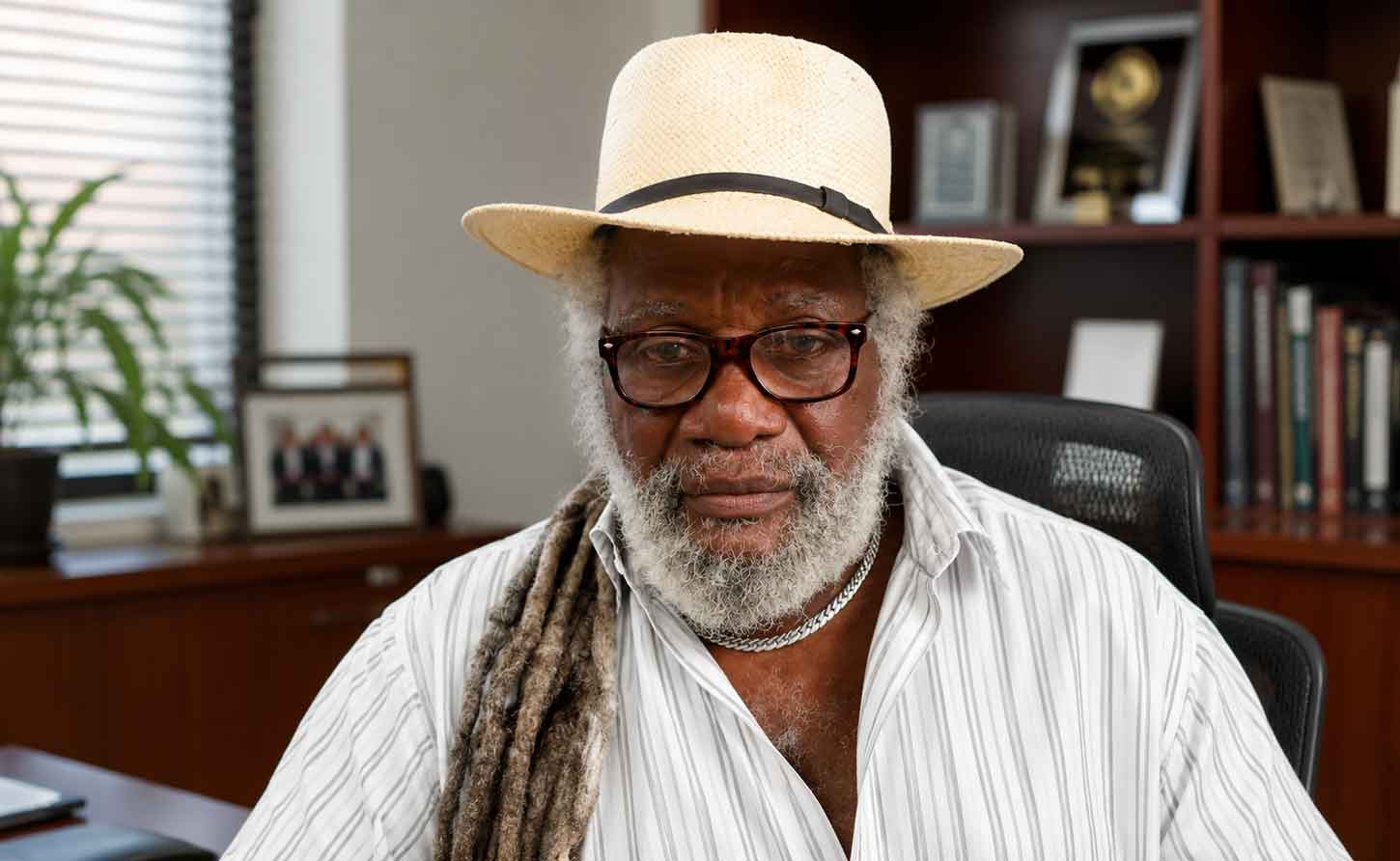
O. Dave Allen is a community development advocate and political commentator based in Montego Bay, Jamaica.
MONTEGO BAY, Jamaica, August 4, 2026 - O Dave Allen - There is a quiet tragedy unfolding across Jamaica. It is not always visible in the crime statistics, the economic reports or the speeches about national development. It is found in the silent rooms of aging parents, in nursing homes where fathers wait for visits that rarely come, and in large family houses that were built with sacrifice but now stand almost empty.
Many fathers spent their strongest years building homes, paying school fees, working long hours and denying themselves so their children could have more. They carried the burden of provision, often without complaint.
Yet when the children became successful and the father became old, frail or no longer economically useful, too many were treated as though their purpose had expired.
This is not merely a private family problem. It is a national crisis of values. A society that teaches children to measure success by how far they can move away from home, but does not teach them how to remain responsible for the people and communities that made that success possible, is building progress on a weak foundation.
In too many Jamaican households, the family is understood as the mother and her children, with the father pushed to the edge. He may be expected to provide money, discipline and protection, but is not always embraced as an equal emotional member of the family.
When relationships break down, he can become an appendage, a visitor, or simply the person who is called when a bill must be paid.
That pattern has consequences. Boys grow up without a daily example of responsible manhood. Girls may grow up without the security and guidance of an engaged father. Mothers are left carrying impossible burdens. Fathers become disconnected, resentful or emotionally absent. The cycle then repeats itself in another generation.
Migration has deepened the wound. For many middle-class Jamaican families, the ultimate sign of achievement is to educate the children overseas. Parents invest everything in that dream.
They build a house with a room for each child, believing that education will strengthen the family and secure its future. But the children settle abroad, establish careers and raise families of their own. The rooms remain prepared, but the children do not return.
The mansion that once represented hope becomes a monument to absence. The father sits on the veranda remembering when the house was full. The mother waits for telephone calls across time zones.
Christmas becomes shorter. Funerals become the main occasions when the family gathers. What was built as a family home slowly becomes a lonely old-age residence for two people, and sometimes for one.
Eventually, the mother may be invited to join the children overseas. She may go to help care for grandchildren or to access health services. Yet this move can carry its own pain. She leaves behind her church, friends, community, familiar food, climate and daily routines.
She may be physically surrounded by family but emotionally isolated in an unfamiliar society. Loss of independence, loneliness and dislocation can accelerate decline.
The father may be left behind because he refuses to migrate, because there is no space for him, because he is considered difficult, or because nobody is prepared to take responsibility for his care. He may end up in a nursing home, cared for by strangers after spending his life caring for others. His children may pay the bill, but money is not companionship.
A monthly transfer cannot replace a familiar voice, a hand on the shoulder, a Sunday meal or the dignity of belonging.
Nursing homes have an important role and many caregivers serve with compassion. The problem is not the existence of professional care. The problem is when institutional care becomes a convenient substitute for family responsibility, human contact and love.
The collapse of the family weakens the wider community. Strong communities are not created by concrete, roads and buildings alone. They are created by relationships, memory, discipline, service and a sense of obligation to one another.
When families become fragmented, communities lose the people who once supervised children, passed on values, settled disputes, cared for the vulnerable and maintained a sense of belonging.
The result is visible everywhere. Children are raised by screens, peers or exhausted grandparents. Young people search for identity in gangs, consumer culture and social media. Elderly residents live alone behind grills. Neighbours no longer know one another.
Churches and community organisations struggle to replace the support once provided by extended families. Government is then expected to carry social burdens that families and communities once shared.
Jamaica cannot achieve sustainable development while its social foundation is crumbling. Economic growth without family stability produces citizens who may be qualified but disconnected, materially successful but emotionally rootless.
A country cannot continue exporting its children, isolating its elderly, marginalising fathers and then expect social cohesion to emerge by accident.
We need an honest national conversation about what children owe their ageing parents, what families owe fathers beyond their earning years, and what responsibility Jamaicans abroad retain toward the communities that raised them.
This must not become an argument against migration or education. Both have created opportunities and lifted many families out of poverty. The issue is whether advancement must always require abandonment.
Families should plan for ageing with the same seriousness that they plan for education, home ownership and migration. Adult children must discuss care arrangements before a crisis occurs. Fathers must be encouraged to remain emotionally engaged, not merely financially responsible.
Communities, churches and civic organisations should develop visiting networks, day-care programmes for seniors, respite support and community-based elder care that allows older people to remain connected to familiar surroundings.
Public policy must also respond. Jamaica needs stronger standards for elder care, more support for caregivers, better community health services, incentives for multigenerational housing, and programmes that reduce the isolation of older people.
Employers and schools should help build a culture in which caring for parents is treated as a social duty rather than a private inconvenience.
But policy alone cannot repair what indifference has broken. The deeper change must come from our values. We must stop treating fathers as disposable after they have provided. We must stop confusing financial support with love. We must stop boasting about successful children abroad while the parents who made that success possible are left lonely at home.
Every aging father deserves more than a bed in a nursing home and an occasional telephone call. He deserves dignity, companionship and the assurance that his sacrifices have not been forgotten.
Every mother deserves to grow old without being uprooted from everything familiar simply because the family has scattered. Every child should understand that success carries obligations backward as well as forward.
The strength of Jamaica will not be measured only by the number of university graduates we produce, the size of our houses or the amount of remittances sent home. It will also be measured by how we care for those who built the foundation on which we now stand.
A nation that abandons its elders is not progressing. It is losing its memory, its conscience and its soul. Jamaica must rebuild the family before the loneliness behind too many closed doors becomes the final inheritance we pass to the next generation.
-30-
O. Dave Allen is a community development advocate and political commentator based in Montego Bay, Jamaica.
