
JAMAICA | Ten Days to Retract: Brown Burke Puts Parliament’s Top Brass on Legal Notice
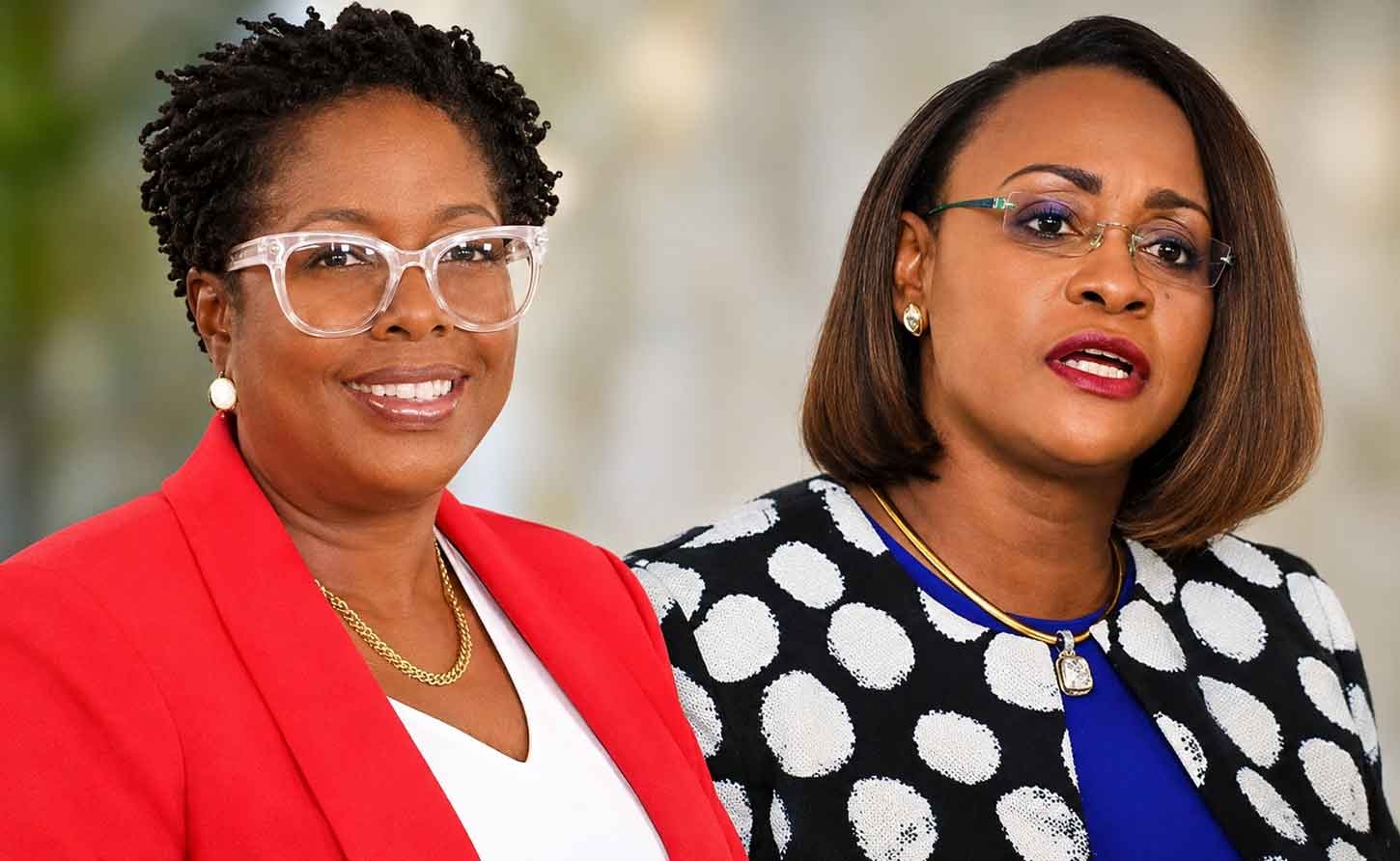
Member of Parliament for St Andrew South Western, Dr Angela Brown Burke, and House Speaker Juliet Holness
The PNP Chairman’s attorneys want a withdrawal, an apology and compensation from the Speaker, the Senate President and Senator Charles Sinclair over claims that she assaulted Juliet Holness. The Supreme Court is the next stop.
MONTEGO BAY, Jamaica, November 11, 2026 — The fight over what happened in the aisle of Gordon House on November 3 has left the chamber and is marching towards the courthouse.
People’s National Party Chairman and St Andrew South Western MP Dr Angela Brown Burke has served formal letters on House Speaker Juliet Holness, Senate President Tom Tavares-Finson and Senator Charles Sinclair, giving each ten days to act over public statements alleging that she physically assaulted or pushed the Speaker as the Speaker left the chamber. The PNP confirmed the move in a statement on Tuesday, adding that Dr Brown Burke “has consistently denied those allegations”.
The party’s language was measured. The letters, it said, give the three an opportunity to retract. Her lawyers were blunter. The Gleaner, which reports having seen the correspondence, says the letters came from the law firm Chen Green & Company, were delivered to Gordon House on Tuesday, and brand the statements libellous, complaining that they paint the MP as party to “termagant like behaviour”. The attorneys reportedly want three things from each recipient: a written withdrawal and apology in terms they approve, a written undertaking not to repeat the assault claim, and money for the injury to her reputation.
Refuse, and the PNP says the steps open to its chairman include claims in the Supreme Court of Jamaica.
Three gavels, one allegation
Consider who is being put on notice. Not backbench hecklers or anonymous social media accounts, but the presiding officer of the House, the presiding officer of the Senate and, according to The Gleaner, his deputy. These are the people Jamaica trusts to referee its Parliament.
Mrs Holness has been unequivocal. She told Nationwide News she was shoved, and in a radio interview cited by Gleaner columnist Dr Michael Abrahams she said the MP “bounced me on my side with her entire body” before pushing her shoulder. Senator Tavares-Finson, The Star reported, went further still, condemning an “atrocious attack” on the Speaker and demanding the harshest sanction the Standing Orders allow, along with a full apology. Senator Sinclair, The Gleaner reports, was also among those calling for sanctions.
Dr Brown Burke’s answer has been equally flat. She told Nationwide the shoving claim is a lie. She does not claim sainthood: she admits calling the Speaker a coward, and she was standing in the aisle as Mrs Holness departed, which Dr Abrahams notes is itself contrary to parliamentary protocol. But an insult is not an assault, and bad manners are not battery.
What the footage shows, and what it doesn’t
The evidence is contested, and readers should treat it that way. Nationwide’s account of the video has the two women’s shoulders colliding as the Speaker walked past the MP. Dr Abrahams wrote that a clip circulated by the Jamaica Labour Party on Instagram appears to show a hand shoving the Speaker’s shoulder, while the official Public Broadcasting Corporation of Jamaica recording shows no such hand contact and has the MP standing still, not advancing. His conclusion was that the assault allegation appears unfounded.
An insult is not an assault, and bad manners are not battery.
That is one columnist’s reading, not a judge’s finding. But it is precisely why the letters matter. An accusation of physically attacking the Speaker is about as serious a charge as can be laid against a legislator. If it is true, those who made it should have no difficulty standing by it. If it is not, three of the most senior officers of the legislature have helped to brand a colleague violent before the nation.
The PNP put the principle plainly: those who hold institutional authority owe the public statements that are accurate, fair and backed by fact, and the gravity of a charge is no substitute for proving it.
The Cuba question underneath
None of this happened in a vacuum. On October 28 Jamaica abstained on the annual United Nations resolution calling for an end to the United States embargo against Cuba, the first time since the resolution was introduced in 1992 that Kingston withheld its yes. It was a jarring turn for a country whose Michael Manley stood with Barrow, Williams and Burnham in 1972 to recognise Havana together. A day before the vote, the House had passed a Government motion on Cuba with no signal that the policy was shifting.
St Andrew Western MP Anthony Hylton’s censure motion followed on November 3. He spoke. Leader of Government Business Floyd Green replied, dismissing the motion as misconceived and denying any deception, then invoked Standing Order 38 to close the debate. The Speaker put the question; Opposition Leader Mark Golding called for a division; no vote was taken in the uproar and the sitting was adjourned. The Government considers the matter closed. The Opposition wants the debate resumed.
So the country is left with two unanswered questions, and they are joined at the hip. Was Parliament misled about Cuba? And was a member falsely accused in the chaos that followed the attempt to ask?
The first belongs to the House. The second, unless three presiding officers retract or produce their proof, may soon belong to a judge. The ten days are running.
-30-
