
JAMAICA | Langrin's Inheritance: A Steady Rate, a Rising Price Line, and an Island Still Digging Out
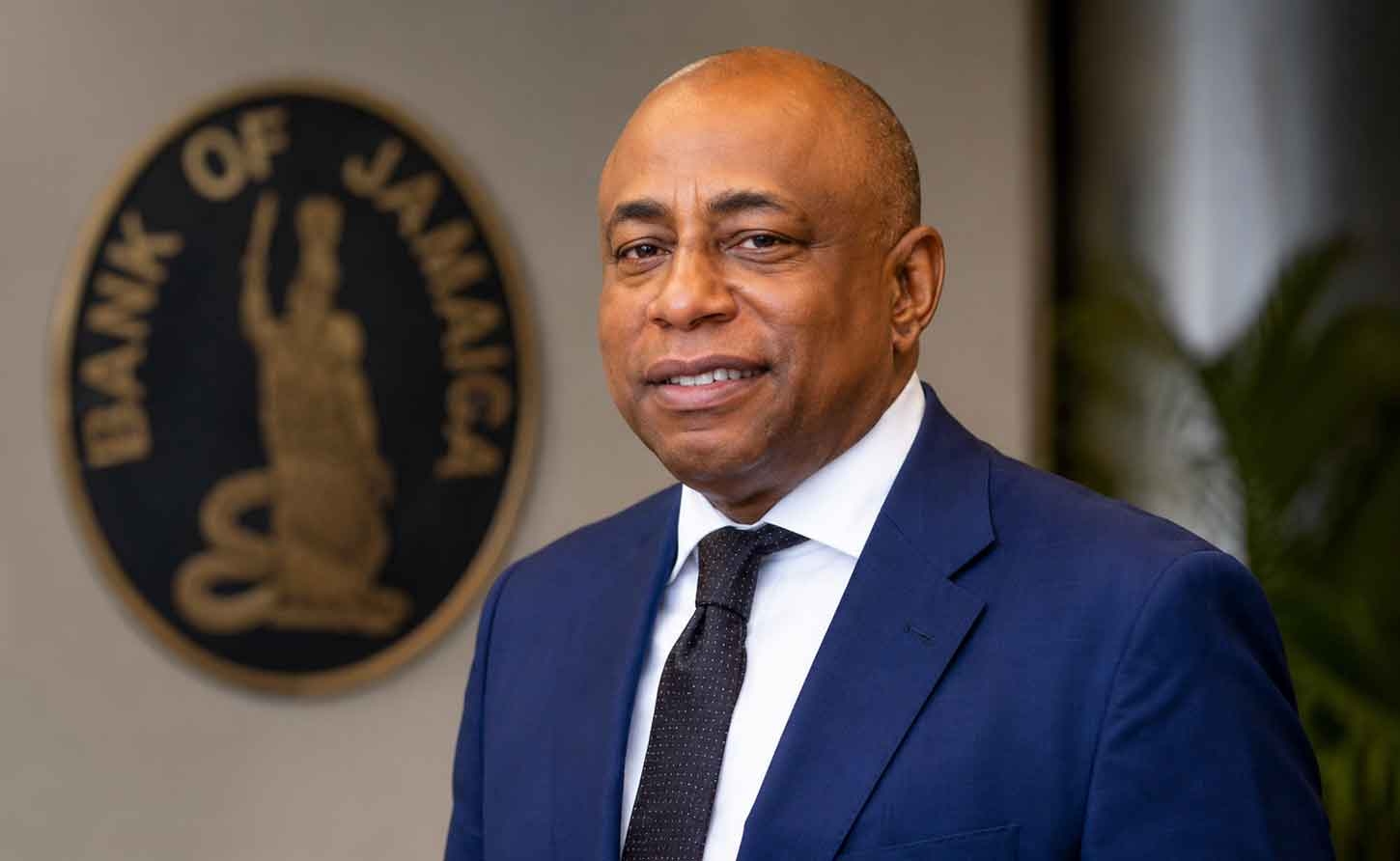
New Governor of Bank of Jamaica Dr. R. Brian Langrin
Two days into the job, Jamaica’s new central bank Governor delivered an MPC decision — and set out the terms on which he intends to be judged.
KINGSTON, Jamaica, August 22, 2026 - Dr. R. Brian Langrin had been Governor of the Bank of Jamaica for less than forty-eight hours when he walked into the Bank’s Kingston auditorium on Thursday, 20 August, to tell the country that interest rates would not move. It was a curious debut. The most consequential number he announced was not one he had chosen.
The Monetary Policy Committee had met on 14 and 17 August, while Richard Byles was still in the chair, and voted to hold the policy rate at 5.50 per cent per annum. Langrin took office on 19 August. He told reporters he had been briefed on the deliberations and was satisfied the decision was supported by the data. What he added to it was a statement of intent.
“This commitment is clear: price stability is the foundation of Jamaica’s economic resilience, and Bank of Jamaica will act decisively to protect it,” the Governor said — in effect, the opening line of his tenure.
He signalled, too, that his term would give increased weight to digitalisation, financial inclusion and resilience — broadening access to formal financial services for small businesses and communities long shut out. It is an agenda that sits alongside the inflation mandate rather than inside it. Whether he gets room to pursue it depends on the numbers.
The Price Line He Inherits
Those numbers are not comfortable. STATIN recorded headline inflation at 7.5 per cent in July 2026, up from 6.7 per cent in June and 3.3 per cent a year earlier — a second consecutive month above the upper limit of the Bank’s four-to-six per cent target range.
Langrin attributed the July jump to three things: higher transport costs following the second phase of the 16 per cent taxi fare increase; the pass-through of higher international commodity prices into electricity rates and selected services; and rising agricultural prices amid worsening drought and heat. Each is, in the Bank’s reading, temporary. The MPC expects inflation to stay above target through the September quarter before easing as agricultural supply recovers and energy pressures decline.
The more awkward figure is core inflation — which strips out agricultural food and fuel, and therefore tells you whether price pressure is spreading rather than merely spiking. It rose to 5.2 per cent in July from 5.0 per cent in June and 4.3 per cent a year earlier. Small movements, but in the wrong direction. The Governor said inflation was a concern but that the Bank was not alarmed, noting that what it has faced so far are supply pressures it cannot reverse.
That is the honest limit of a policy rate. No interest rate set in Kingston lowers the price of crude oil or ends a drought.
“The message today is straightforward: the Bank is holding the policy rate steady because the current inflation pressures appear largely temporary, but we remain alert and ready to act if those pressures become more persistent.”— DR. BRIAN LANGRIN, GOVERNOR, BANK OF JAMAICA
Melissa’s Long Arithmetic
Behind the inflation print sits the larger inheritance. Hurricane Melissa, which struck on 28 October 2025 as a Category Five system, remains the defining fact of the Jamaican economy. The Planning Institute of Jamaica has put total loss and damage at J$1.952 trillion — roughly 57 per cent of 2024 GDP, and more than four times the cost of Gilbert.
Recovery has been slower than early optimism suggested. The PIOJ estimated a 5.9 per cent contraction in the January-to-March quarter and projected a further three to four per cent decline in the April-to-June period. The fiscal rule has been suspended under its escape clause to accommodate reconstruction. Langrin’s forecast for financial year 2026/2027 is real GDP growth of one to three per cent — a return to growth, but from a low floor.
Here is the vice. Reconstruction spending is, by design, expansionary, and the Bank has itself flagged it as an upside risk to inflation — so a Governor whose first duty is price stability must keep one eye on the very spending the country most needs. Tighten too early and you choke the rebuild. Wait too long and second-round effects harden into expectations.
The Cushions
He is not without cover. The foreign exchange market has held up: the rate appreciated by two per cent year-over-year as at 13 August, against a 2.2 per cent depreciation a year earlier — a meaningful reversal for an economy that imports most of what it consumes. Gross international reserves stood at US$6.7 billion, or 144.3 per cent of the measure considered adequate, and the banking system remains soundly capitalised.
Still, reserves peaked at a record US$6.8 billion in February, at 155.8 per cent of adequacy. The buffer is being drawn on — which is what buffers are for, but the Caribbean’s long experience is that they are easier to spend than to rebuild.
The Man and the Mandate
Langrin arrives well matched to the job. He spent more than fifteen years at the Bank in financial stability and economic research, served as resident adviser in financial stability at the IMF-administered Caribbean Regional Technical Assistance Centre (CARTAC) from 2017 to 2020, and was Executive Director at the Inter-American Development Bank from 2020 to 2022. He holds a doctorate in economics from Pennsylvania State University.
The CARTAC years matter more than they might appear. The new Governor has sat inside the balance sheets of other Caribbean central banks — small, open, import-dependent economies that receive their inflation from abroad and manage it with instruments of limited reach. That is a regional education, not merely a Jamaican one, and useful in a job where several of the decisive variables are set in Riyadh, Rotterdam and Washington.
He was careful, too, to credit Byles with strengthening Jamaica’s monetary policy framework and advancing the Bank’s institutional transformation. Central banking runs on credibility, and credibility is cumulative. Continuity was the point.
The next policy decision is due on 28 September. That one will be his.
— 30 —
