
JAMAICA | Government Breaks Silence on US Deportee Deal — Talks Underway
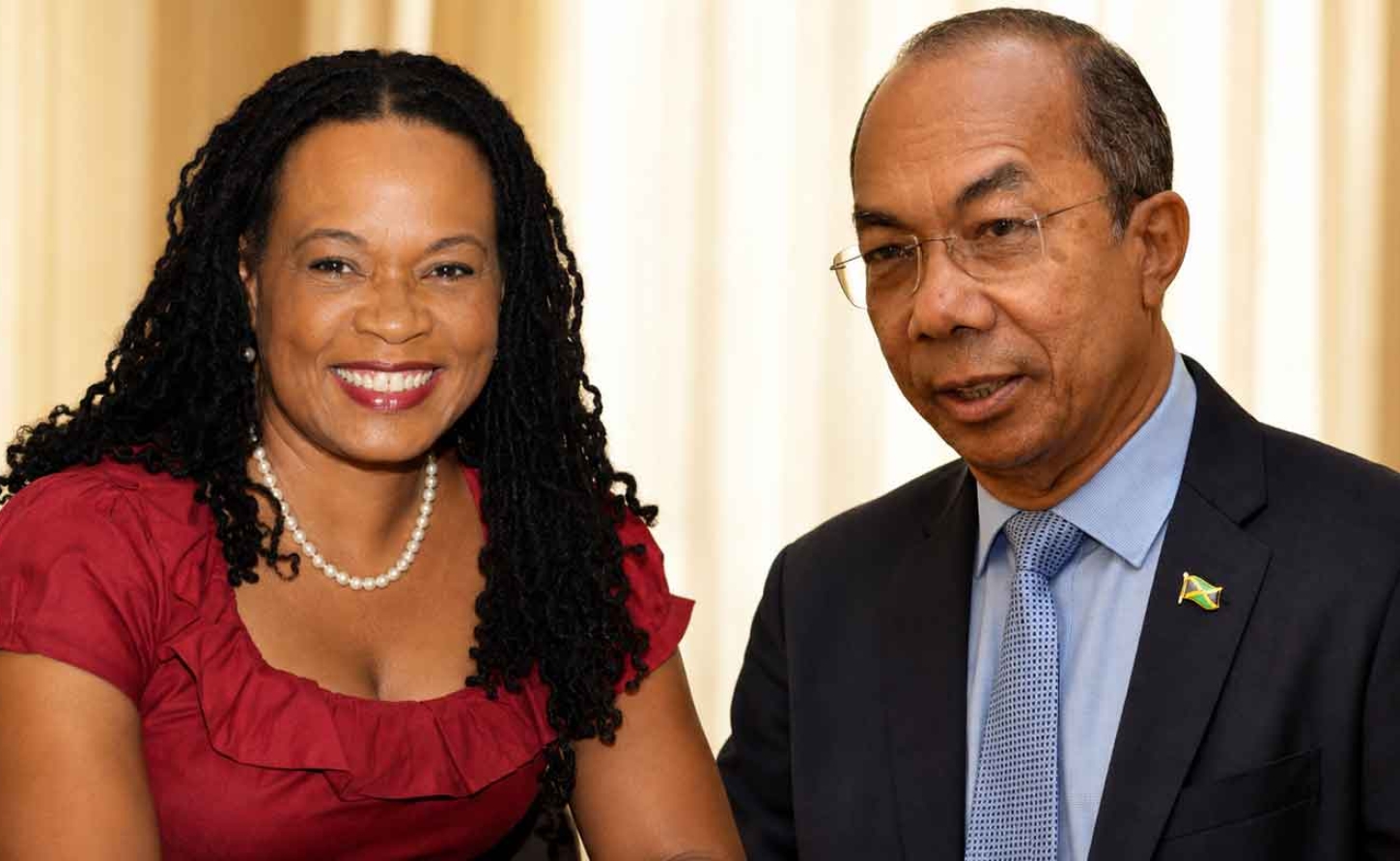
Opposition Spokesperson on Foreign, Regional and Diaspora Affairs, Senator Donna Scott-Mottley and National Security Minister Dr. Horace Chang.
Senator Donna Scott-Mottley’s demand for clarity on a reported Third-Country Nationals arrangement with the United States got an answer the same day — but the government’s confirmation raises as many questions as it settles.
MONTEGO BAY, Jamaica, June 16, 2026 - Senator Donna Scott-Mottley did not have to wait long for a response. Hours after the Opposition Spokesperson on Foreign, Regional and Diaspora Affairs called on the Holness administration to clarify reports that Jamaica was in talks to accept non-Jamaican deportees from the United States, National Security Minister Dr Horace Chang confirmed it: the talks are real, and a Memorandum of Understanding is on the table.
What Chang Confirmed
In a statement issued Tuesday afternoon, Chang said Jamaica is negotiating a framework that would allow third-country nationals — people deported from the US who are neither American nor Jamaican — to transit through the island en route to a third territory or back to their home countries.
He was emphatic that this is not an open-door migration scheme. “Jamaica is not opening its borders for an uncontrolled migration programme,” he said, describing the arrangement as the product of negotiation between “two sovereign partners,” not automatic acceptance of a US proposal.
The mechanics, as Chang laid them out, are tightly bounded. The US wants to send up to 25 individuals every two weeks, but Jamaica has built in a circuit breaker: if more than 10 transferees are awaiting onward movement at any point, the process pauses until conditions normalise. Persons with criminal records would not qualify. Washington, he said, would cover all costs.
The Questions Still on the Table
Scott-Mottley’s original statement was not really about whether such talks existed — by Tuesday morning, that was already public knowledge through media reports. Her demand cut deeper: who authorised the discussions, on whose behalf were they conducted, what legal status would transferees hold while in Jamaica, how long could they remain, and what assessment — financial, social, security — had been done before the country went anywhere near this kind of commitment.
Chang’s statement answers some of that. It does not answer all of it. He confirmed the existence of safeguards and a numerical ceiling, but he did not say who in government first opened the door to Washington on this, nor did he confirm whether Cabinet formally sanctioned the negotiations before they began.
Crucially, Scott-Mottley’s call for “an early statement to the country setting out the facts” was answered with a ministerial press release — not the parliamentary statement she explicitly requested, the kind of disclosure that would put the matter on the record before the institution constitutionally tasked with oversight.
“Questions of this magnitude cannot be left to speculation. The Jamaican people are entitled to a clear and timely explanation.” — Senator Donna Scott-Mottley
A Familiar Caribbean Script
Jamaica is not charting new territory here. Chang himself pointed to Belize, Costa Rica, Paraguay, Panama, Antigua and Barbuda, Dominica, and St Kitts and Nevis as countries that have struck comparable arrangements, each tailored to its own laws and security posture.
What is familiar too is the sequence: a story breaks, then government confirms. That pattern — reactive rather than proactive transparency — is precisely what Scott-Mottley’s statement warned against. Her statement and the ministry’s response landed in the same news cycle almost by coincidence of timing, not by design.
What Comes Next
The technical safeguards Chang outlined — the 10-person ceiling, the criminal-record exclusion, the US footing the bill — may well be sound policy. But policy soundness and political accountability are not the same thing. Scott-Mottley’s underlying point stands: an arrangement touching national sovereignty, immigration policy, and Jamaica’s international obligations should not reach the public through leaked drafts and after-the-fact ministerial statements. It belongs in Parliament, debated and recorded, before the ink dries on any MOU.
Whether Chang or the Prime Minister will take that fuller step — a formal statement to the House, as the Opposition has now twice requested — remains the open question hanging over this story.
— 30 —
