
GUYANA | Eleven Months, No Meeting: GECOM's Slow Constitutional Collapse
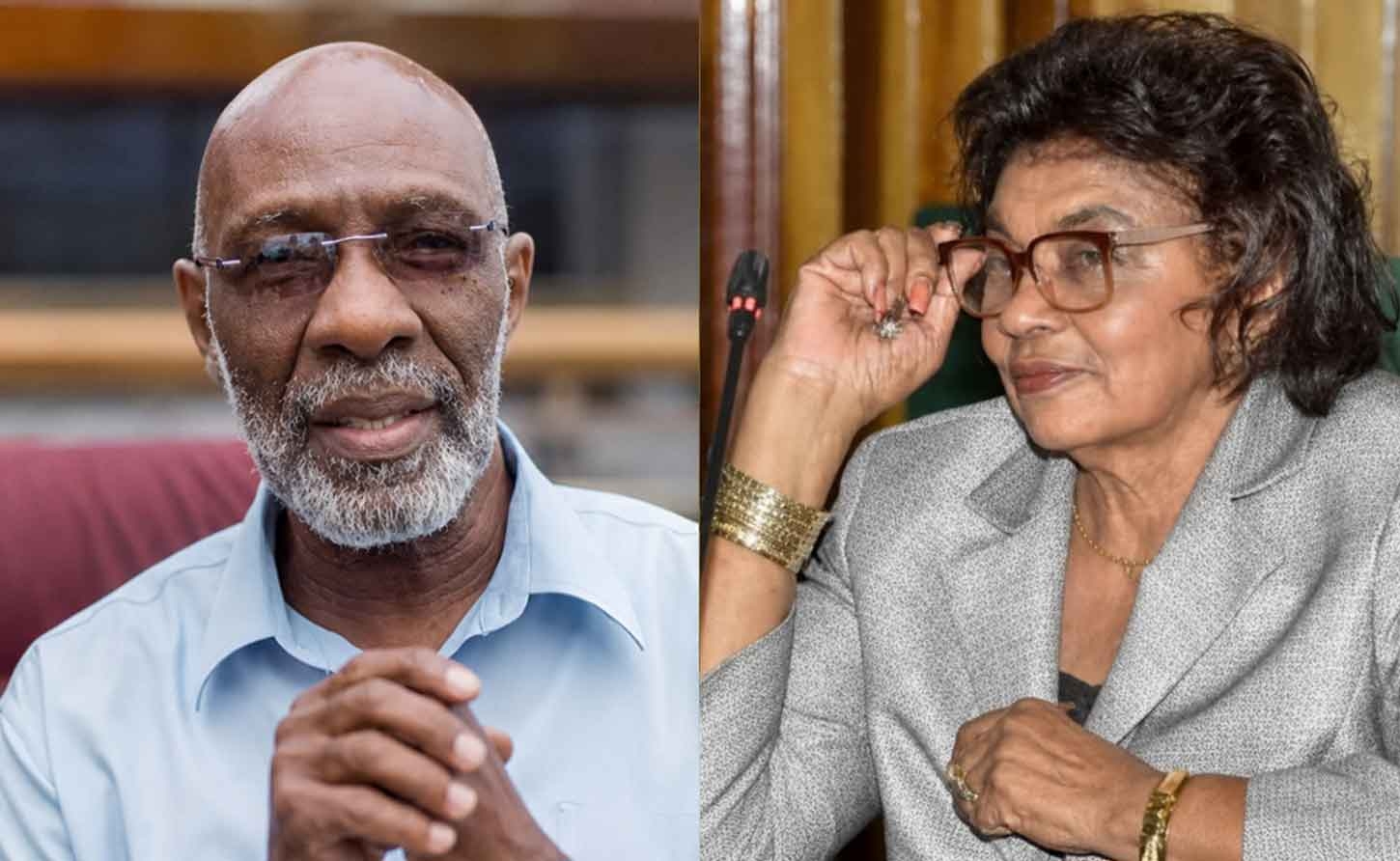
GECOM Comissioner Vincent Alexander and GECOM Chair Claudette Singh
A commission that declared a president but never declared the regions has not sat since September. Commissioner Vincent Alexander now says the Chair's silence is grounds for her removal.
GEORGETOWN, Guyana, August 9, 2026 - Eleven months. That is how long the Guyana Elections Commission has gone without convening a meeting. Its last sitting was on 7 September 2025 — the small hours in which it declared the People's Progressive Party/Civic the winner of the 1 September general and regional elections and Irfaan Ali the elected President. According to Commissioner Vincent Alexander, that sitting did only half of what the law demanded of it, and nothing has been done since to finish the job.
A declaration left half-finished
In a letter to the editor published on Saturday, Alexander writes that the Commission's responsibility under the Representation of the People Act for declaring the results was “partially executed”. The regional results, he says, were never presented to the Commission for approval, and other statutory obligations were never discharged at all.
The charge is not new. Last October, Alexander and fellow commissioners Charles Corbin and Desmond Trotman accused Chairperson Justice (ret'd) Claudette Singh of failing to comply with sections 96 and 99 of the Act — of never publicly declaring the results, and never laying the regional figures before the body constitutionally charged with approving them.
In a country that surrendered five months of 2020 to a contested count, this is not paperwork. Regional Democratic Councils govern ten administrative regions and command real budgets. Their composition rests on numbers that, on Alexander's account, no lawful sitting of the Commission has ever ratified.
The pretext that keeps moving
The Chair's explanation has not held still. In a letter of 10 October 2025 she said she was guided by Article 161(3)(b) as to the Commission's composition, a question that would be settled when Parliament convened. Parliament convened.
Azruddin Mohamed of We Invest in Nationhood — second on 109,066 votes to the PPP/C's 242,497 — became Leader of the Opposition in January, with APNU's twelve members boycotting the vote. By May, the Chair had a new formulation: GECOM cannot move until Mohamed submits his three nominees.
Article 226 insulates GECOM from the direction and control of any other person or authority. That shield was drafted to keep the executive out of the counting house. It was not drafted to permit a chairperson to decommission a constitutional body by simply declining to send out a notice of meeting.
“She has stoutly refused to call meetings of the Commission and in doing so has usurped the functions of the Commission.”— Vincent Alexander, GECOM Commissioner
The shield becomes the sword
Alexander's proposed remedy is Article 225, the removal provision, on the ground that the Chair's conduct amounts to “misbehaviour”. The irony is sharp. Article 161(6) applies those very Article 225 protections to commissioners, which is precisely why Alexander cannot be turned out of his own seat. The clause that shields him is the clause he now aims at her.
Nor is he a disinterested witness. He is PNCR-aligned, nominated by a Leader of the Opposition whose coalition the electorate has since reduced to third place, and he maintains that his open-ended instrument of appointment carries no finite term. Aubrey Norton says flatly that no vacancy exists.
The counter-argument deserves its full weight: a commission whose opposition bench answers to a parliamentary configuration voters dismantled has a genuine legitimacy problem, and the Carter Center's final report on the 2025 polls found that Guyana's commissioners are widely perceived as acting for their nominating parties rather than for the electorate as a whole.
But a legitimacy problem is an argument for resolution. It is not a licence for paralysis.
The bill now falling due
The costs have stopped being theoretical. GECOM's 2026 estimates went forward to Parliament without the Commission's imprimatur; biometric registration, long promised, was not provided for in them. Local government elections were slated for November.
Four days ago the Carter Center warned that, absent a functioning commission, Guyana will miss the statutory deadline for those polls altogether — and will lack the time to implement electoral reform before the next general election.
Electoral machinery in this region rarely fails loudly. There is no seizure of the count, no soldiers ringing the tabulation centre, no moment the cameras can fix upon. There is only a chairperson who does not call a meeting, a secretariat that carries on regardless, and a constitutional commission that exists on paper and nowhere else.
Eleven months in, Guyanese are entitled to put the question plainly: which is the graver injury to a democracy — an election stolen, or an election never properly finished?
— 30 —
