
CARICOM | Afreximbank Takes $5 Billion Caribbean Mandate to Nassau in High-Stakes Roadshow
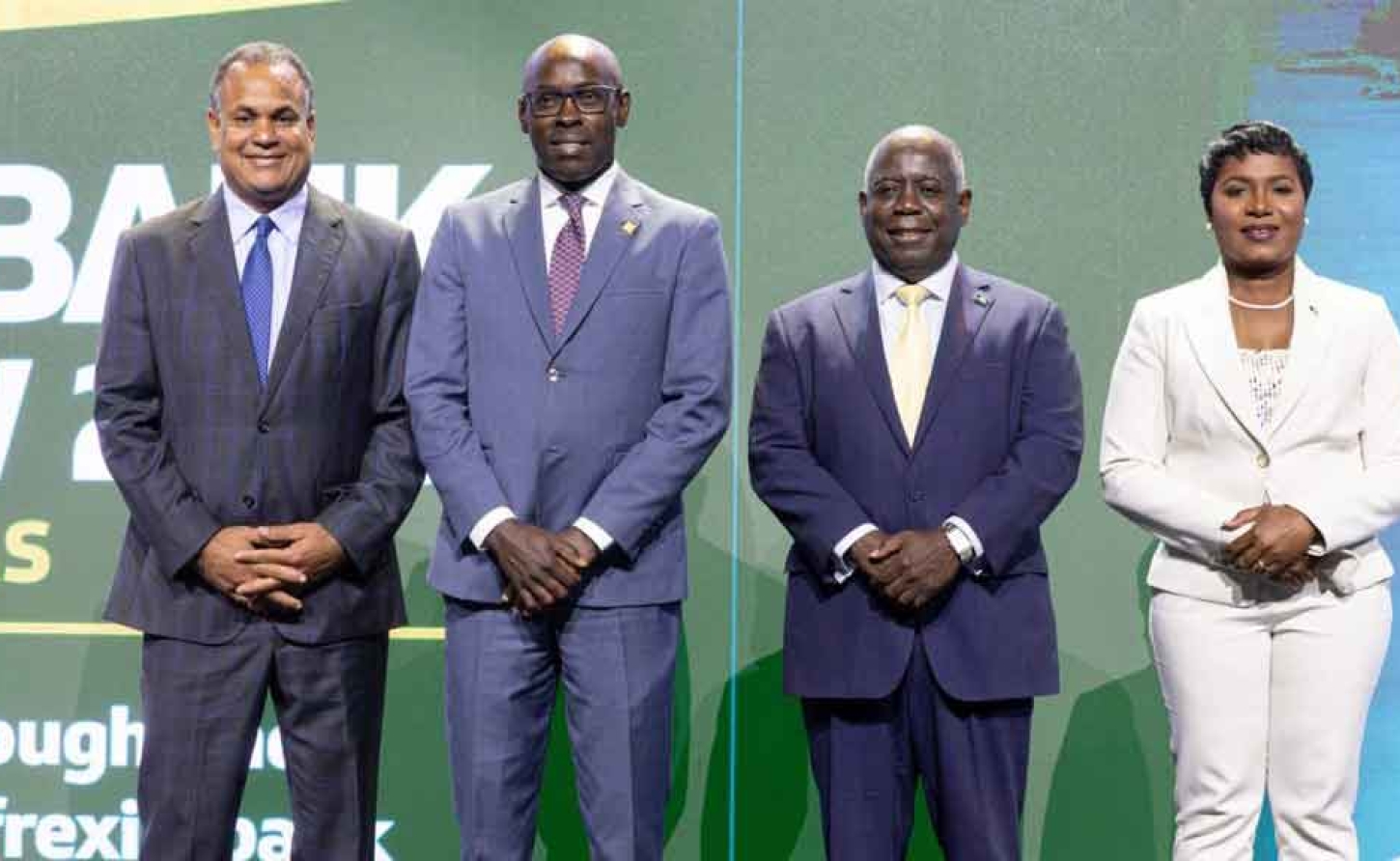
From left: Honourable Michael B. Halkitis, Minister of Finance, The Bahamas, Mr. Okechukwu Ihejirika, Ag. Regional Chief Operating Officer, Afreximbank Caribbean Office, Honourable Philip Davis, Prime Minister of The Bahamas and Honourable Ginger M. Moxey, Minister of Grand Bahama
The pan-African multilateral bank is turning a historic financing pledge into boots-on-the-ground engagement — and The Bahamas is its latest stop in a methodical conquest of Caribbean markets.
NASSAU, The Bahamas, Calvin G. Brown | June 2, 2026— It was billed as a roadshow. In substance, it was something closer to a declaration of intent.
On May 29, the African Export-Import Bank — Afreximbank — descended on Nassau with a delegation of senior officials, a suite of financing and advisory products, and a message calibrated to resonate in a small island economy long accustomed to looking elsewhere for capital: Africa is open for business with the Caribbean, and the funds are real.
The event, held under the theme “Investing in Progress through the Implementation of the Afreximbank Mandate in The Bahamas,” drew senior figures from government, the private sector, and the financial services community. Prime Minister Philip Davis set the tone with a pointed observation that growth, on its own, is not enough.
“Economic growth must translate into broader economic participation, ensuring that more Bahamians have the chance to build businesses, create jobs, and share in the country’s progress,” he told the gathering. Access to capital, the Prime Minister said, is “an important part of our ongoing efforts” — and Afreximbank is a central vehicle for that access.
“In less than three years of operations within CARICOM, Afreximbank has demonstrated a strong commitment to economic development in the region.”— Mr. Ihejirika, Afreximbank
The numbers underwrite the ambition. According to Afreximbank’s representative Mr. Ihejirika, the Bank has already channelled roughly USD 140 million into Bahamian infrastructure through Public-Private Partnership arrangements, alongside USD 30 million directed at small and medium-sized enterprises — the backbone of any genuine economic diversification strategy.
In less than three years of active CARICOM engagement, those figures represent a pace that few multilateral institutions have matched in the region.
But the Nassau roadshow did not arrive in a vacuum. It is the ground-level expression of a strategic pivot announced with considerable fanfare in February, when Afreximbank President Dr. George Elombi addressed the 50th Regular Meeting of CARICOM Heads of Government in Basseterre, St. Kitts and Nevis, and declared that the Bank’s Caribbean financing ceiling would rise from USD 3 billion to USD 5 billion.
Built on a foundation of more than USD 750 million already disbursed across the region — with a further USD 2 billion in the active pipeline — the expanded envelope signals that Afreximbank is past the pilot phase and moving toward institutional permanence in Caribbean markets.
That permanence is being anchored architecturally, too. Afreximbank has reaffirmed its commitment to building an African Trade Centre in Bridgetown, Barbados, which will function as the Bank’s Caribbean regional headquarters, and is actively supporting discussions around the establishment of a dedicated Caribbean Eximbank — an institution designed to mobilise development finance from within and beyond the region.
The ideological framework binding these developments is Afreximbank’s Global Africa strategy: the deliberate extension of the Bank’s mandate beyond the African continent to encompass communities and economies with deep historical, ancestral, and cultural ties to Africa. The Caribbean — forged in the furnace of the transatlantic trade, sustained by African labour, and now home to some of the most dynamic diaspora communities in the world — sits squarely within that frame.
The fifth Africa-Caribbean Trade and Investment Forum, scheduled for July 2026 in St. Kitts and Nevis, will be the next major convening of that vision.
Finance Minister Michael Halkitis and Grand Bahama Minister Ginger Moxey were among the Bahamian officials in attendance at the Nassau roadshow, alongside private sector voices including Atario Mitchell of the Bahamas Stripping Group of Companies and Kino Simmons of CAT Island Development Company — a spread of representation that suggests the Bank is serious about reaching beyond the capital’s financial district and into the productive economy.
For the wider Caribbean, the significance of Afreximbank’s Nassau visit extends beyond any single deal or dialogue. The region has spent decades navigating the conditionalities, structural requirements, and geopolitical assumptions of traditional multilateral lenders.
An institution rooted in African development philosophy — prioritising trade facilitation, local value chains, and South-South solidarity — offers a different kind of partnership. Whether Caribbean governments and businesses can fully mobilise the USD 5 billion now on the table will be one of the defining economic questions of the next four years. In Nassau, at least, the conversation has started in earnest.
Jamaica’s Business Sector Awaits Its Afreximbank Moment
As Afreximbank’s Caribbean roadshow advances city by city, Jamaica’s private sector is watching closely — and waiting. With the island less than a year into full membership of the Bank, business leaders are increasingly vocal in their hope that Kingston will be next on the itinerary, and that the USD 1.5 billion financing window unlocked by Jamaica’s accession will move from pledge to pipeline.
Jamaica formally acceded to the Afreximbank Establishment Agreement in July 2025, becoming the 13th CARICOM member state to join the pan-African multilateral institution. The signing, which took place on the sidelines of the 49th Regular Meeting of CARICOM Heads of Government, was hailed by Prime Minister Andrew Holness as a “strategic step” to secure funding for key sectors including manufacturing, agriculture, and the creative industries.
The accession simultaneously pushed Afreximbank’s total approved Caribbean facility to USD 3 billion — a ceiling since raised further to USD 5 billion in February 2026.
For Jamaica’s private sector, the appeal of Afreximbank is not merely about the quantum of financing on offer. It is about the architecture of the relationship. Unlike the conditionality-laden frameworks that have historically accompanied engagement with Western multilateral and bilateral lenders, an Afreximbank partnership is grounded in South-South solidarity — a model that treats Caribbean economies as strategic partners rather than aid recipients or risk exposures to be managed.
The Bank’s suite of instruments, spanning trade guarantees, project financing, SME support, and capital market access, is precisely tailored to the structural challenges Jamaican businesses face: high cost of capital, limited access to long-term finance, and overdependence on North Atlantic markets.
The Afreximbank partnership offers access to trade finance, guarantees, and investment support without adding unsustainable debt burdens — a proposition of growing appeal in a tightening global funding environment.
The sectors watching most intently are those with the clearest Africa-Caribbean commercial logic: agro-processing, logistics, manufacturing, and the creative economy. Jamaica’s creative industries — music, film, fashion, and culinary arts — have long outpaced institutional support.
An Afreximbank roadshow in Kingston, modelled on the Nassau engagement, could unlock the kind of structured financing conversations that move creative entrepreneurs from subsistence to scale.
The institutional groundwork is already in place. Jamaica is a member. The financing envelope is approved. The next AfriCaribbean Trade and Investment Forum, scheduled for July 2026 in St. Kitts and Nevis, offers a regional convening where Kingston-based business interests could make a compelling case for Jamaica as the Bank’s next dedicated engagement.
What remains is the political and institutional will to convert membership into momentum — and to ensure that the dividends of the Global Africa vision are felt on Old Hope Road and in the factories of Spanish Town, not merely in the diplomatic communiqués of Montego Bay summits.
The roadshow is coming. The question is when Jamaica moves from the audience to centre stage.
— 30 —
