
CARIBBEAN | CARICOM Silence & Sovereignty
CARIBBEAN | CARICOM Silence & Sovereignty
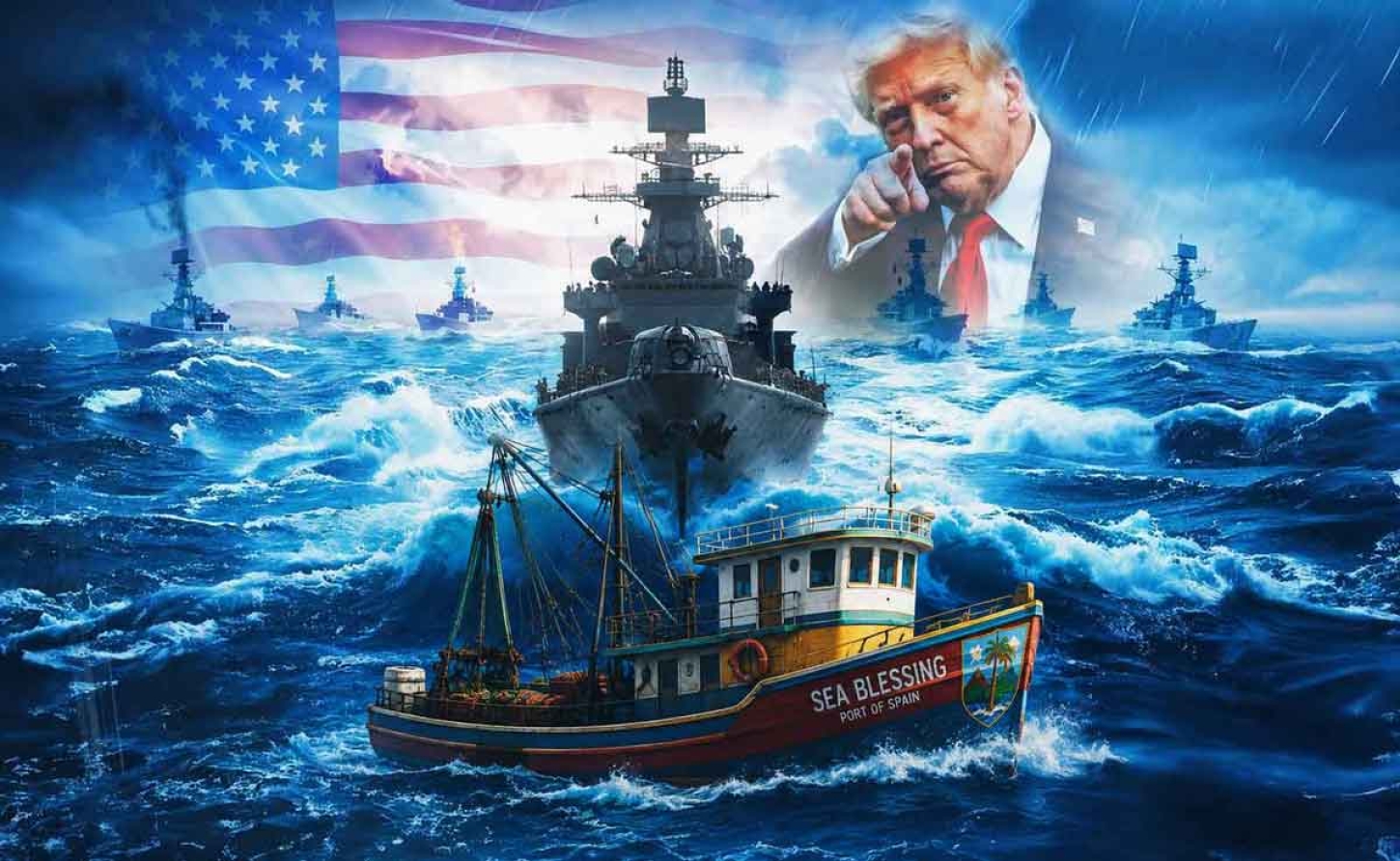
While Washington bombs Caribbean waters and labels the dead “narco-terrorists,” the region’s leaders have chosen the silence of complicity.
MONTEGO BAY, Jamaica, May 9, 2026 - The body count is no longer abstract. More than 190 people have been killed in over 55 strikes launched by the United States military in Caribbean and Eastern Pacific waters since September 2024 — executed under the Trump administration’s “Operation Southern Spear,” a campaign sold to the American public as a war on narco-terrorists, but which has produced no credible evidence that a single one of its victims was a drug lord.
What it has produced is a kill zone in Caribbean waters. And from the region’s leaders: a silence that is fast becoming indistinguishable from complicity.
The Evidence Washington Never Provided
The Trump regime's’s case for bombing boats rested on a series of claims that have since collapsed under scrutiny. Secretary of State Marco Rubio argued that conventional Coast Guard and Navy interdiction was insufficient to stop the flow of drugs northward. The regime designated cartels as “terrorist organizations engaged in armed conflict” with the United States — a legal maneuver designed to bypass the constraints of international law and domestic oversight.
But the evidence? Grainy footage of exploding boats. No identities. No documentation. No due process.
Reporting by The Intercept confirmed what many observers long suspected: government officials privately acknowledged that the targeted vessels were not transporting fentanyl — despite President Trump’s October claim that “the boats get hit and you see that fentanyl all over the ocean.” These were not drug kingpins meeting justice on the high seas. These were people in boats. And Washington killed them anyway.
“More than 190 people are dead. The drug trade is intact. By every measurable standard, the campaign has failed — yet Washington’s new counterterrorism doctrine promises to intensify it.”
A Policy That Failed Even on Its Own Terms
Strip away the rhetoric, and Operation Southern Spear is a case study in lethal incompetence. Trump claimed that each boat strike saved 25,000 American lives. His regime asserted the campaign had halted 97 percent of maritime cocaine trade. The administration’s own figures told a different story: drug transport declined by only 20 percent in the Caribbean and 25 percent in the Eastern Pacific.
More damning still: cocaine prices — the most reliable barometer of drug market disruption — remained stable throughout the campaign. And cocaine seizures at the U.S. border have actually increased since the strikes began. The drug trade is intact. By every measurable standard, the campaign has failed. Yet Washington’s new counterterrorism doctrine promises to intensify it.
The Doctrine Behind the Strikes
The Trump regime’s new counterterrorism strategy — which analysts have termed the “Donroe Doctrine” — fuses the War on Drugs with the War on Terror into a single operational framework. “Narcoterrorists and transnational gangs,” “Islamic terrorists,” and “violent left-wing extremists” are now designated the three principal threats to U.S. national security.
That final category should alarm every Caribbean government. This doctrine provides ideological scaffolding for military intervention against left-leaning governments across the hemisphere. Trump has already threatened direct military action against alleged cartels in Colombia and Mexico — both governed by progressive administrations.
The recent “Hondurasgate” scandal — involving allegations of a disinformation scheme linking former Honduran President Juan Orlando Hernández to Trump, Netanyahu, and Argentina’s Javier Milei — suggests that the destabilization of the region’s progressive governments is not a hypothetical threat. It is an operational objective.
Where Is CARICOM?
Here lies the most damning indictment of all. Caribbean waters are being bombed. Caribbean people are being killed — branded as narco-terrorists without trial, without evidence, without recourse. And the Caribbean Community has issued no unified, forceful response.
CARICOM recently welcomed Interpol’s Secretary General as a guest of honour at its 49th Regular Meeting in Montego Bay, celebrating “international cooperation” and “regional safety and security.” But international cooperation, it seems, does not extend to demanding accountability from Washington for extrajudicial killings conducted in the region’s own waters.
The Caribbean has fought long and hard for its sovereignty — from the independence movements of the 1960s to CARICOM’s persistent resistance to foreign interference in its domestic affairs. That sovereignty means nothing if regional leaders watch in silence as the United States conducts a killing campaign in Caribbean seas, accountable to no law and to no one.
More than 190 people are dead. The region has yet to say their names.
The dead deserve better than silence. So does the Caribbean.
— 30 —
