
BARBADOS | Nigeria's Air Peace Makes History, Touching Down in Barbados to Serve the Caribbean
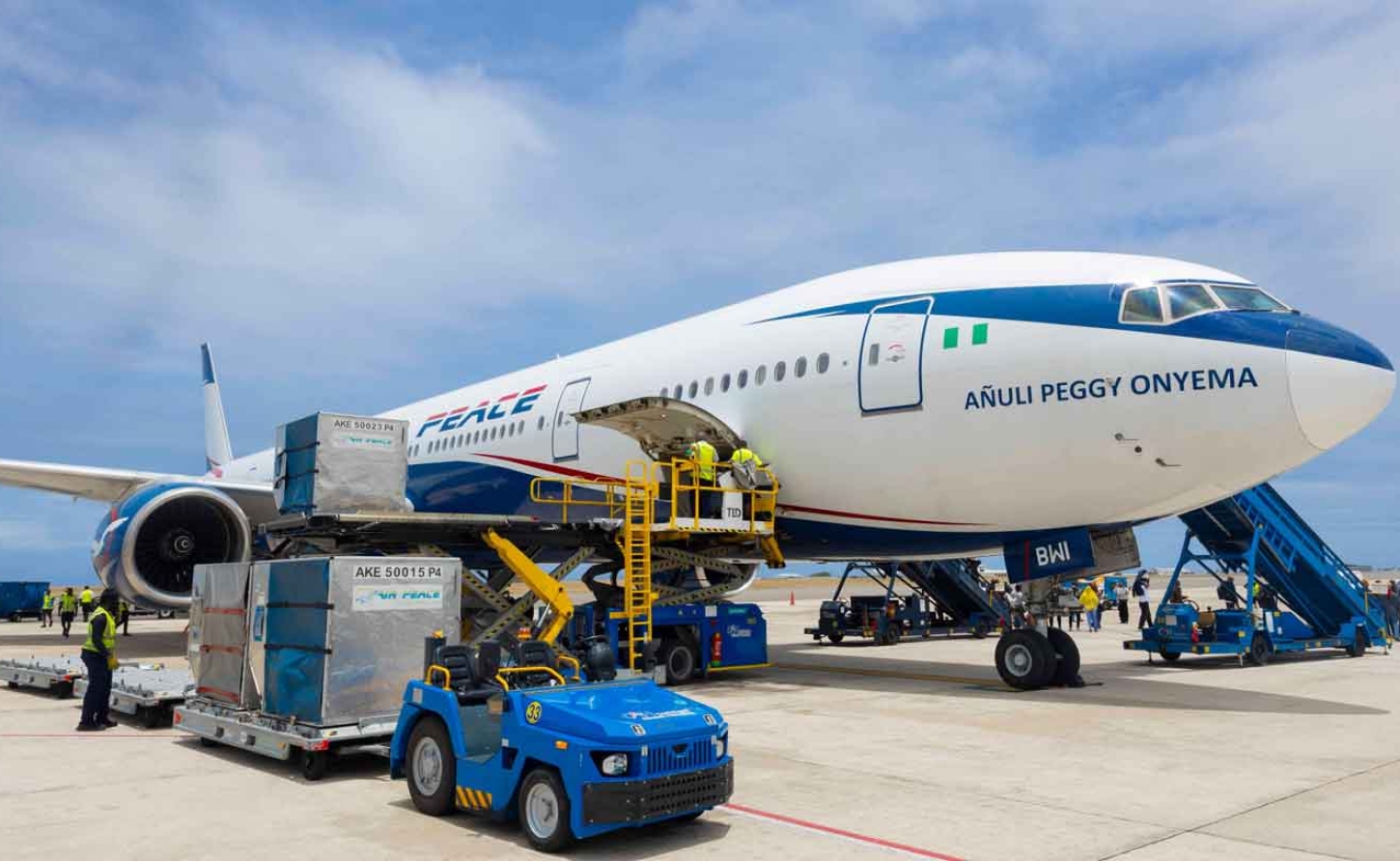
BARBADOS | Nigeria's Air Peace Makes History, Touching Down in Barbados to Serve the Caribbean
For the first time in history, a commercial aircraft has flown non-stop from West Africa to the Caribbean — and the ripple effects could reshape the region’s economic and cultural future.
CARIBBEAN | Bridgetown, Barbados | Calvin G. Brown | When an Air Peace aircraft touched down at Grantley Adams International Airport in Barbados on Sunday, it carried more than 284 passengers — it carried a century of longing.
For the first time in the modern era of commercial aviation, a direct flight had connected West Africa to the Caribbean without a single stopover, a transit visa, or the indignity of routing through London, Paris, or New York. That is not merely a milestone in air travel. It is a civilizational statement.
The Nigerian carrier’s inaugural Lagos-to-Bridgetown service — announced with fanfare at Hotel Indigo before a gathering of diplomats, tourism officials, and health authorities — is the product of a vision that cuts through centuries of separation. The African continent and the Caribbean were violently disconnected by the transatlantic slave trade.
Now, at last, a commercial airline is beginning to stitch those torn threads back together. The symbolism is staggering. The economics are compelling. The implications are enormous.
From Lagos With Purpose Air Peace crew on the inargural flight to Barbados
Air Peace’s Chief Commercial Officer, Nowel Ngala, was refreshingly candid about the motivation: “We want to drive and push traffic from the Caribbean now into Nigeria, into Lagos, and beyond.” It is the language of commerce, yes — but commerce anchored in connectivity long overdue.
Nigeria is Africa’s largest economy, home to more than 220 million people and a rapidly expanding middle class with an insatiable appetite for international travel. For years, that demand has been funnelled through European hubs, enriching foreign carriers at the expense of African and Caribbean economies.
That calculus is now changing. Ngala outlined an ambitious growth trajectory — scaling from twice-monthly flights to weekly service and eventually to multiple weekly frequencies. The airline’s commitment to profitability is not corporate jargon; it is the guardrail that will determine whether this route survives its infancy.
Air Peace is not a charity. It is a private carrier that must prove the economics work. And if the demand on that inaugural flight — over 280 seats filled — is any indication, the market has been waiting for exactly this.
Barbados as the Gateway
“It is one thing in the diplomatic sphere to be talking about bridging the gap between Africa and the Caribbean. It is another thing to have the ability to do so.”— Juliette Bynoe-Sutherland, Barbados’ High Commissioner to West Africa
Barbados’ High Commissioner to West Africa, Juliette Bynoe-Sutherland, captured the geopolitical weight of the moment with precision. Barbados has long punched above its weight in regional diplomacy, and its selection as the Caribbean’s entry point for Air Peace is no accident.
The island’s Grantley Adams International Airport has the infrastructure, the connectivity, and the institutional reputation to serve as a hub — a staging post for passengers making onward journeys to Guyana, Dominica, St. Lucia, and Antigua and Barbuda.
That multiplier effect is critical. This is not simply a bilateral Lagos-Bridgetown story. This is the story of a new air corridor opening the entire Caribbean region to West African travellers who have, until now, been locked out by geography, visa regimes, and the structural bias of global aviation routing. Every connecting flight booked out of Barbados is money and movement that no longer enriches a European hub.
The Ebola Caveat
No serious analysis of this route can ignore the public health dimension. The inaugural flight landed in a climate already charged by the World Health Organization’s declaration of the 2026 Ebola outbreak — a Bundibugyo strain — as a Public Health Emergency of International Concern.
The Caribbean Public Health Agency (CARPHA) moved quickly to assess the regional risk as low, but its executive director, Dr. Lisa Indar, offered a sober warning: because the Caribbean is a major global travel hub, “the primary way the virus could arrive is through an infected traveller.”
Health officials from the Ministry of Health and Wellness, the Pan American Health Organization, and CARPHA were all present at Grantley Adams for the arrival — a visible signal that governments are not sleepwalking into this new connectivity.
But the region must now grapple with a complex dual imperative: embrace the transformative potential of this air link while ensuring biosurveillance infrastructure keeps pace. Open skies and public health are not mutually exclusive goals, but they demand vigilance, investment, and coordination in equal measure.
More Than a Flight Plan
At its core, what Air Peace has inaugurated is a statement of self-determination. For generations, African and Caribbean people have been told — by geography, by colonial infrastructure, by the architecture of global aviation — that connection between their two worlds must pass through the metropole. It must be filtered through Europe or North America before it can arrive home. That logic has always been absurd, and now, at last, it is being challenged.
The 284 passengers who crossed the Atlantic on that inaugural flight did not just travel. They voted with their seats for a world where the African-Caribbean connection does not need a European visa to breathe. That is a different kind of arrival — and it is one the Caribbean should welcome, nurture, and build upon with every instrument of policy, diplomacy, and investment at its disposal.
The wings are finally spread. Now the region must make sure they stay in the air.
— 30 —
