
JAMAICA | Under the Mango Tree: The 99.7 Per Cent That Hides 277 Broken Schools
JAMAICA | Under the Mango Tree: The 99.7 Per Cent That Hides 277 Broken Schools
The Prime Minister says children learning outdoors are closer to nature. The PNPYO says they are closer to the evidence of a recovery that has stalled. Almost a year after Hurricane Melissa, both cannot be true.
MONTEGO BAY, Jamaica, Sept. 9, 2026 - There is a particular kind of political injury that comes not from what a government fails to do, but from how it chooses to describe the failure.
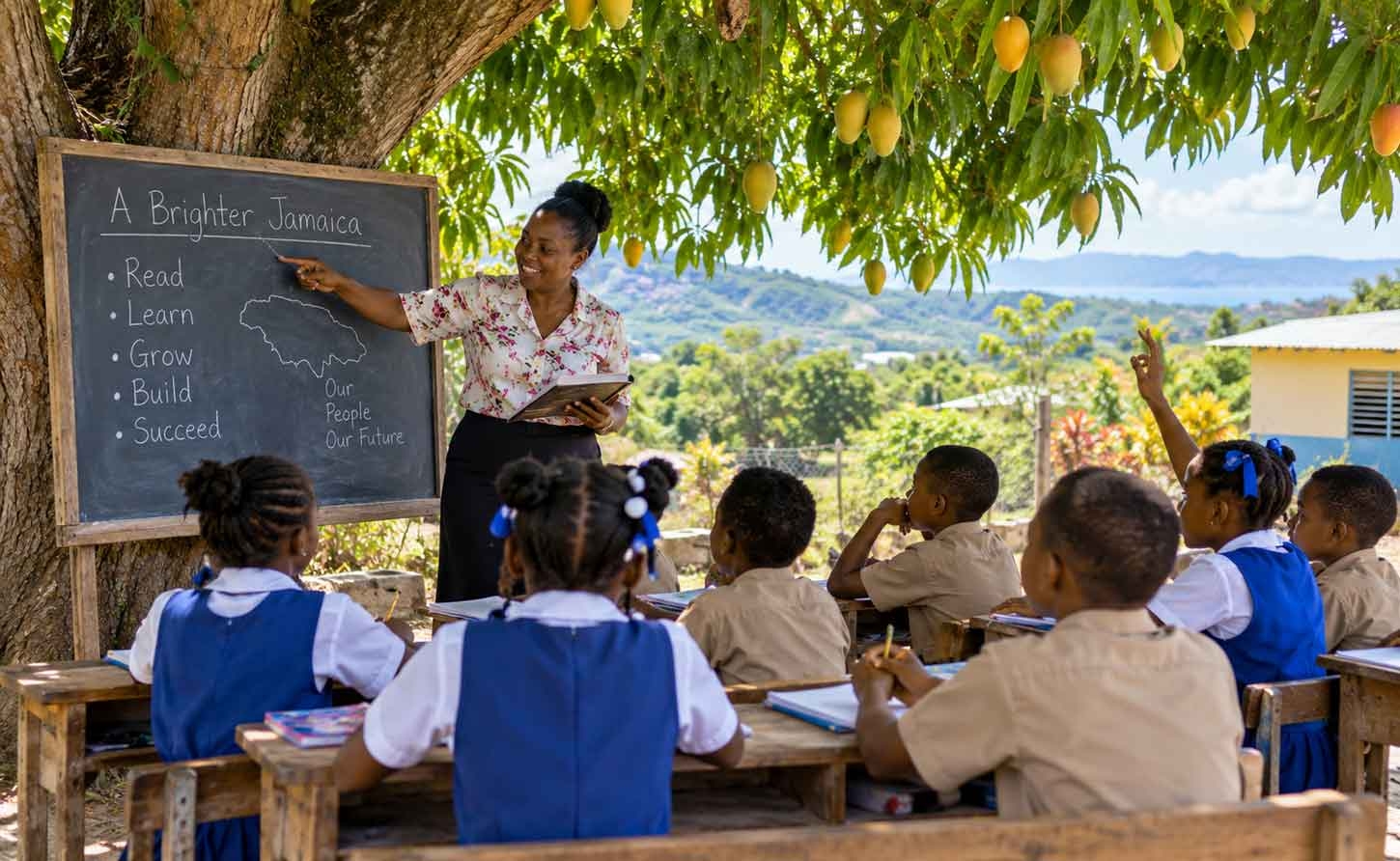
At Jamaica House on Tuesday, launching the Jamaica Reconstruction and Resilience Oversight Committee (JAMRROC), Prime Minister Andrew Holness turned to the photographs in that morning’s newspapers: children in western Jamaica sitting under trees because their classrooms remain unusable. He recalled his own schooldays, when the classrooms were stifling and the shade outside was a mercy. Jamaicans, he suggested, should not look down on children learning “closer to nature, in cooler environments”.
By Wednesday, the People’s National Party Youth Organisation had made that single sentence the centre of the argument.
“These children are not sitting under trees because their teachers chose an innovative outdoor experience,” said PNPYO General Secretary Peta-Gay Ferguson. “They are there because their Government has failed to provide them with adequate classrooms.”
The Statistic and the Reality
The Government’s headline number for the new academic year is 99.7 per cent. The Ministry of Education reported that of roughly 1,000 schools across all seven educational regions, only three failed to open on the first day of the 2026/27 year.
That is a real logistical achievement, and it measures precisely one thing: whether a gate opened. It says nothing about whether there is a roof over the child who walks through it. On that same first day, principals in the parishes Hurricane Melissa savaged were reporting unfinished repairs and tents that turned into ovens by mid-morning.
The PNPYO cites figures it attributes to Parliamentary Secretary Senator Marlon Morgan: 45 to 50 of more than 300 severely damaged schools repaired, roughly 15 per cent, with some 277 still in mixed modality or temporary spaces. WiredJa has not independently verified those totals, though they align with the Ministry’s own admissions. More than 300 schools were classified priority one after Melissa — damage close to rebuilding — and the National Education Trust has restored just over 40. Education Minister Dana Morris Dixon accepted before term began that reopening would not mean repairs were done, with schools running shifts, tents or timber structures.
At Holland Primary in St Elizabeth, grade two pupils were moved out of a tent that had become too hot, to a bamboo structure and the shade of a mango tree. The PNPYO adds Ocho Rios Primary, where staff built makeshift classrooms rather than put 1,100 children on rotation, and Maggotty High, where the NET funded eight wooden temporary classrooms.
Whose Children Sit in the Shade
Ferguson’s sharpest thrust was not statistical. “How many children of Government ministers or parliamentarians are being sent to school each morning to sit beneath a tree because their classroom remains damaged?”
“Cut the PR. Stop dressing up hardship as resilience and failure as innovation.”
— Peta-Gay Ferguson, PNPYO General Secretary
The question lands because it names what the 99.7 per cent conceals. An unfinished recovery does not distribute its burden evenly, and for most Jamaican families there is no private-school exit from a hot tent in Black River.
Nor is the Youth Organisation alone. The Fi We Children Foundation has condemned the same remark, warning that presenting compromised conditions as an educational advantage romanticises circumstances no child should be expected to accept.
The Government’s Harder Case
There is a defence, and it deserves airing. Repairing more than 300 schools at once, while houses, businesses and churches across five parishes also wait, is a problem of a scale Jamaica has not previously had to solve. Procurement rules slow every step, and a contractor waiting on louvre blades held up by disrupted shipping cannot conjure them out of the air.
Holness himself said on Tuesday that he was not satisfied with the pace of relief, and JAMRROC exists because the administration accepts its own machinery needs independent pressure applied to it. In the same breath as the remark about nature, he said the responsibility of government is not to explain away shortcomings but to fix them and accelerate delivery.
He was right. The trouble is that the two halves of his statement were fighting each other in public, and the losing half was the one about fixing things.
The Ask
The PNPYO wants a full status report on every hurricane-affected school: outstanding repairs, temporary arrangements, completion dates and resources allocated. It is a modest demand, and an awkward one to refuse in the week you launch a committee whose stated purpose is quarterly public reporting.
“After almost a year, Jamaica’s children deserve more than excuses,” Ferguson said. “They deserve results.”
The mango tree at Holland Primary will still be standing in October. Whether the classroom beside it will be is the only statistic that matters now.
— 30 —
