
CARIBBEAN | Trump's September 7 Colonial Map Engulfs the Caribbean — CARICOM Silent
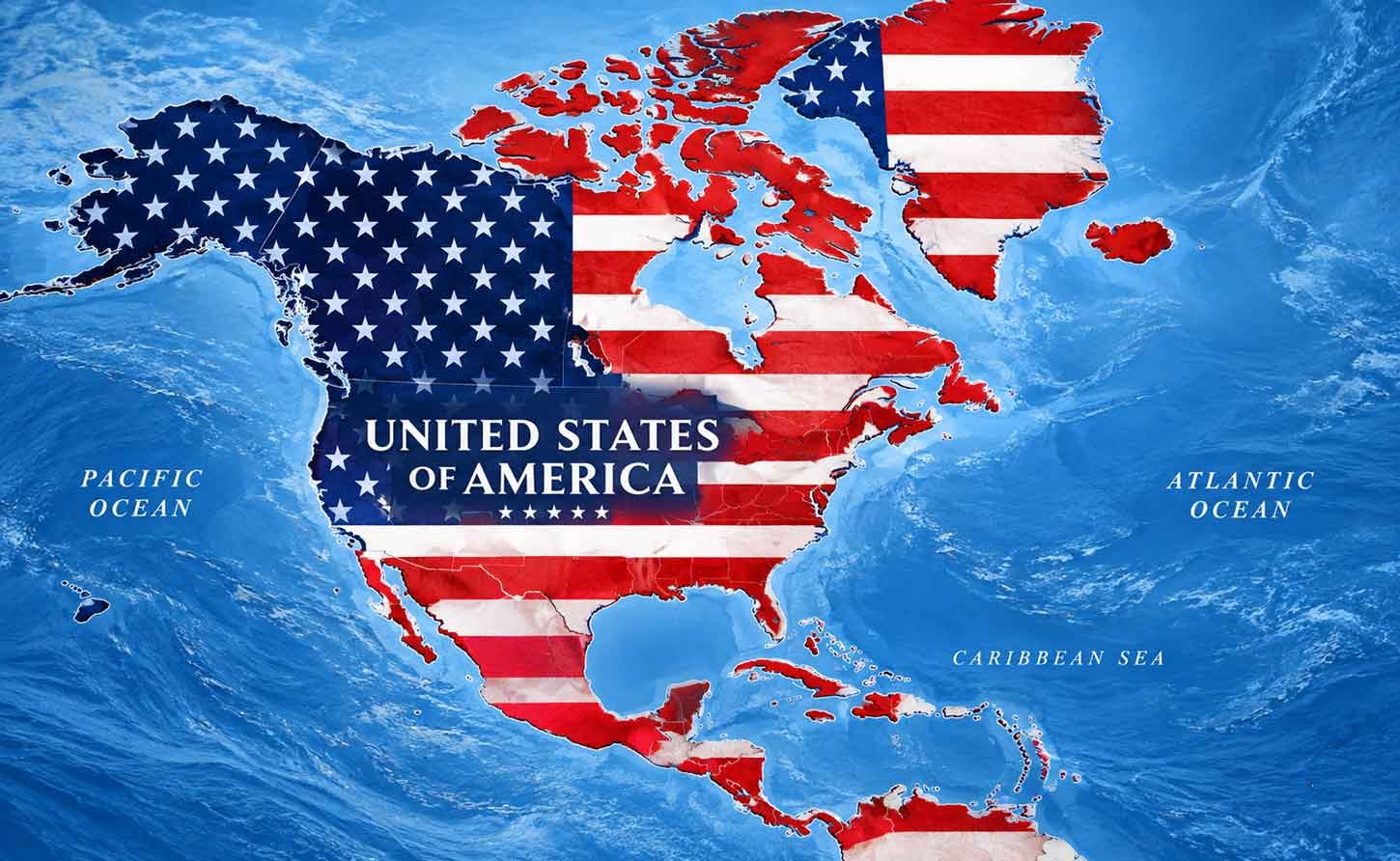
Donald Trump's September 7 colonial map of the region
Mexico spoke. Cuba spoke. Paris spoke. Iceland summoned an ambassador. From the Caribbean Community, whose member states were painted over in the Stars and Stripes, not one syllable.
MONTEGO BAY, Jamaica, September 12, 2026 - Calvin G. Brown | On 1 August 1834, the Slavery Abolition Act took legal effect across most of the British Empire, and even then Jamaica's freedmen served four more years of so-called apprenticeship before full freedom arrived in 1838. On 6 August 1962, this country put down the colonial yoke altogether. It took a slave war led by Sam Sharpe, an Act of Parliament at Westminster, and more than a century of struggle in between.
It took Donald Trump one untitled image to paint the whole thing over.
On Monday 7 September, the United States President posted to Truth Social an artificial-intelligence-generated map on which the American flag lay across the United States, Canada, Mexico, part of Central America, Greenland, Iceland and the Caribbean archipelago. Cuba. Haiti. The Bahamas. Guadeloupe and Martinique. Jamaica. The entire landmass carried a single label: United States of America. The Gulf of Mexico had been relabelled the Gulf of America. There was no caption, no explanation, no formal claim, and no denial.
The White House has not presented the map as government policy. Fair enough. But this is a president who uses his social media platform as a policy instrument, and who has spent a second term musing aloud about annexing Greenland, making Canada a 51st state, renaming Lake Ontario as “Lake America”, and rebranding New Mexico as “New America”. At some point a pattern stops being a joke and starts being a posture.
The world answered. The region did not.
Mexico's President Claudia Sheinbaum said plainly that her country will not be a colony or protectorate of any foreign power. Cuba's Miguel Díaz-Canel invoked the island's history under two empires and pledged to defend sovereignty “to the last consequences”, while his foreign minister, Bruno Rodríguez, dismissed the exercise with the observation that Washington would soon leave its own citizens geographically disoriented. Paris called the depiction of the French West Indies extravagant and restated French sovereignty over Guadeloupe, Martinique, Saint-Martin and Saint-Barthélemy.
Then there is Iceland: a nation of fewer than four hundred thousand people, roughly the population of St Lucia and Barbados combined. Its foreign minister summoned the United States Ambassador, Billy Long, to protest the map as wholly inappropriate. Its prime minister, Kristrún Frostadóttir, called it an insult and said there is nothing normal about making light of the sovereignty of states.
Now count the Caribbean voices. Five days on, CARICOM has issued nothing. Not the Secretariat. Not the Bureau. Not the Chair. No sitting prime minister of any member state has spoken publicly on the matter. The two governments in this sea that did respond, Havana and Paris, both sit outside CARICOM's decision-making. Trinidad and Tobago, as it happens, does not appear on the map at all.
Silence as a policy
Let us be honest about why, because the case for saying nothing is not frivolous.
Caribbean states are small, open and structurally dependent. Tourism arrivals, remittances, correspondent banking relationships, visa access, security and deportation cooperation, and in Jamaica's case the financing of reconstruction after Hurricane Melissa, all run through Washington. Ministers will argue, privately and with some justification, that you do not pick a fight with your largest partner over a picture; that responding dignifies a provocation engineered to bait; that quiet diplomacy delivers more than a communiqué ever has.
That argument deserves a hearing. Weighing consequences is not cowardice.
But it collapses under its own logic. Iceland is dependent too, a NATO ally hosting American strategic interests, and it spoke within a day. Mexico's exposure to American tariffs and remittances dwarfs the region's, and Sheinbaum spoke within hours. Nor did silence protect anyone on 3 January, when the United States bombed Venezuela and removed Nicolás Maduro from his own territory.
CARICOM's Bureau, then comprising Jamaica, St Kitts and Nevis, and Saint Lucia, convened that same Saturday and produced a statement on international law and peaceful dialogue that never once used the words “Zone of Peace”, the doctrine this region adopted at Havana in 2014 and has invoked for a decade since. Trinidad and Tobago had already broken ranks in support of the operation. Seven weeks later, Secretary of State Marco Rubio sat in a CARICOM plenary in Basseterre explaining that same operation to leaders who had declined to condemn it.
This is the pattern WiredJa identified in January: statements calibrated to offend nobody, and which therefore defend nothing.
What is actually being asked
Very little. A statement.
Specifically, the Bureau should convene and issue a joint declaration affirming the sovereignty and territorial integrity of every member state depicted on that map. It should name the Zone of Peace explicitly and assert that the doctrine still binds. It should instruct the Secretariat to seek clarification from Washington through a coordinated démarche, which Reykjavík managed in an afternoon. And it should carry sovereignty and non-intervention to the United Nations General Assembly this month, where the region's leaders will have a global platform and no excuse.
None of that starts a trade war. All of it establishes a record.
Records matter. The 1833 Act was a record. Independence in 1962 was a record. A generation from now, when a Jamaican schoolchild asks what the Caribbean said in the week an American president wiped it off the map, the answer should not be a blank page.
Sharpe's generation had no foreign ministry, no diplomatic corps and no seat at the United Nations. They found their voice regardless.
Silence is not neutrality. Silence is consent, filed quietly.
— 30 —
