
HAITI | Petit-Goâve Has 31 Voter Centres, Port-au-Prince 14, Carrefour Is Not Listed
HAITI | Petit-Goâve Has 31 Voter Centres, Port-au-Prince 14, Carrefour Is Not Listed
Haiti's electoral council has a new first-round date, 18 July 2027, and a voter roll of 878,217 names against a target of four million. But its own public list of registration centres, read on November 7, shows eight communes in the Ouest department with none at all and three entries for Cité Soleil, all at the SONAPI industrial park. The register is becoming a map of where the Haitian state can still switch on a tablet — and the Caribbean governments that will be asked to vouch for the result have said nothing about it in public.
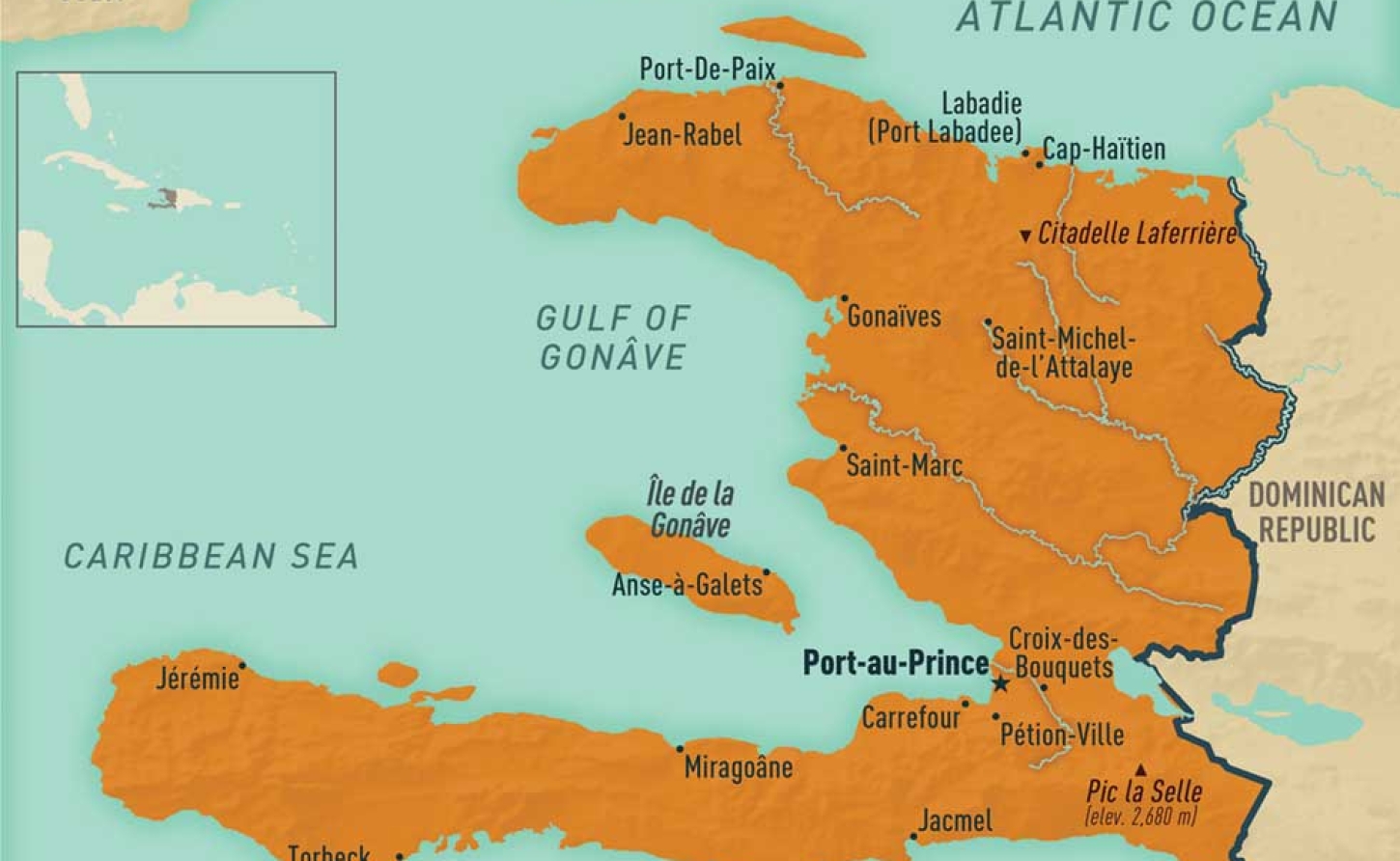
MONTEGO BAY, Jamaica, November 7, 2026 - Calvin G. Brown | On Saturday afternoon the Conseil Électoral Provisoire's public search tool for registration and voting centres — "Centres d'inscription et de vote (CIV) – Recherche publique" — carried a footer saying its data had been updated that day, and listed 1,448 centres across Haiti. For the Ouest department, which contains Port-au-Prince, it listed 190, in twelve communes. Eight Ouest communes did not appear at all: Carrefour, Croix-des-Bouquets, Gressier, Cabaret, Thomazeau, Ganthier, Fonds-Verrettes and Cornillon.
Cité Soleil appears with three entries, SONAPI 1, SONAPI 2 and SONAPI 3, with no communal section and no street address. SONAPI is the state industrial-parks agency; the CEP opened a centre there on 1 September with three registration stations, and its president, Jacques Desrosiers, told Le Nouvelliste it was to ease registration for residents of Cité Soleil and nearby areas. The three entries may be one site. Port-au-Prince itself has fourteen, and none carries an address in Martissant, Carrefour-Feuilles, Bel-Air or the lower town. Petit-Goâve has 31 and Léogâne 30. Those two towns have more centres than Port-au-Prince, Delmas, Tabarre and Cité Soleil combined — 61 against 38.
The figures the CEP publishes are national ones. On 6 September it reported 506,953 voters registered since 20 July, through 1,418 centres "of which 1,271 are directly operational", against a stated goal of four million. On 21 September its Note de presse 61 put the roll at 628,755. By 6 October, when it announced the postponement, the figure was 769,000. Note 79, dated 23 October, gave 878,217 registered and 1,306 centres operational. The CEP had published no later figure that WiredJA could find. The 1,448 on Saturday's tool and the 1,306 of 23 October are different measures — listed against operational — which the CEP has not reconciled.
What it has never published is a count of registered voters by commune or department. Note 61 gave centre counts for six departments and registration rates for only three — Sud-Est, Grand'Anse and Nippes — and omitted the Ouest's rate. The one departmental voter count in print is AP's, 9 October: of more than 784,000 enrolled nationally, 58,695 were in the Artibonite — which the UN Panel of Experts calls "the country's second-largest electoral district" in S/2026/714, and where the IOM recorded the sharpest recent rise in displacement.
The temptation is to put the register beside the displacement figure — nearly 1.5 million people, by the IOM's count of 25 September — and conclude that the displaced cannot vote. The documents do not say that.
The electoral decree of 1 December 2025, published in Le Moniteur and hosted on the CEP's site, requires a citizen to register in person with a valid national identity card (Article 56). The decree says a citizen who changes domicile presents himself at the registration office for the new domicile. Article 238 admits a voter only if listed at that bureau. On 26 October the CEP said that "au moment de leur inscription, les électeurs peuvent choisir librement leur centre de vote". One caveat: the December decree has since been replaced by one of 2 June 2026, amended on 2 July and revised on 6 October; WiredJA has read the December 2025 text, not the later ones.
So the law bars no displaced person. What is missing is a place. Someone who fled Carrefour for Pétion-Ville, which has 25 centres, can register. Someone still in Carrefour, Croix-des-Bouquets or the residential quarters of Cité Soleil has nowhere to go. No measure specific to displaced people — teams at displacement sites, lists for camps — appears in the decree, in any CEP note found, or in the 26 October announcement, aimed at workplaces and public spaces.
The CEP's communiqué of 6 October said that "the period originally scheduled for the electoral campaign has been postponed", citing "technical and operational requirements of the process", with a new timetable to follow "as soon as possible". It came on 28 October, in Note 81, which says the calendar "résulte de la promulgation du Décret électoral du 6 octobre 2026": first round of presidential and legislative elections on 18 July 2027, run-off and local elections on 4 October 2027. The CEP's own calendar closes the register on 20 May 2027; another row schedules the tablets on which voters are registered and ballots cast. The calendar of 27 July 2026 had said 13 December.
The Secretary-General's report of 14 July 2026, S/2026/574, records at paragraph 4 that the Prime Minister "reaffirmed the authorities' commitment to ensuring that an elected president would assume office by 7 February 2027". The UN presents it as the Prime Minister's undertaking; neither report calls it a deadline. A first round on 18 July 2027 cannot meet it. No government statement on the February date since 28 October was found.
On 29 September, Jamaica spoke for CARICOM at the Security Council as the Gang Suppression Force mandate was renewed: "Armed gangs will not be allowed to determine Haiti's future nor, indeed, that of the Caribbean region." Jamaica's contingent in Haiti — 26 at the last announced rotation, in December 2025 — is assigned to the force's headquarters. Two weeks earlier CARICOM's Eminent Persons Group, back from Haiti, had said the registration process "was not meeting expectations" and was "constricted by the existence of territories beyond state control"; stakeholders wanted "wider availability of registration centres". It gave no figures and named no communes.
Since the postponement, nothing. CARICOM's Haiti page, checked on 7 November, carries nothing on the postponement or the new calendar; its only item since 1 October is the Chair's remarks to a US–Caribbean dialogue on 15 October. Jamaica's foreign ministry's last Haiti item is its 29 September release welcoming the force's renewal; it has posted nothing since the postponement. The Jamaica Information Service's latest Haiti item is from 2 February. The Observer and the Gleaner carried the wires, nothing from Kingston.
What the CEP has published is the list of where it has opened a door, and that list is a map of where the Haitian state can still switch on a tablet. When the first round comes, the region that lent the mission its flag will be asked whether the roll was whole. It has said nothing about it in public.
-30-
