
CUBA |The Sixty-Six Year Squeeze: Washington's War on the Cuban Economy — and Why the Caribbean Should Read It as a Warning
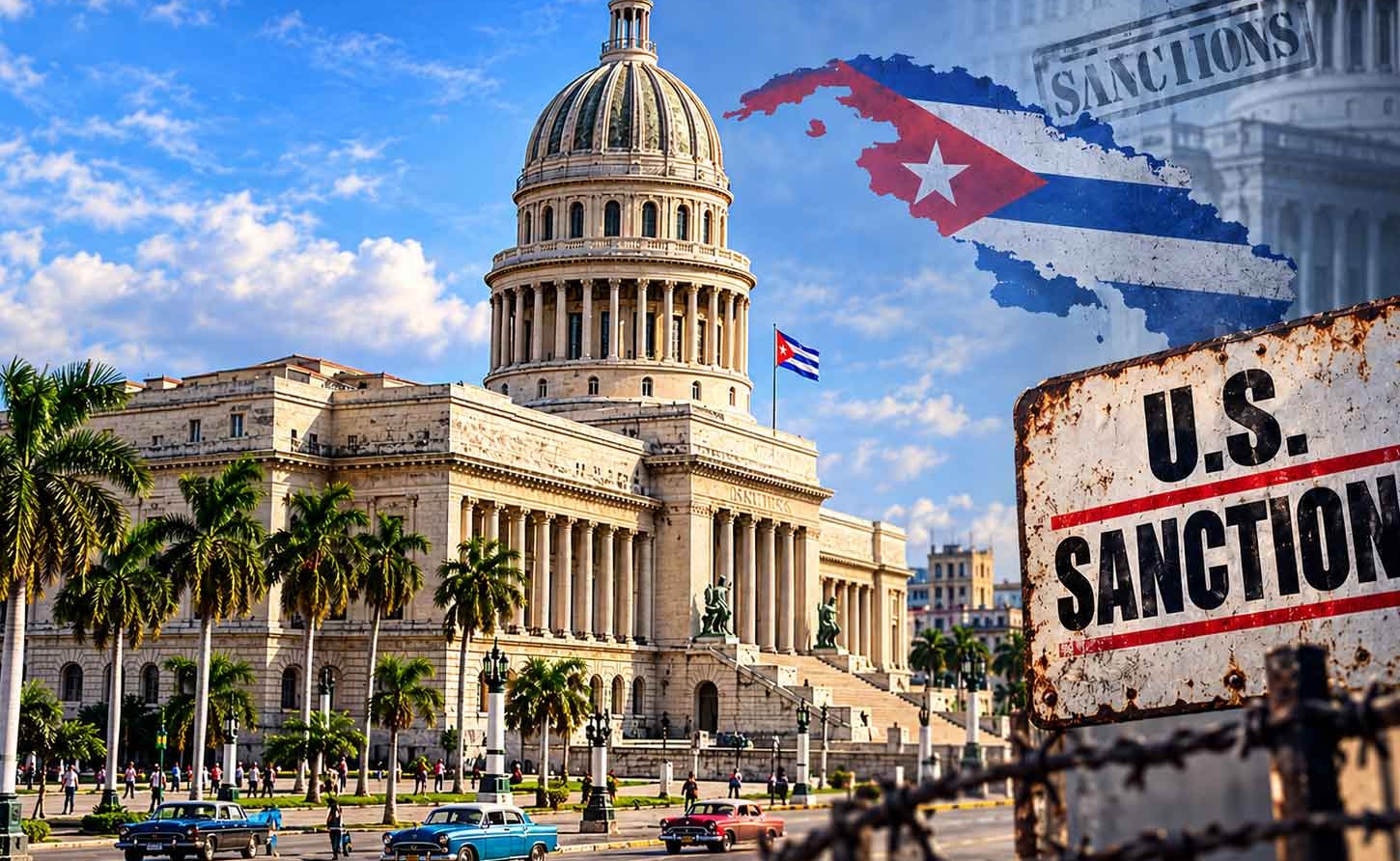
CUBA |The Sixty-Six Year Squeeze: Washington's War on the Cuban Economy — and Why the Caribbean Should Read It as a Warning
The strongest objection to the embargo has nothing to do with Havana's politics. It has to do with whether a superpower may punish small states for the company they keep.
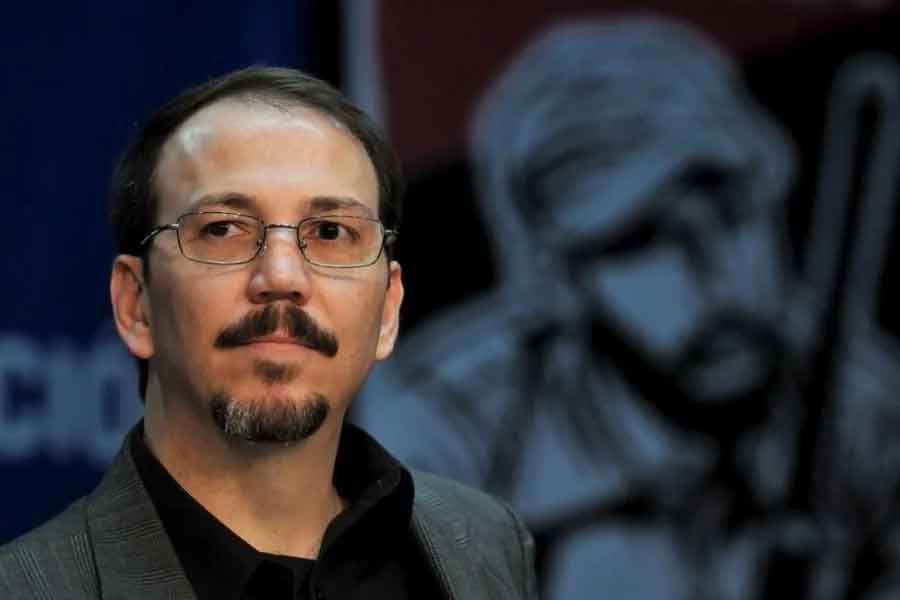
MONTEGO BAY, Jamaica, September 4, 2026 - Calvin G Brown | On 3 September, the United States Department of State designated five entities and one individual under Executive Order 14404. Among the targets was Abapet, the Cuban company responsible for importing the specialised equipment and spare parts that keep the island's collapsing power grid alive. Also designated were Banco Exterior de Cuba, a state bank handling foreign-trade finance and international transactions, listed for operating in the energy sector; Comercial CUPET S.A., which represents the state oil company in negotiations with foreign partners; and Fidel Ernesto Castro, a 31-year-old grandson of Raúl Castro.
The targeting was not incidental. Sanctions specialists quoted in the wire coverage read the action as designed to push Cuban machinery offline. Havana will attempt to procure the parts anyway — through longer, costlier, more circuitous channels, which will feed inflation and deepen the shortage the measure was meant to create.
This was the latest instalment in a policy that turns sixty-six next year. It is worth setting out, in full, what that policy now consists of.
 Fidel Ernesto Castro, a 31-year-old grandson of Raúl CastroThe architecture
Fidel Ernesto Castro, a 31-year-old grandson of Raúl Castro
The embargo is not a single instrument. It is roughly six, stacked over six decades, and each layer is harder to remove than the one beneath it.
The foundation (1960–62). Imposed after Cuba nationalised American-owned property, administered through the Cuban Assets Control Regulations at 31 CFR Part 515. These prohibit US persons from virtually all economic activity involving Cuba absent a specific licence from the Treasury's Office of Foreign Assets Control, restrict travel, bar Cuban entities from the US financial system, and control the export and re-export of American goods, software and technology.
The Cuban Democracy Act (1992), which extended the prohibition to foreign subsidiaries of American companies and barred vessels calling at Cuban ports from entering US ports for 180 days — a provision felt acutely by Caribbean shipping.
The Helms-Burton Act (1996), the decisive one. It lifted the embargo out of executive discretion and into statute, meaning no president can now lift it; only Congress can. It extended liability to foreign firms and individuals "trafficking" in property expropriated after 1959. Title III permits US nationals to sue those firms in American courts. Title IV permits the denial of visas to their executives. Successive presidents suspended Title III for twenty-three years. Secretary of State Marco Rubio withdrew that suspension on 31 January 2025.
The Trade Sanctions Reform Act (2000), which carved out cash-in-advance sales of agricultural and medical goods — the reason Cuba buys American chicken while almost nothing else moves in either direction.
The 2017–2025 tightening. National Security Presidential Memorandum 5, the Cuba Restricted List of enterprises linked to the military and security services, and the designation of Cuba as a state sponsor of terrorism. Cuba held that designation from 1982 to 2015 and again from 2021. President Biden moved to rescind it on 14 January 2025; the incoming administration reversed the decision within weeks. The Restricted List, briefly rescinded, was reissued on 5 February 2025 with the addition of Orbit S.A., the entity that had processed remittances in partnership with Western Union.
The 2026 escalation, which differs in kind rather than degree. On 29 January, an executive order declared a national emergency with respect to Cuba under the International Emergency Economic Powers Act and established machinery to impose tariffs on imports from any country that sells or provides crude oil or petroleum products to the island — directly, indirectly, or through intermediaries. Commerce identifies the suppliers; State recommends the tariff level; the President decides. Then, on 1 May, Executive Order 14404. Before that order, as the international trade bar noted at the time, Cuba sanctions were almost entirely confined to Cuba and Cuban persons; unlike most modern US sanctions programmes, they did not authorise the designation of foreign persons for their dealings with Cuba. That authority now exists.
Two instruments, four months apart, both aimed not at Cuba but at everyone else.
What it has done
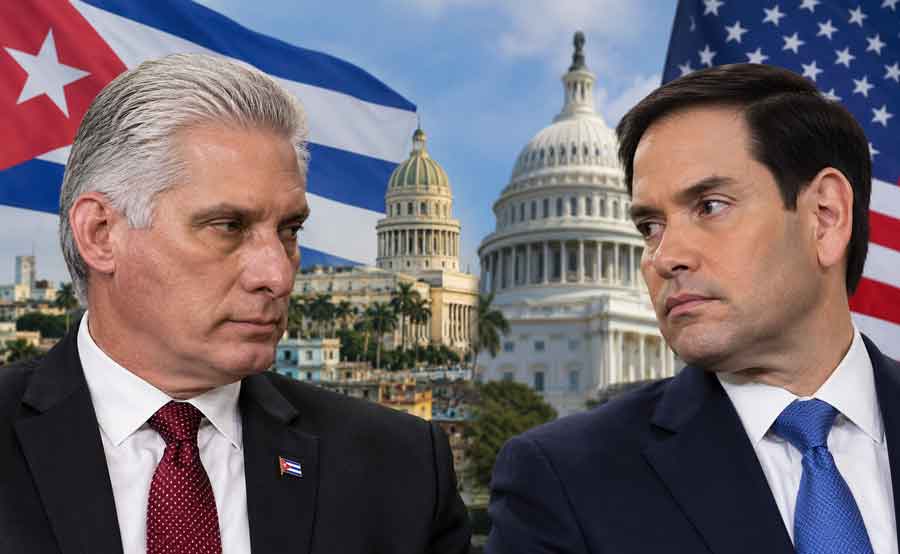
Cuban President Miguel Díaz-Canel Bermúdez and US Secretary of State Marco Rubio.
By February the government had placed state enterprises on a four-day week, curtailed inter-provincial transport, closed principal tourism facilities and shortened the school day. Blackouts now run to twenty hours and more across much of the country. By Easter, the national grid was generating roughly 1,278 megawatts against peak demand near 3,000.
The health consequences are documented rather than alleged. Scarcity of jet and diesel fuel has grounded international flights, halted imports of vaccine inputs and disabled refrigerated transport, leaving containers of medical supplies — and World Food Programme cargo — stranded at ports and warehouses. In March the United Nations system in Cuba launched a US$94.1 million emergency appeal, warning that continued fuel scarcity risked accelerated deterioration and loss of life. Cuba's foreign minister has told the General Assembly that infant mortality, historically below five per thousand live births, reached 8.5 in the first half of 2025.
The macroeconomic picture is equally stark. The Economist Intelligence Unit and the IMF both project a 7.2 per cent contraction for 2026, close to double the 3.8 per cent decline recorded in 2025, bringing cumulative losses to roughly 23 per cent of output since 2019. Tourism has fallen from 4.7 million visitors in 2018 to 1.9 million in 2025, earning some US$917 million. In February 2026, 249 Russian tourists and 511 Canadians visited the entire country. GDP per capita stood at about US$1,082 against a regional average above US$10,000 — the lowest in Latin America and the Caribbean.
The toll, and how to read it
Every headline figure on the embargo's cost originates with the Cuban foreign ministry's annual report to the United Nations. That provenance should be stated plainly rather than buried.
Havana's cumulative estimate is US$170.677 billion in nominal terms. Converted at the gold price — a device the ministry uses to strip out dollar depreciation over six decades — it puts the figure at US$2.103 trillion.
The annual series shows the trajectory: US$4.87 billion for March 2022 to February 2023; US$7.5 billion for March 2024 to February 2025; and a record US$8 billion for March 2025 to February 2026, a seven per cent increase, and one that expressly excludes the effect of the fuel measures imposed in February. Cuba separately attributes US$2.57 billion in losses to the emigration of skilled workers.
These reports aggregate foregone export earnings, the premium paid for buying from distant markets rather than one ninety miles away, lost tourism and investment, and counterfactual growth. No independent body audits the methodology, and the gold-price conversion is a presentational choice rather than an accounting standard. The direction and order of magnitude are broadly accepted; the decimal places are a claim, not a finding.
Nor is the embargo the sole author of the wreckage. The European Union, which votes against the embargo every year, told the General Assembly in its capacity as observer that the dire condition of the Cuban people is not attributable to the embargo alone. Independent economists point to state monopoly control, distorted prices, the botched 2021 currency unification, decades of under-investment in generating capacity, and the collapse of Venezuelan subsidies. A journalism worth the name says both things.
The argument that actually holds
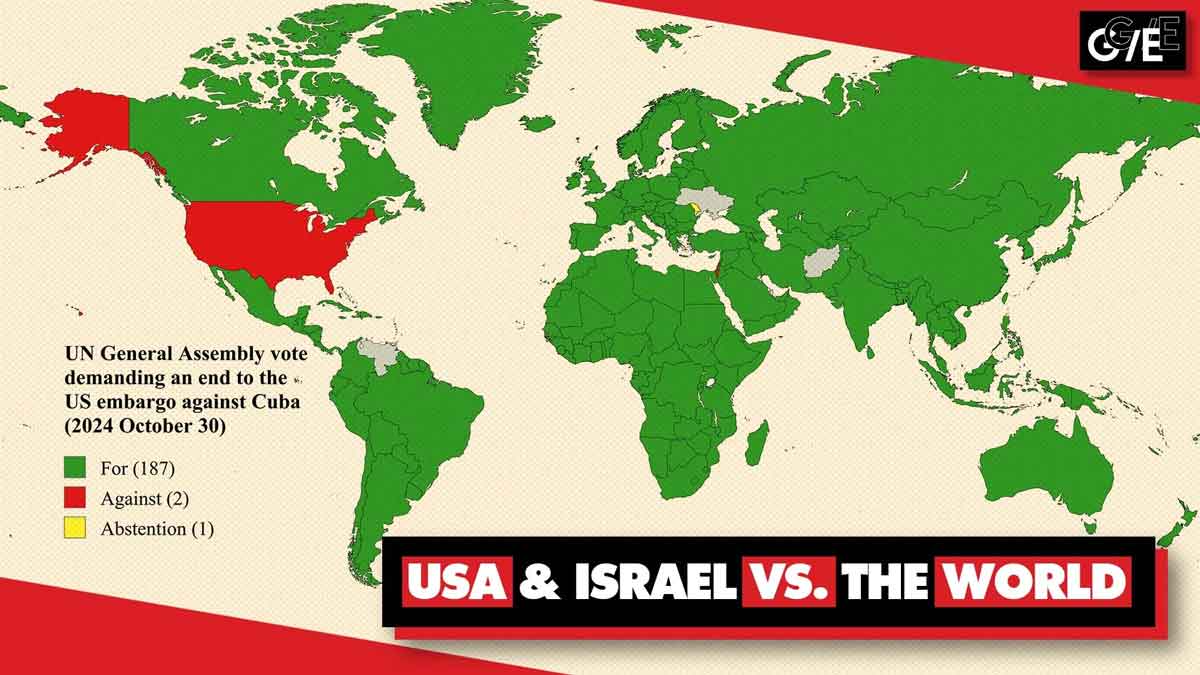
Cuba blockade UN vote 2024
The usual complaint is that the measures are extraterritorial. That framing invites an easy rebuttal, and Washington will use it: a tariff is levied at an American port on goods entering American territory; a designation freezes assets within American jurisdiction and closes access to American correspondent banks. Every sovereign chooses its trading partners. Jamaica remains perfectly free to sell fuel to Cuba and merely bears a consequence in its dealings with a third party. On that reading the measures are territorial in form and the objection dissolves into a complaint about market power.
The rebuttal is formally correct and substantively evasive. The objection was never about jurisdictional reach. It is about coercion.
The governing principle is non-intervention — restated in General Assembly Resolution 2131 of 1965 and the 1970 Friendly Relations Declaration — under which no state may employ economic measures to coerce another into subordinating the exercise of its sovereign rights. The choice of trading partner falls squarely within a state's reserved domain.
A measure territorial in form, whose designed function is to compel a third state's foreign-policy choice, engages that principle regardless of where the duty is collected. The Charter, for its part, vests economic enforcement measures in the Security Council under Article 41, not in individual capitals. The Human Rights Council created a Special Rapporteur on unilateral coercive measures in 2014 precisely because the practice had proliferated beyond that framework.
Two honest qualifications. First, the International Court of Justice in Nicaragua v United States (1986) declined to hold that the American trade embargo breached customary non-intervention, finding for Nicaragua on that count only under the bilateral treaty of friendship and commerce.
But Nicaragua concerned a primary embargo — one state declining to trade, which nobody seriously disputes is lawful. Whether a state may penalise third states for their own lawful commerce is a question the Court did not reach. The correct formulation in print is that these measures are of doubtful legality and plainly contrary to the norm of sovereign equality, not that they are settled violations.
Second — and this is the strongest single fact available to critics — the United States has already declined, once, to defend the third-country provisions before an international tribunal. When Helms-Burton passed, the European Union adopted Council Regulation 2271/96, the Blocking Regulation, making compliance with the American extraterritorial provisions unlawful for European firms and allowing them to recover damages.
Canada amended its Foreign Extraterritorial Measures Act to similar effect. Mexico legislated in the same direction. The EU filed a complaint at the World Trade Organisation, and suspended it only when Washington undertook to keep waiving Title III. That understanding held for twenty-three years. It collapsed in 2019, and the waiver was formally withdrawn in 2025.
The objection to secondary sanctions, in other words, was made formally, by the closest allies of the United States, on sovereignty grounds — and it was conceded.
Why this is a Caribbean question
The region already has a direct stake. Roughly 24,000 Cuban health workers serve in some fifty-six countries; Jamaica alone hosts more than four hundred doctors, nurses, biomedical engineers and technicians.
When the State Department expanded visa restrictions in 2025 against officials of governments engaging the Cuban labour export programme, CARICOM's Council for Foreign and Community Relations convened in special session, and prime ministers across the region said publicly that they would rather forfeit American visas than lose the medical staff their health systems depend on.
That defence must be made with open eyes. The Inter-American Commission on Human Rights reported in April on the brigades in terms that serve both sides — recognising their contribution while alleging coercive conditions, including personnel receiving a fraction of what host governments pay and restrictions on their movement.
Washington cites its own finding that medical services generated some US$4.9 billion of Cuba's US$7 billion in service exports in 2022. Any regional defence of the programme that ignores the labour-conditions critique hands over the rebuttal free of charge.
And the region's rhetorical firmness has not translated into leverage. Governments began winding down brigade arrangements through 2026 under sustained pressure.
Support for the annual General Assembly resolution fell from 187 votes in favour in 2024 to 165 in October 2025, with Argentina, Hungary, Paraguay, North Macedonia and Ukraine joining the United States and Israel in opposition. When Cuba secured an additional debate in July 2026, the procedural motion carried 136 to nine — with thirty abstentions.
Which brings the matter to its point. If Washington may impose duties on Jamaican exports because a Jamaican firm sold petroleum to Havana, the same mechanism is available against any third-country relationship a future administration dislikes: Chinese port infrastructure, Venezuelan energy, a security arrangement, an inconvenient vote at the United Nations. Small open economies with no retaliatory capacity are the precise class of state on which this instrument works best and which can resist it least.
That is a sovereignty argument every CARICOM government understands, whatever it thinks of the Cuban Communist Party. It requires no one to say a kind word about Havana. And it is available in concrete form — a regional blocking statute on the European model, a coordinated legal position through the Association of Caribbean States or CELAC, the tariff mechanism placed formally on the agenda of trade engagement with Washington, or an advisory opinion sought on the lawfulness of unilateral coercive measures.
None of that lifts the embargo. Each raises the diplomatic cost of the third-country provisions specifically. That is the achievable target, and it is the one the region has a direct interest in hitting — because the next country on the receiving end of this machinery may not be Cuba.
-30-
