
CARIBBEAN | From Las Cuevas to Capitol Hill: Caribbean Boat Strikes Reach Hegseth’s Impeachment Floor
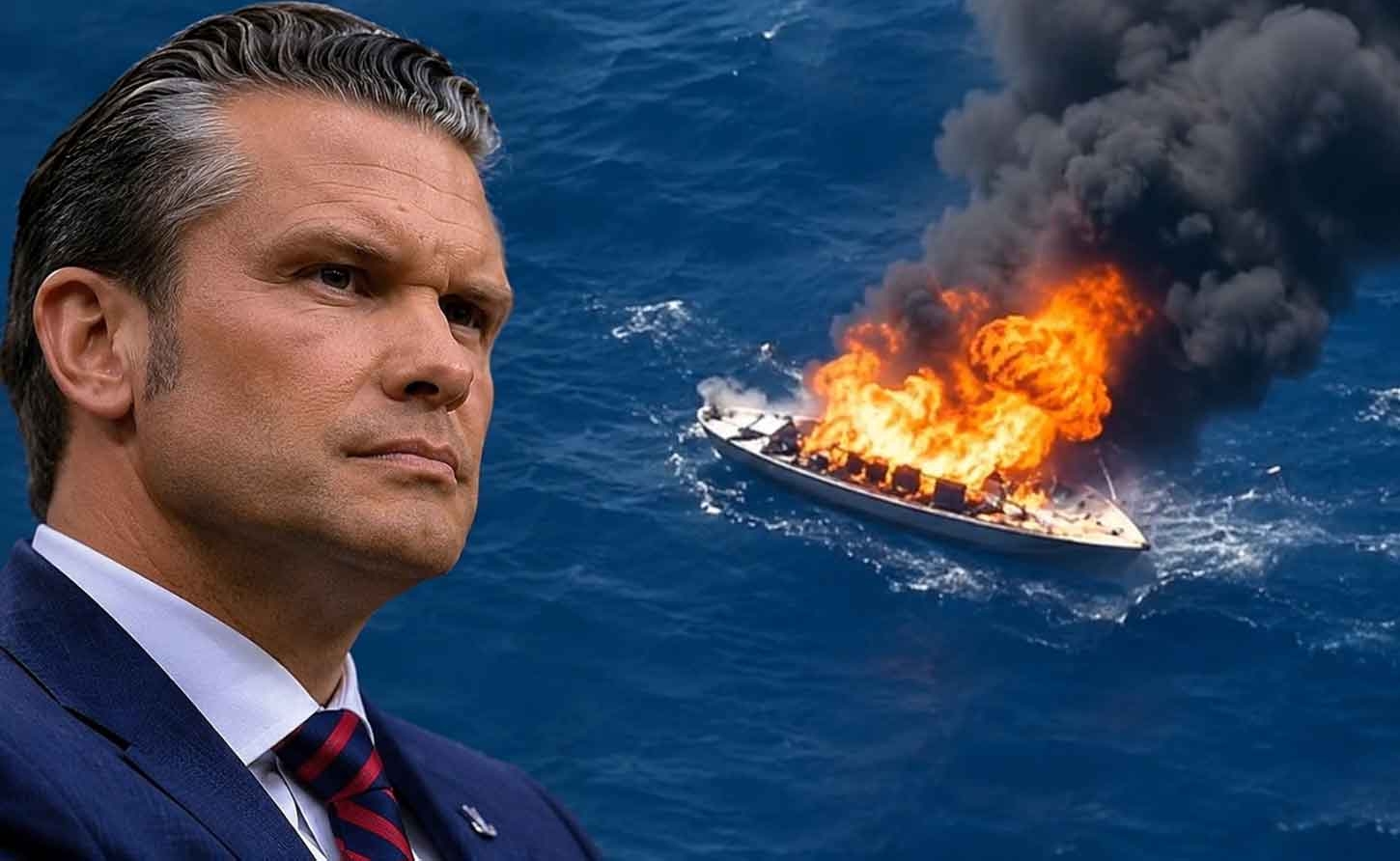
Defence Secretary Pete Hegseth Charged for Caribbean boat strikes as part of Rep Massie's impeachment articles.
A Kentucky Republican's eight-count resolution against Washington's self-styled Secretary of War is mostly about Iran, but two of its charges are written in Caribbean waters.
MONTEGO BAY, Jamaica, CALVIN G. BROWN | November 9, 2026 — For fourteen months the Caribbean Sea has been a firing range. On Monday, the man who ran it was formally accused.
Kentucky Republican Thomas Massie rose in the House of Representatives on Monday with a 34-page, eight-article resolution charging United States Defense Secretary Pete Hegseth with high crimes and misdemeanours. His reading of the updated text set a two-day clock running for Republican leaders to schedule a vote, which is expected by Wednesday.
Iran dominates the document. Three of the eight counts concern the Iran war and the War Powers Resolution, and a fourth concerns laws meant to limit civilian casualties. For this region, however, the weight sits in Articles V and VII.
Article V: “Extrajudicial Killings”
Article V addresses the boat-strike campaign the Trump regime has sold as a war on “narco-terrorists”. Task & Purpose, reporting on the updated text, puts the resolution’s count at no fewer than 243 people summarily executed in international waters.
The version published on Massie’s congressional website sets out the detail. Of at least 63 attack events it tallies, 17 fell in the Caribbean and 44 in the eastern Pacific. Its central complaint is that missiles took the place of the Coast Guard’s traditional work of interdiction, arrest and prosecution.
The targeting rules draw particular fire. Under an Execute Order dated August 5, 2025, the resolution says, a strike needed only “reasonable certainty” that those aboard belonged to a designated terrorist organisation, a looser test than the one applied to drone strikes in the War on Terror. Neither drugs nor weapons had to be on board.
Then comes the first strike of all. On September 2, 2025, by the resolution’s account, the Navy hit a vessel carrying 11 people between Venezuela and Trinidad and Tobago; roughly 45 minutes later, a second strike killed two survivors clinging to the wreckage. Massie’s text frames this as a denial of quarter and a failure to rescue, conduct it warns could invite mistreatment of captured American personnel.
The article also attacks the legal scaffolding. It records the removal, without stated cause, of the top military lawyers of the Army, Navy and Air Force, and describes a classified memo asserting an armed conflict with 24 Latin American organisations.
The fishermen the text does not name
The word “fishermen” does not appear in the resolution’s text as published. The dead are counted, not named. The names come from the Caribbean itself.
Chad Joseph, 26, and Rishi Samaroo, 41, of Las Cuevas, Trinidad, died on October 14, 2025, when a missile hit the boat bringing them home from Venezuela, where, their families say, they had worked on farms and as fishermen. Four others died with them.
Joseph’s mother, Lenore Burnley, and Samaroo’s sister, Sallycar Korasingh, are suing Washington for wrongful death and extrajudicial killing. Washington, Al Jazeera reported last month, has offered little evidence that those aboard were trafficking drugs and has never publicly identified its victims.
A sea of fear
Las Cuevas is not alone. From Trinidad’s southern peninsula to St Lucia’s Atlantic coast to the Colombian Caribbean, men who have fished these waters as their fathers and grandfathers did now put to sea wondering whether a drone operator will mistake a day’s work for a drug run.
In Vieux Fort and Micoud, fishermen told the St Lucia Times they were afraid to make the dawn run to their offshore fishing grounds. “Now men afraid to go out,” one said. In Cedros and Icacos, within sight of Venezuela, AFP found Trinidadian crews putting to sea less often.
The cruellest detail concerns the boats themselves. Reporting from Santa Marta, Colombia, The World found that the vessels being destroyed resemble in size and shape the round-hulled, twin-engine craft traditional fishermen rely on for long trips offshore.
Boats built to bring a crew home safely through open water now fit the profile of a target. Even the Styrofoam boxes that keep the catch fresh worry crews there, who fear a drone could read them as contraband.
The catch they are risking their lives for feeds the hotels and restaurants of the region’s most lucrative industry. Washington has noticed the empty water. Hailing the operation’s success last year, President Donald Trump boasted that “even fishing boats — nobody wants to go into the water anymore.”
Article VII: the Maduro raid
Article VII, its title misspelt in the original as “Kidnapping of a Soverign Foreign Leader”, turns to Venezuela. Operation Absolute Resolve, the January 3, 2026 seizure of President Nicolás Maduro and his wife, Cilia Flores, is cast as an act of war dressed as drug enforcement. The resolution’s toll is at least 83 dead, several of them civilians. The motive Massie assigns, per Task & Purpose, is “regime change and the acquisition of foreign oil”.
The defence
Hegseth is unmoved. In a video released last Thursday he called the charges “sham articles of impeachment”. On Monday he argued that objecting to the Iran, Yemen and Maduro operations amounts to objecting to the troops who carried them out.
Nor is the Caribbean of one mind. Trinidad and Tobago’s Prime Minister, Kamla Persad-Bissessar, has welcomed the strikes, even as her own citizens sue over them. The regime’s position remains that the dead were traffickers and the campaign lawful.
“The question is whether he committed impeachable acts.” — Rep. Thomas Massie
Massie insists politics is beside the point, arguing that colleagues who back the war are answering the wrong question.
What comes next
NPR’s count suggests the votes may be there, with all Democrats, Massie and a handful of Republicans. Success would make Hegseth only the third Cabinet secretary ever impeached. Removal is another matter: conviction requires two-thirds of the Senate.
Massie himself is on his way out, having lost his Republican primary earlier this year. But whatever Wednesday brings, the dead of the Caribbean Sea are now entered in the record of the United States Congress, where families in Las Cuevas have waited a year to see them.
-30-
