
BARBADOS | BLP's Five-Year March Now Begins — Bold, People-Centred, Bajan Strong
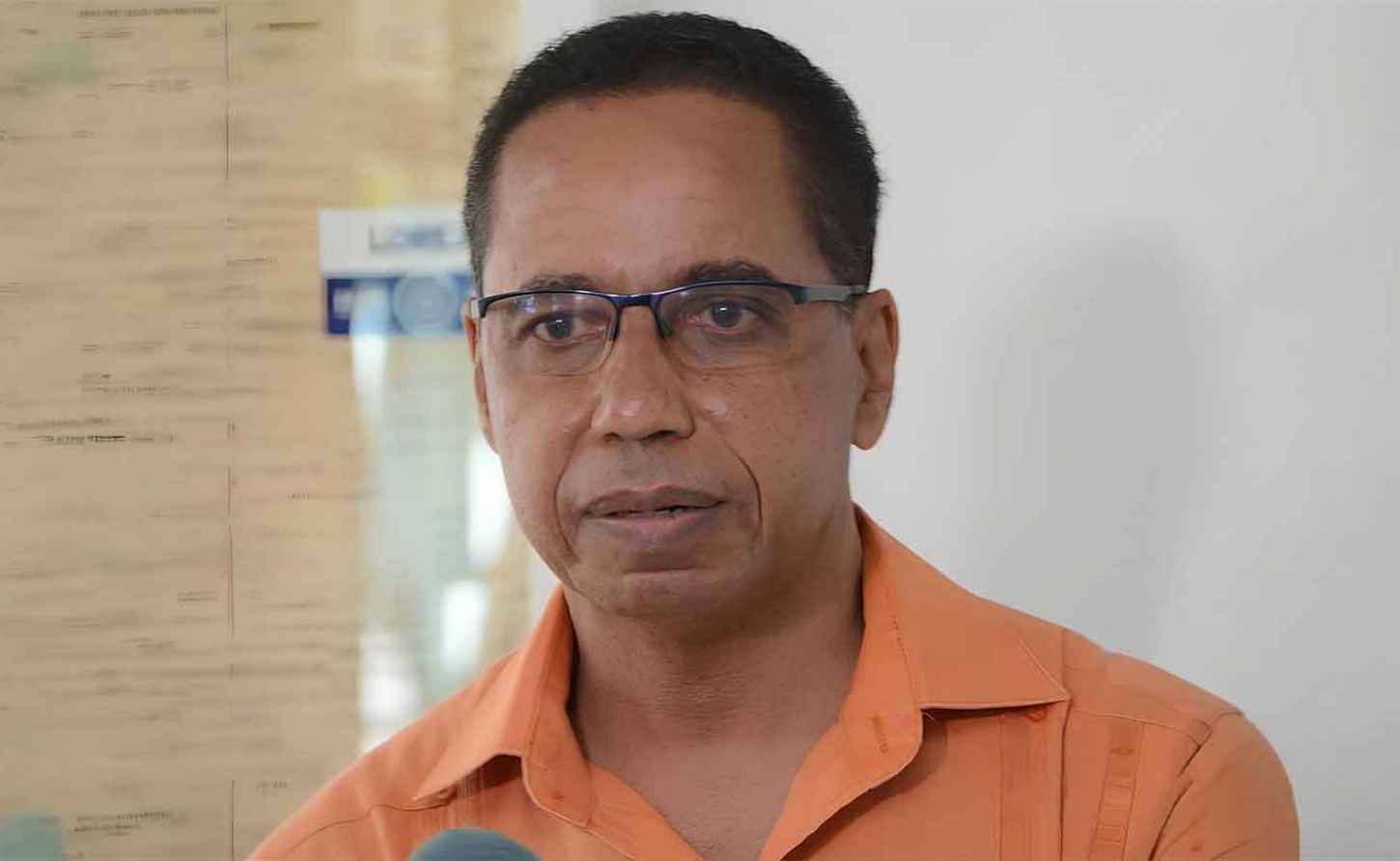
Ambassador David Comissiong, one of Barbados's most articulate voices on sovereignty and Caribbean self-determination
BRIDGETOWN, Barbados, March 1, 2026 - When Prime Minister Mia Mottley announced that Barbadians would return to the polls on February 11, 2026—a full year ahead of constitutional requirement—the decision carried an implicit question: What kind of nation do Bajans wish to be?
Ambassador David Comissiong, one of Barbados's most articulate voices on sovereignty and Caribbean self-determination, offered a compelling answer in a Press Release devoted to elucidating the Barbados Labour Party’s general election slogan of “Bajan Strong”! His interpretation of the "Bajan Strong" sloganread less like a campaign platform and more like a manifesto for the preservation of Barbadian civilization itself.
The Social Democratic Compact
At the heart of Comissiong's vision was an unapologetic embrace of social democracy—not as foreign import, but as indigenous Barbadian tradition. Free education from primary school through university.
Free public healthcare anchored by a first-class general hospital, a network of polyclinics, and a National Drug Service that ensures no Bajan must choose between medicine and meals. Social protection for the most vulnerable that recognizes the measure of a society in how it treats those with the least.
These were not presented as mere policy positions. Rather, they represented, in Comissiong's framing, a social compact forged across generations—the understanding that Barbadian strength derives not from individual accumulation but from collective provision. The BLP, he suggests, stands as guardian of this compact against forces that would unravel it.
Economics for the People
Comissiong pointedly described his economic vision as "Republican"—a deliberate invocation of Barbados's 2021 transition from constitutional monarchy to republic. This is economics rooted in the ingenuity and labour power of Barbadians themselves, oriented toward their fundamental needs rather than external interests.
Central to this vision is land ownership. In a Caribbean context where colonial patterns of land concentration persist generations after independence, the commitment to facilitating Barbadian ownership of Barbadian land carries profound significance.
Paired with the insistence that all beaches remain public—that no Bajan can be denied access to their own shoreline—this represents an economics of belonging, of birthright, of home.
Currency stability, maintained through the Barbados dollar's peg to the US dollar, provides the foundation upon which this economic sovereignty rests. It is a recognition that independence means little if a nation cannot protect its people from monetary chaos.
Governance by the People
Democracy, in Comissiong's telling, extends far beyond the ballot box. He envisions consultative and participatory governance—citizens engaged not merely as voters but as active shapers of national direction.
Trade union organization "in virtually every component of society" ensures that workers possess collective voice. A non-partisan public service, characterized by professionalism and minimal corruption, guarantees that state machinery serves the nation rather than narrow interests.
This is democracy as daily practice, not quadrennial ritual.
Culture as Sovereignty
Perhaps most striking was the cultural dimension of Comissiong's vision. National arts programmes to safeguard indigenous heritage. Beautiful public spaces and inspirational monuments. A cricket culture that inculcates "communal artistic aesthetic and sense of pride." Indigenous church organization, deeply rooted and self-managed.
These are not ornaments to governance but its very substance. A people disconnected from their history, their art, their spiritual traditions, and their communal rituals cannot be truly sovereign, regardless of what flag flies above parliament.
Comissiong's insistence on "a Sense of History that equips the Barbadian people with knowledge of their pre-colonial origins and the heroic struggles and achievements of their forebears" is a direct challenge to the cultural amnesia that colonialism sought to impose.
Caribbean and Global Vision
Comissiong's Barbados does not stand alone. Caribbean integration and "the construction of an independent Caribbean Civilization" position the island within a regional project of collective self-determination.
The foreign policy doctrine of "Friends of All: Satellites of None" echoes the non-aligned traditions that guided newly independent nations through Cold War pressures—and remains equally relevant as great power competition intensifies in the 21st century.
Gender equality, framed as "women's emancipation and full participation in society," and commitment to providing children with "multiple opportunities to develop their innate potential" complete a vision oriented toward the future even as it honours the past.
The Choice Before Barbados
When Barbadians entered the polling stations on February 11, they made a choice between political parties and candidates. But Comissiong's articulationsuggested that the stakes ran deeper.
"Bajan Strong," in Comissiong’s reading, was not merely a slogan. It was a declaration that Barbadian strength lies in Barbadian traditions of solidarity, sovereignty, and shared prosperity.
The eventual 30:0 victory for Prime Minister Mia Mottley and her BLP suggested that Comissiong had read the tea leaves correctly and that the Barbadian electorate had delivered a verdict in favour of the social democratic consensus that has shaped modern Barbados—the free education, the public healthcare, the worker protections, the cultural institutions, the commitment to collective wellbeing.
But will that verdict hold over the next five years? Will the refreshed Mia Mottley Administration live up to the towering vision that Ambassador Comissiong articulated in the run-up to the February 2026 election? Will it hold true to the imperishable principles and policies that have seemingly been bequeathed to Barbados by its unique history as the world’s first out-and-out slave society ? In short, will the Republic of Barbados march through the next five years people-centred and Bajan Strong ?
Only time will tell.
-30-
