
TRINIDAD & TOBAGO | Kamla Absent Again: Unexplained Antigua U-Turn Hands the Opposition Its Script
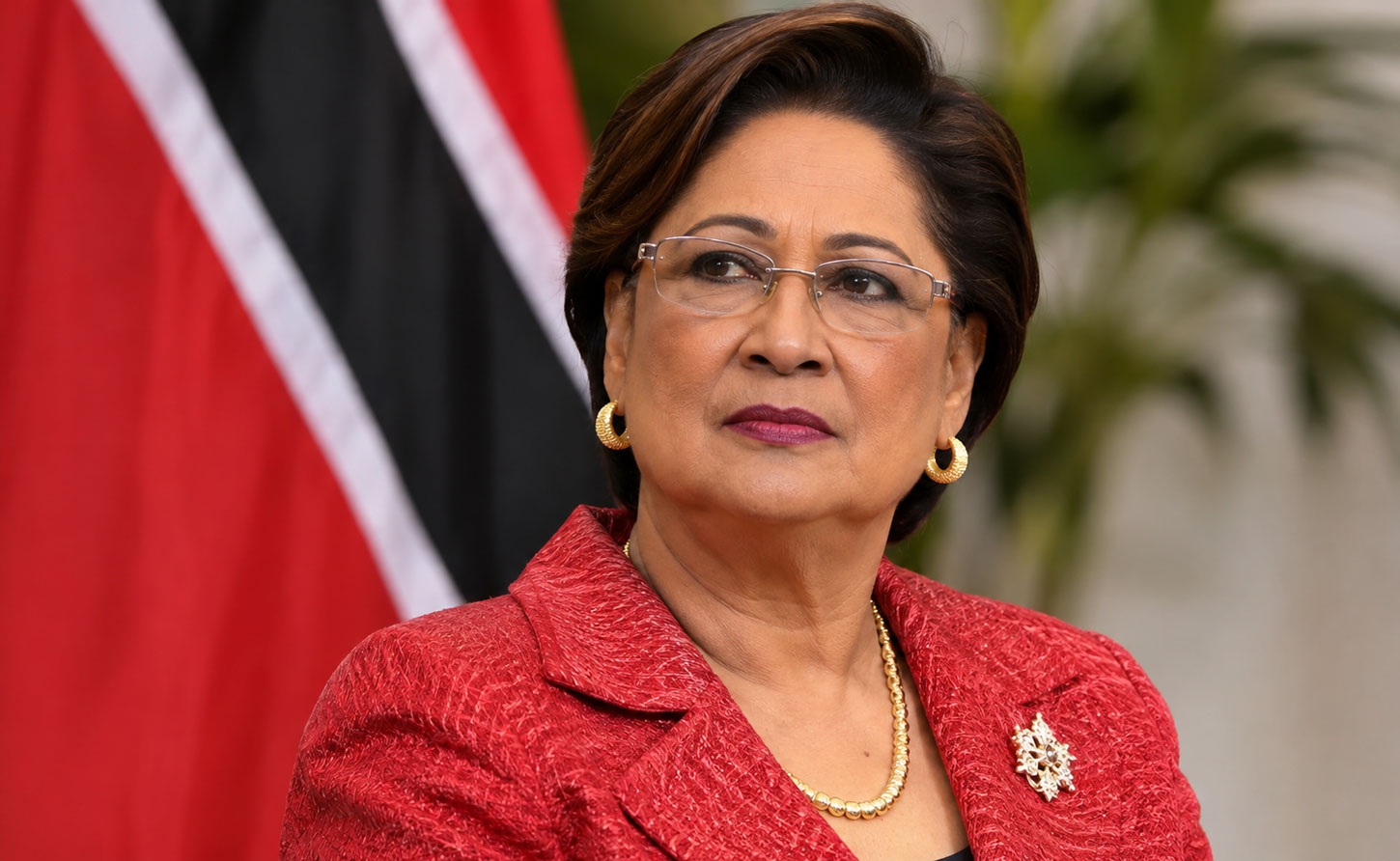
T&T Prime Minister Kamla Persad-Bissessar skipsthe Commonwealth Heads of Government Meeting (CHOGM) in Antigua and Barbuda
Hours after Port of Spain trumpeted a "proactive foreign policy agenda" for CHOGM 2026, the Prime Minister pulled out — and the explanation arrived by WhatsApp.
MONTEGO BAY, Jamaica, November 3, 2026 - Calvin G Brown — It took less than a working day for Trinidad and Tobago's "proactive foreign policy agenda" to shrink to an empty chair.
On Monday morning the Ministry of Foreign and CARICOM Affairs issued a glowing release confirming that Prime Minister Kamla Persad-Bissessar would depart that evening to lead the national delegation to the Commonwealth Heads of Government Meeting in St John's, Antigua.
The itinerary was a diplomat's dream: a reception and dinner hosted by King Charles III, the Commonwealth Business Forum, the Heads of Government Retreat, a CARICOM-Canada session hosted by Prime Minister Mark Carney, and bilateral talks with the leaders of the United Kingdom and Australia.
By Monday afternoon the Office of the Prime Minister had issued a second release. The Prime Minister "will not be attending the Commonwealth Heads of Government Meeting as previously announced." Foreign Minister Sean Sobers would represent the country. Persad-Bissessar "reverts to her existing OPM schedule."
That was it. No reason. No apology to the host. No acknowledgement that the Government had, in the space of a few hours, contradicted itself in writing.
The reason arrived by text message
The explanation, when it came, did not come from either ministry. It came in a WhatsApp message to Guardian Media. "Came down with bad case of flu," the Prime Minister wrote. The Trinidad Express separately reported that she had been nursing a persistent cough and did not want it to disrupt meetings with world leaders.
Nobody begrudges a sick woman her bed. A head of government hacking through a dinner with the King is in no one's interest, least of all her own. But the illness is not the story. The story is a government communications machine that managed to issue two official statements on the same day, on the same subject, and explain nothing in either of them — leaving the Prime Minister herself to fill the vacuum by text message to a reporter.
For an administration that has staked its reputation on being "influential" in global affairs, this was an own goal scored in slow motion.
Why this summit mattered
CHOGM 2026 is not a routine gathering. It is the first Commonwealth summit held in the Caribbean in 17 years — and the last one was in Port of Spain, in 2009, and Persad-Bissessar herself went on to hold the Commonwealth chair until 2011, the first woman to do so. The Ministry's own release leaned heavily on that history.
Antigua and Barbuda, the smallest nation ever to host, has spent a year and a fortune preparing. King Charles is in the room. Reparations, climate finance and small-island debt are on the table.
Trinidad and Tobago, one of the region's heavyweight economies and its loudest recent critic of CARICOM governance, will be represented at head-of-government level by nobody. The Retreat, where the real business is done, is strictly for Heads. Minister Sobers, however able, cannot sit in that room.
The Ministry's Monday-morning release had insisted that "effective foreign diplomacy must extend beyond ceremonial engagements." It is a line Port of Spain may now wish it had held back.
The pattern her critics are pointing to
Former foreign minister Dr Amery Browne wasted no time. He described the Prime Minister as having "a very low attendance record at important meetings and summits," and reminded citizens of her early departure from the CARICOM Heads Retreat in Nevis in February — the episode that ended with Sobers reportedly citing seasickness as a reason he might not take the boat to the venue, and with Trinidad and Tobago absent from the meeting where Secretary-General Carla Barnett's reappointment was settled.
Persad-Bissessar has disputed that account vigorously, insisting Sobers was effectively disinvited by a Heads-only message and that the reappointment process was "surreptitious." Fair enough. But the political damage of the Nevis saga was never about who was right. It was about optics: a Prime Minister who leaves, a minister who cannot follow, and a region that moves on without them.
Antigua now hands the opposition a sequel. Two absences from the year's two most consequential regional gatherings — one unexplained for days, the other unexplained for hours — are enough to turn an unfortunate coincidence into a narrative.
The case for the defence
In fairness, foreign ministers stand in for Prime Ministers at summits all the time. Sobers and his team were already on the ground on Sunday, and the trade and investment forums that matter most to ordinary Trinidadians will carry on without a prime ministerial handshake. The flu is real; coughing on a monarch is not statesmanship. Browne, for his part, is an opposition politician doing what opposition politicians do.
All true. None of it answers the question of why a government with a full press apparatus at its disposal could not manage one honest sentence: the Prime Minister is unwell and sends her regrets.
The lesson from Port of Spain
Diplomacy runs on presence. A bilateral with Carney, a word with Albanese, a quiet exchange with Gaston Browne at the Retreat — these are the moments where a small state punches above its weight, and they are not transferable by press release. Trinidad and Tobago has spent 2026 arguing that CARICOM lacks transparency. It has now shown the Commonwealth, on Caribbean soil, that it struggles with the same thing on a Monday afternoon.
The flu will pass. The question Port of Spain must answer is whether the pattern will.
— 30 —
