
CARIBBEAN | Haiti’s Vote Off; UN Experts Trace Gangs’ Political and Business Patrons
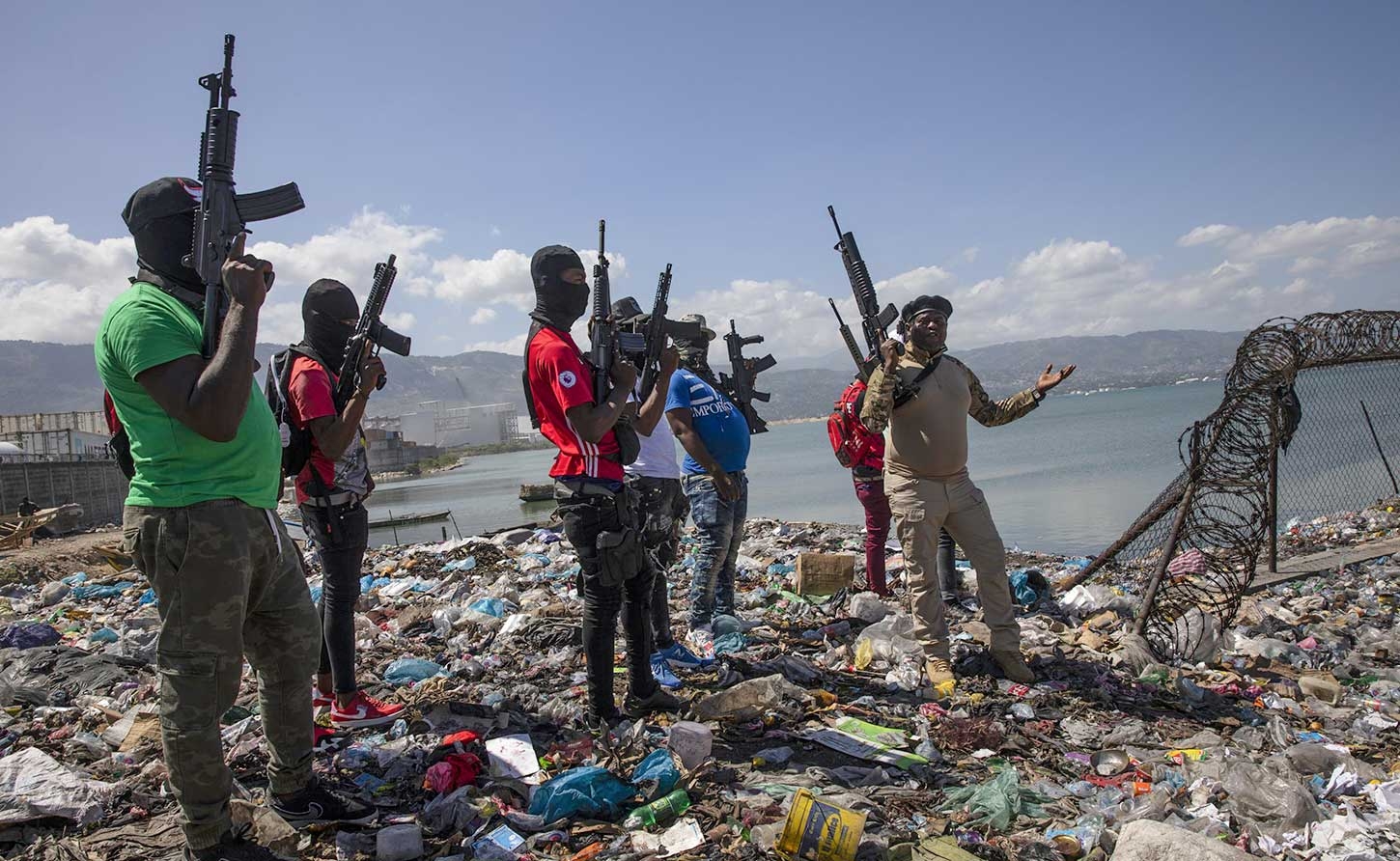
Members of Haitian Gangs said to be terrorising the citizens. Who buys them weapons? Who finances them?
Haiti’s 13 December election is gone, with no new date. But “gang violence” is only half an explanation. The UN’s own experts have spent three years documenting the gangs’ political and business patrons — and the business class that moves Haiti’s economy has sat at the negotiating table without being made to answer for the ports, the customs posts or the payments.
MONTEGO BAY, Jamaica, October 20, 2026 - Calvin G. Brown | On Monday, Carlos Ruiz Massieu, the UN’s top official in Haiti, gave the Security Council the count: 1,123 Haitians killed and 440 injured in gang-related violence between July and early October. On Sunday an armoured vehicle carrying Salvadoran soldiers of the Gang Suppression Force was attacked in Croix-des-Bouquets; four soldiers were still missing on Monday, according to media reports cited by UN News.
Two weeks before he spoke, the election Haitians had been promised for 13 December was gone.
The UN did not call it off. Haiti’s Provisional Electoral Council suspended the campaign on 5 October, citing amendments to the electoral decree adopted that same day by Prime Minister Alix Didier Fils-Aimé’s Council of Ministers. It set no new date; according to AFP, the council said only that a calendar would follow shortly.
Ruiz Massieu warned against rushing one: “Setting new dates for elections without a realistic assessment of their feasibility will only erode public confidence and the credibility of Haitian institutions.”
He has a point. As of 5 October, 759,257 people were on the voter lists, in an electorate of an estimated 6.5 million. Nearly 1.5 million Haitians have fled their homes. Haiti has not voted nationally since 2016.
“Gang violence” is the reason everyone reaches for. It names the weapon and says nothing about who put it in the gunman’s hand.
The UN Panel of Experts on Haiti has been plainer than the diplomats. In 2023 it wrote that “the influence of politicians and financial actors on gang activities is systemic in nature.” Haiti’s ports, it found, were “mostly controlled by businesspeople and merchant families.”
Those families are the movers and shakers of the Haitian economy. A 2016 World Bank review counted “highly concentrated markets” among the constraints on Haitian business and found “a concentration of ownership in the most powerful firms, which seem to benefit from preferential treatment such as reduced customs duties.” The UN experts, citing 2018 data, found one private terminal handling about 80 per cent of the cargo entering Port-au-Prince, and family conglomerates with influence over the appointment of some customs officials.
In December 2022 Canada sanctioned three of Haiti’s most prominent businessmen — Gilbert Bigio, Reynold Deeb and Sherif Abdallah — citing “illicit financial and operational support to armed gangs.” All three denied the accusations and called for the evidence. Deeb has fought his listing in Canada’s Federal Court. A sanction is a government’s finding, not a court’s.
Washington went after the political class. In August 2024 the US Treasury sanctioned former president Michel Martelly under a drug-trafficking authority, saying he “sponsored multiple Haiti-based gangs.” AP could not reach Martelly for comment.
So is it not the oligarchs who finance the gangs? The UN experts say political and business patrons built the gangs up — and that the gangs have outgrown them, “stronger, richer, better armed and more autonomous,” as the 2023 report put it.
The Global Initiative Against Transnational Organized Crime described “violent entrepreneurs” in 2024, with businesses paying up to US$20,000 a week. In January 2025, the two gangs controlling the routes to and from the National Port Authority port in Port-au-Prince each raised their levy from US$200–300 to US$500–1,000 per container. Haitian business now pays the gangs as an extortion victim too.
But the Panel’s newest report, released on 7 October, says, according to AP, that gangs stay strong because of “political, economic and security actors who back gangs when it serves their interests,” and warns that “targeting gang leaders without addressing the networks that sustain them will inevitably fall short.” One frozen account of Prophane Victor, a former deputy on the UN sanctions list, held US$421, AP reported; its report carried no response from him.
And the business class got its seat at the table. The CARICOM-brokered Kingston declaration of 11 March 2024 gave “the Private Sector” one of seven voting seats on the Transitional Presidential Council, and by August 2025 the council was chaired by businessman Laurent Saint-Cyr, a former president of Haiti’s Chamber of Commerce and Industry. WiredJA has seen no allegation against Saint-Cyr. The declaration barred anyone under UN sanction, charged or convicted. It set no test on ports, customs or payments.
Security operations account for 52 per cent of Haitians killed or wounded since July — 808 people, 148 of them not associated with gangs. “Experience has shown that security operations alone cannot bring about lasting stabilisation,” Ruiz Massieu said.
For Jamaica this is not someone else’s war. Jamaican soldiers and police were deployed to the force in December 2025. The Panel’s 2025 report described a drugs-for-guns trade between the two countries: Jamaican authorities seized nearly 4,900 kg of cannabis bound for Haiti between January 2024 and July 2025, and the experts warned that Haitian gang members could enter Jamaica with firearms to trade for drugs.
CARICOM brokered that table. It can say the next part out loud: Haiti needs more than soldiers to vote. It needs the networks the UN experts describe made to answer for the ports, the customs posts and the payments.
-30-
