
JAMAICA | Who Travelled, and What Did It Cost? Opposition Demands Accounting for London Reparations Mission
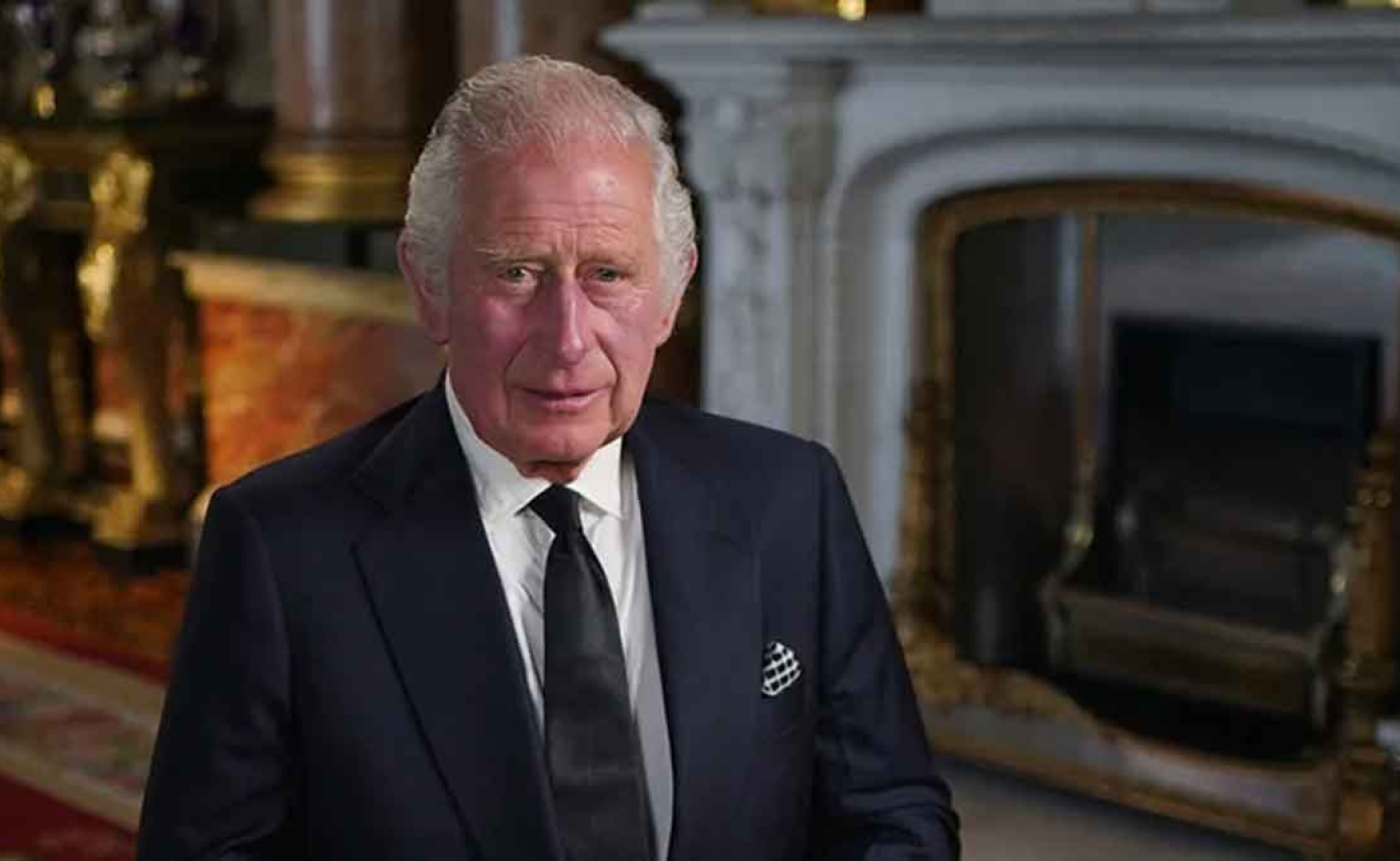
King Charles lll, on vacation in Balmoral, Scotland
Jamaica’s petition is lodged and Buckingham Palace has answered. But the Opposition wants the receipts, and the Palace’s own account of the process raises a harder question than any of them: who actually advises the King?
KINGSTON, Jamaica — September 8, 2026 - Who travelled to London, what was each person there to do, what did the mission cost the Jamaican taxpayer, and what did it achieve that the island’s existing diplomatic and legal representatives could not have accomplished from where they already sit?
Those are the questions Opposition Spokesperson on Culture, Creative Industries and Information Nekeisha Burchell, MP, put to the Government on Tuesday, a day after Jamaica’s reparations petition was lodged at Buckingham Palace. They will not be answered by pointing at the photographs.
Her statement separates the cause from the conduct. The Opposition, she says, fully supports Jamaica’s pursuit of reparatory justice by every credible legal and diplomatic avenue — but an issue carrying the expectations of generations demands rigorous preparation, disciplined diplomacy and clear objectives. The complaint is not about the destination. It is about how the country was driven there.
Burchell also records that the Government did not consult the Opposition on any aspect of the matter. On a question that is national rather than partisan — one that CARICOM has pursued collectively for more than a decade — that omission is difficult to defend on any ground other than convenience.
What the Mission Actually Did
A delegation led by Culture Minister Olivia Grange delivered a petition to Buckingham Palace on Monday, 7 September, asking King Charles III — in his capacity as Head of State of Jamaica — to refer three questions on transatlantic chattel slavery to the Judicial Committee of the Privy Council. It is the first time a Commonwealth state has attempted this route in the cause of reparatory justice.
The questions are deliberately narrow. Was the enslavement of Africans in Jamaica ever lawful under English law? Did it breach international law? Does the United Kingdom bear a legal obligation to provide a reparatory remedy?
The petition names no sum; any figure owed is for a court, not a communiqué, to settle. The filing was timed to the 245th anniversary of the 1781 voyage of the slave ship Zong, on which the crew murdered scores of enslaved Africans by throwing them overboard and then claimed the insurance on lost cargo. The symbolism was not accidental.
The Palace’s Own Account
Buckingham Palace did not decline to comment, and that in itself is notable. A spokesperson confirmed the Palace’s understanding that the Jamaican Government is seeking to have a petition heard before the Judicial Committee, and set out the mechanism: the petition is lodged with the Committee so that a referral under section 4 of the 1833 Act may be considered.
The Palace added that the Jamaican representatives would be received by the Foreign, Commonwealth and Development Office for bilateral discussions, and it worked with Jamaica’s Governor General to ensure the document was correctly lodged. It was not handed to the King. It went to the Registrar of the Judicial Committee.
Read carefully, the statement does three things. It confirms Jamaica’s route is real and that the Palace is not obstructing it. It moves the matter from the person of the monarch to a legal registry. And it says nothing whatever about the merits. To that the Palace appended the King’s familiar language on addressing historic wrongs, drawn from his address to Commonwealth leaders — sympathy, carefully bounded.
The Disputed Version
Burchell’s account goes further. She states that the Government requested a meeting with the King only during the week commencing 24 August, months after Grange announced the initiative in her Sectoral Debate presentation, and that the Palace advised a meeting was not practical because the King was at Balmoral for his publicly known annual summer stay.
On her telling, the Palace also advised that petitions of this nature are not served personally on the King — which raises her sharpest question: why did the delegation cross the Atlantic after being told the trip was unnecessary?
That account is hers, and it sits uneasily beside the rest of the record. Grange told Reuters shortly before the filing that she was “encouraged” by the Palace’s engagement, and the delegation has confirmed it knew of the King’s absence in advance and regarded it as immaterial.
The Government has not published its correspondence with the Palace; until it does, the public is being asked to choose between two characterisations of the same exchange, on the word of the two parties to it.
The accounting questions, however, do not depend on resolving that dispute. Cost, composition, confirmed programme, next steps, and what legal weight an advisory opinion would actually carry — these are the ordinary questions of a functioning Parliament, and the Government owes Parliament answers whatever it thinks of the messenger.
The King Cannot Answer
Behind the politics sits a difficulty no amount of ceremony can dissolve. Charles is asked to refer the questions. He does not decide them, and he does not decide on his own initiative whether to refer them. He acts on the advice of ministers.
The King is Head of State of Jamaica. He is also Head of State of the United Kingdom. He acts on the advice of ministers — and on this question, the ministers who advise him are British.
Within hours of the delegation’s arrival at the Palace gates, Downing Street closed that door. The Prime Minister’s official spokesman restated the British position flatly: the United Kingdom does not and will not pay reparations. The slave trade was abhorrent and the wrongs of the past should be acknowledged, he allowed — but Britain intends to face forward.
So Jamaica has asked its own Head of State to refer a question about the liability of his other realm, on the advice of that realm’s government, which has already announced its answer. The Pan-African advocate Dr Imani Tafari-Ama put the objection sharply in the local press: there is a contradiction in asking the Crown to adjudicate the Crown’s own historic conduct. That is the structural problem, and no elegance of drafting argues it away.
The counter-argument deserves equal force. The Judicial Committee is a court, not a cabinet, and its judges are institutionally distinct from the ministers who would advise the referral. A finding that the enslavement of Africans was never lawful under English law is a determination no British government could talk past. Jamaica is not asking the King for money. It is asking for a door to be opened onto a bench.
A Correction the Record Requires
Defending the campaign, Grange returned to the 1833 settlement, in which Britain allocated £20 million to compensate slave owners — roughly forty per cent of annual Treasury revenue at the time. Her question was whether a country still repaying the slave masters can object to a claim from the descendants of the enslaved. The moral arithmetic is sound.
The temporal arithmetic is not, and WiredJa has flagged this before: the £20 million was raised through a borrowing instrument that was retired on 1 February 2015. Britain is not, in 2026, still paying slave owners or their heirs.
The point survives the correction and is stronger for it. That Britain could find £20 million in 1833 for the owners of human beings, and carry that obligation for 182 years, establishes beyond argument that compensation for slavery was administratively possible, fiscally survivable and politically achievable. It was simply paid to the wrong people.
Advocates should say exactly that, because opponents of reparations hunt for the loose fact, and one overstatement is worth more to them than a decade of careful argument.
What an Advisory Opinion Can and Cannot Deliver
Nothing has been won and nothing lost. An advisory opinion, if it is ever given, awards no compensation and establishes no present liability. It would settle points of law never authoritatively settled — in London, before judges of the United Kingdom Supreme Court.
That is either the shrewdest available use of the colonial architecture Jamaica inherited or an act of self-contradiction, and reasonable Jamaicans will disagree. Grange maintains the legal route runs parallel to CARICOM’s ten-point programme, not against it.
The sharpest irony sits behind all of it. Jamaica has repeatedly signalled its intention to remove the British monarch as Head of State and has repeatedly failed to finish the work. It is precisely because that constitutional business remains unfinished that this route existed at all. Jamaica has used a door it says it intends to brick up.
The petition is lodged and the Registrar has it. What remains outstanding is domestic: a delegation list, an invoice, a programme of engagements, and a candid statement of what the Government will do if the answer comes back no. None of that requires the King’s permission.
— 30 —
