
JAMAICA | PNP Gagged at Gordon House: Government Pulls the Plug on Cuba Censure Debate
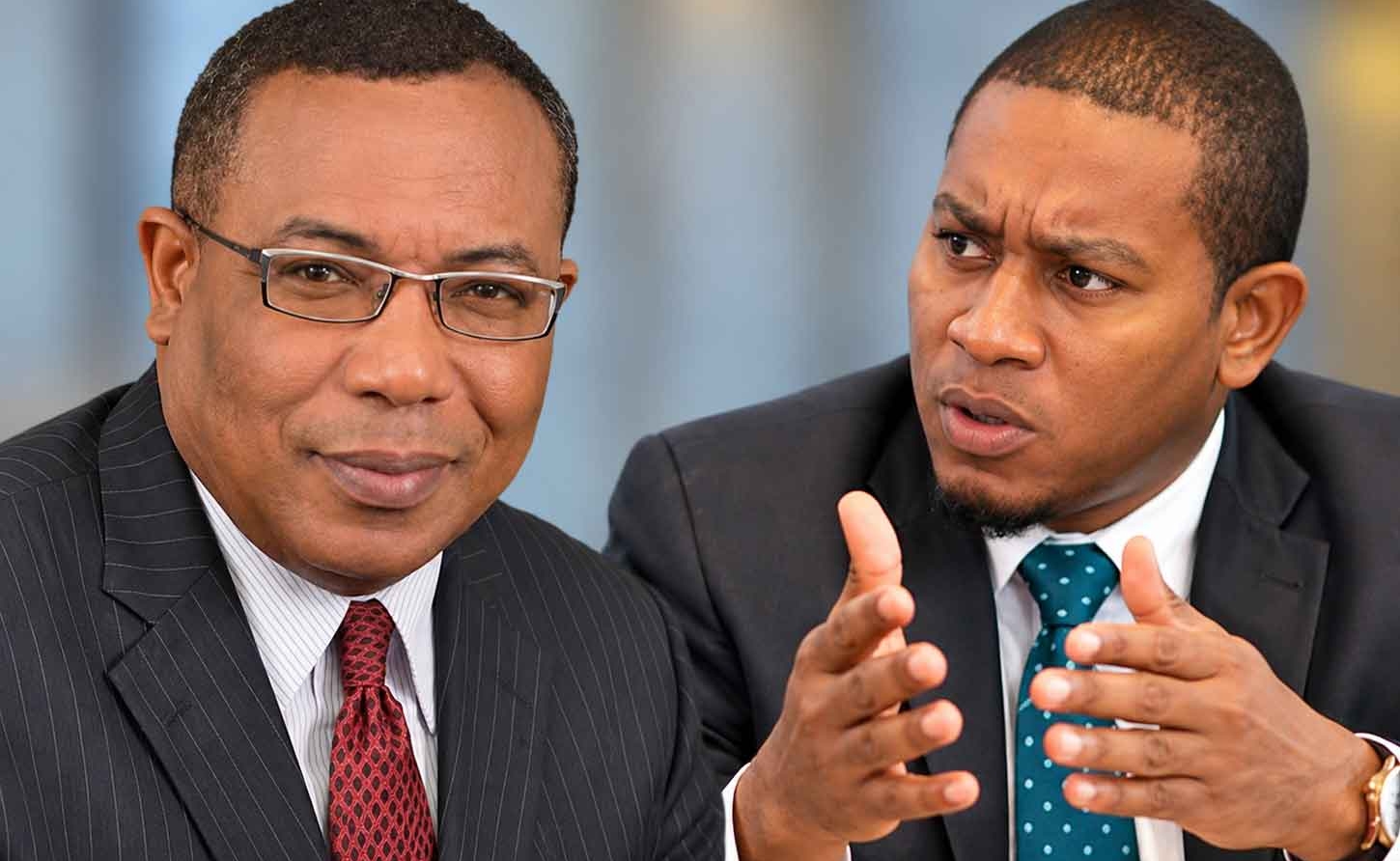
Opposition member Anthony Hylton and Leader of Government Business Floyd Green
The Opposition says the Holness administration bent the House's own rules to bury a censure motion over Jamaica's U-turn at the United Nations. The Government says the motion was "absurd". Either way, the debate is not over.
MONTEGO BAY, Jamaica, November 4, 2026 | Calvin G. Brown | — For thirty-four years, Jamaica voted the same way. Every autumn since 1992, under governments of both colours, its ambassador at the United Nations raised a hand in favour of ending the United States embargo against Cuba.
On October 28 that hand stayed down. One week later, when the Opposition tried to make the Government answer for how that about-face was kept from Parliament, the Government reached for the rulebook — and, the Opposition says, used it to shut the door.
That is the charge in a blistering release issued Wednesday by the Parliamentary Opposition, which accuses the administration of "brazen manipulation of Standing Orders" to stifle a censure motion over what it calls the Government's deception of the House on Cuba. "This is not merely a procedural dispute," the release says. "It concerns democratic accountability and the public's right to know."
Suspend, speak, shut it down
The sequence, as the Opposition tells it, has the tidy precision of a plan. Anthony Hylton, MP for St Andrew Western, tabled his motion on Tuesday, November 3. Standing Orders bar debate on a motion the same day it is tabled, so the Opposition expected the matter to come up at the next sitting — with Prime Minister Andrew Holness in the chamber to face it.
Instead, Leader of Government Business Floyd Green moved to suspend the Standing Orders and proceed at once. Leader of Opposition Business Phillip Paulwell objected on two grounds: the procedural breach, and the impropriety of debating a censure of the Government with the Prime Minister absent. Speaker Juliet Holness ruled the Standing Orders suspended, notice requirement included.
Hylton opened. Green replied. Then, as Opposition members rose to contribute, Green moved to close the debate. The Opposition invoked Standing Order 38(2), which bars early closure where it would oppress the minority, and Opposition Leader Mark Golding called for a division. The Speaker acknowledged the call.
Then, in the Opposition's account, "no vote was taken amid the pandemonium" — and the Speaker adjourned the sitting.
That is the nub of the Opposition's grievance, and it is aimed at the Chair as much as at Green. The Opposition maintains that the Speaker improperly closed the debate and rushed an adjournment while its objection was still being made — an objection that amounted to nothing more than a request to speak on its own motion.
The division Golding demanded, the one mechanism that would have put every member on the record, was never taken. The Opposition's reading is simple: the Government did not want the motion discussed, and the Chair obliged.
Two contributions. One from each side. On a motion to censure a Government for misleading Parliament. Then the gavel.
"This Government cannot be allowed to use procedural sleight of hand to silence Parliament on a matter of grave national importance," Golding said. "The censure motion stands, and every Opposition voice must be given the opportunity to be heard." Hylton was blunter still: "The Government misled the House on Cuba. It then tried to bury the consequences."
"This Government cannot be allowed to use procedural sleight of hand to silence Parliament on a matter of grave national importance." — Mark Golding
The Government's version
The Government does not dispute the speed. It disputes the sin. Green dismissed the motion as "absurd" and "fundamentally misconceived", arguing that it rests on a misreading of the October 27 sitting and of how Parliament and the executive share responsibility for foreign affairs. The Government's Cuba motion that day, he said, was read verbatim, debated and passed with no Opposition dissent.
At Jamaica House on Wednesday morning he insisted the Government is not afraid of scrutiny, drawing a line between "parliamentary scrutiny and the abuse of parliamentary process".
There is also a factual dispute over the closure itself. The Gleaner reported that the Speaker put Green's closure request to the House and later declared it carried by the ayes; Irie FM likewise reported the matter "voted on and closed". The Opposition's release says flatly that no vote was taken, and that a division called by the Leader of the Opposition was left hanging when the Speaker adjourned.
A voice vote declared over the din, with a demand for a division unanswered, is not the same thing as a vote. Hansard will have to settle which chamber the two sides were sitting in.
Deputy Leader of Government Business Robert Morgan, for his part, laid the "unparliamentary behaviour" squarely at the Opposition's feet, after a sitting that ended with Opposition members refusing to take their seats and a reported post-adjournment confrontation between Government MP Desmond McKenzie and Opposition MP Mikael Phillips.
What the row is really about
Strip away the Standing Orders and the quarrel is about a single day. On Tuesday, October 27, the House passed, without dissent, a Government motion on the economic and humanitarian situation in Cuba. On Wednesday, October 28, Jamaica abstained in New York. Hylton's motion says neither junior foreign affairs minister Alando Terrelonge nor anyone else on the Government benches told the House that an abstention was even being considered.
His motion asked for a full statement within seven days on when the abstention was decided and by whom, when instructions went to the UN mission, and whether Jamaica approached Havana or proposed any amendment before the vote. It asked for an apology. None of that was ever reached.
Foreign Minister Kamina Johnson Smith has defended the abstention as a deliberate shift: the UN text, she said, could not be amended to reflect Jamaica's broader concerns about humanitarian conditions, reform and dialogue. Information Minister Dana Morris Dixon denied any American pressure. The resolution passed 130 to 17 with 25 abstentions, the weakest showing in its history. Trinidad and Tobago voted no, the first CARICOM state in decades to do so. Jamaica, Guyana and Haiti abstained.
Former Prime Minister P.J. Patterson called the abstention "an abominable betrayal", and the Opposition release says the mishandling has "badly damaged Brand Jamaica" — a phrase chosen with care in an economy that lives on reputation.
Unfinished business
Here is the uncomfortable truth for both sides. A Government confident in its case had every reason to let the debate run, take its lumps and win the vote it was always going to win. An Opposition that chose procedure as its battlefield now finds itself arguing about Standing Order 38(2) when the public wants to know why Jamaica blinked on Cuba.
The debate, by the Opposition's own account, remains unfinished and must resume when the House next sits. The Opposition demands that every member be allowed to speak on the motion it brought. Whether the Speaker will let them — and whether the Prime Minister will be in his seat when it happens — are the questions no release has yet answered.
— 30 —
