
JAMAICA | PNP Calls for Rights-Based Social Protection Framework Rooted in Dignity and Inclusion
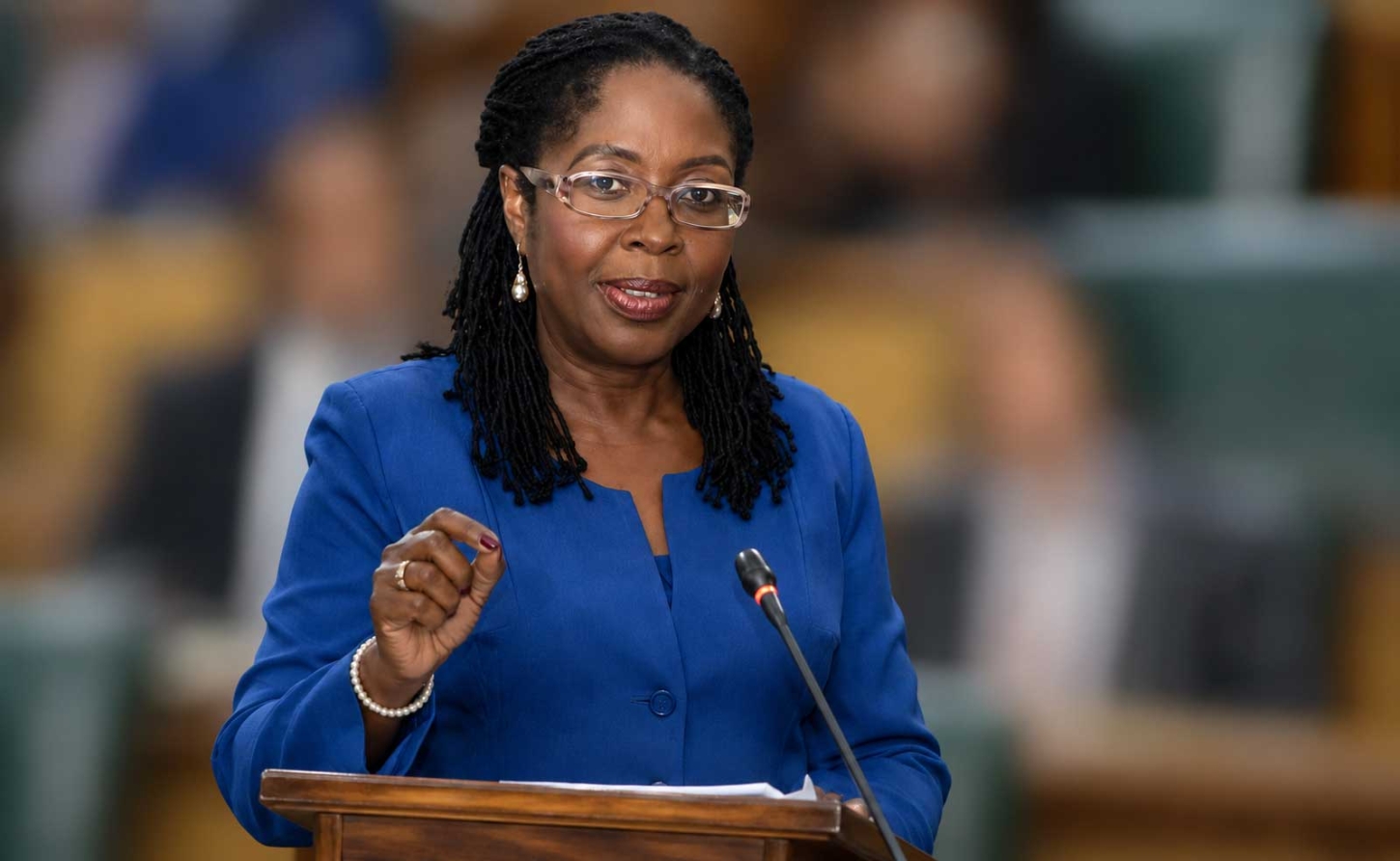
Opposition Spokesperson on Social Protection and Social Transformation, MP, Dr Angela Brown Burke.
Opposition Spokesperson Dr Angela Brown Burke says Jamaica's social protection system has been reduced to charitable handouts — and that the State's obligation to its most vulnerable citizens demands far more than that.
Kingston, Jamaica — Calvin G. Brown | May 7, 2026 - When a government reframes poverty as a personal failure and social support as an act of generosity, the architecture of injustice is already in place. That, in essence, is the indictment that Opposition Spokesperson on Social Protection and Social Transformation, Dr Angela Brown Burke, levelled at Jamaica's current social protection system during her Sectoral Presentation in Parliament on Tuesday — and she was not mincing words.
Brown Burke's central demand is as straightforward as it is transformative: social protection must be recognised not as charity dispensed at the discretion of the State, but as a fundamental right owed to every Jamaican citizen. Drawing on the International Labour Organization's established framework on social protection floors, she called for a system that guarantees access to essential healthcare, education, income security, and targeted support for those who need it most — enshrined not in political goodwill, but in enforceable obligation.
A System Built on Good Intentions, Riddled with Gaps
Brown Burke did not come to bury Jamaica's existing social architecture. She acknowledged the historic contributions of programmes such as the Programme of Advancement Through Health and Education (PATH), the National Health Fund, and the National Insurance Scheme in providing a floor of support for vulnerable Jamaicans. But acknowledgement of intent is not absolution of outcome.
Major gaps remain in both implementation and accessibility, she argued — gaps that fall hardest on persons with disabilities, low-income households, and communities that have been structurally underserved for generations. The integrated, inclusive system that successive administrations have promised remains, she contends, a political aspiration rather than a lived reality for too many Jamaicans.
“Social protection demands cultural intelligence. Policies must recognise the lived realities of all Jamaicans and ensure that no one is forced to choose between identity and security.”- Dr Angela Brown Burke
The Dignity Deficit
There is a dimension to Brown Burke's argument that goes beyond policy mechanics — it is, at its core, a moral reckoning. She argued forcefully that the manner in which public systems deliver support matters as much as the support itself. Beneficiaries must not be stripped of dignity in the process of receiving assistance. Privacy must be protected. Unnecessary bureaucratic hardship must be eliminated. A rights-based framework, by definition, treats every person who accesses it not as a supplicant, but as a rights-holder.
This distinction — between charity and entitlement — is not merely semantic. It shapes the culture of every institution that delivers social services, from frontline workers to the Ministers who set policy. When support is framed as generosity, it invites condescension. When it is framed as a right, it demands accountability.
Culture, Identity, and the Rastafari Question
Brown Burke widened her lens to encompass a dimension that government policy has historically struggled to address with either consistency or sensitivity: cultural identity. She pointed specifically to the Rastafari community as a population whose protections remain uneven and insufficient, leaving members vulnerable to inconsistent — and often discriminatory — treatment within public systems and institutions.
Her challenge to policymakers is blunt: no Jamaican should be forced to choose between their cultural identity and their access to the State's protection. That this principle must still be argued in 2026 is itself an indictment of the pace of reform.
From Safety Net to Social Floor: A Structural Shift
The language of “safety nets” has long dominated social policy discourse in the Caribbean — a metaphor that imagines protection as something invoked only when citizens have already fallen. Brown Burke is arguing for something categorically different: a social floor, a permanent baseline of guaranteed rights beneath which no Jamaican should be allowed to sink, regardless of circumstance.
This is not a radical proposition. It is, in fact, the direction in which international best practice has been moving for decades. ILO Social Protection Floors Recommendation No. 202, adopted in 2012, establishes precisely this framework — one that Jamaica has endorsed in principle but has yet to translate into comprehensive legislative and institutional reality.
Brown Burke made clear that Jamaica’s long-term development depends on building social protection systems that are inclusive, transparent, effectively implemented, and capable of delivering measurable outcomes. Aspiration without accountability, she implied, is the currency of governments that are not serious about transformation.
An Opposition With a Mandate to Be Heard
Brown Burke's intervention arrives at a moment when the People's National Party is actively repositioning itself as a credible governing alternative — not merely a vehicle for opposition, but a party with a coherent social vision. Her call for a rights-based framework is a challenge to the administration, but it is also a statement of intent: that a future PNP government would approach social protection not as a line item in a budget, but as the foundation of a just society.
The question now before Parliament — and before the Jamaican public — is whether the current administration is prepared to meet that standard, or whether the dignity of the most vulnerable will remain, as it has too often been, a matter of political convenience rather than constitutional obligation.
If Jamaica is to be the kind of country it claims to aspire to be, the answer must be written not in speeches, but in law.
— 30 —
