
JAMAICA | NaRRA Pays Its CEO and Its Landlord. Who Pays for the Roofs?

Chief Executive of the National Reconstruction and Resilience Authority (NaRRA) Major General (Retired) Antony Anderson
Almost a year after Hurricane Melissa, the agency created to rebuild Jamaica is caught in a storm of its own making, over its rent, its chief executive's pay, and whether anyone outside Jamaica House will get to judge its results.
MONTEGO BAY, Jamaica,| Calvin G Brown | October 10, 2026 | In 18 days, Jamaica marks one year since Hurricane Melissa. The storm struck on October 28 last year, leaving at least 45 people dead and causing physical damage estimated at US$8.8 billion (J$1.4 trillion), equal to 41 per cent of the country's 2024 GDP. That makes it the costliest hurricane in Jamaica's recorded history. The Opposition's housing spokesman estimates that some 180,000 houses were either destroyed or damaged.
Against that wreckage, you might expect the National Reconstruction and Resilience Authority (NaRRA), the body built to be the single point of command for recovery, to spend early October announcing a bridge, a school, or a roof. Instead, it spent the week defending its address and its chief executive's pay.
The Rent
On October 5, NaRRA announced that it had signed a five-year lease for its new headquarters at the Digicel Building, 14 Ocean Boulevard, downtown Kingston. The lease is valued at US$26.00 per square foot, for a total annual cost of US$725,972. That is about J$115.2 million a year, or more than half a billion dollars over the term, committed before NaRRA's recruitment drive was even finished.
The agency offered a resilience argument. NaRRA said the building was designed and constructed to withstand multiple environmental hazards. Chief executive Ambassador Antony Anderson put it this way: “Resilience must be reflected in NaRRA's operations.”
The public was not persuaded, and the Government backed down within days. Information Minister Dana Morris Dixon announced a slower, staged rollout using less space, and Prime Minister Andrew Holness said NaRRA would initially occupy one floor. Even so, he defended the price as “a market reality” and said the lease would have been reviewed by the National Land Agency first.
A lease signed, announced, defended and sent back for renegotiation within one week: either the Government folded under noise, or nobody caught a bad decision before the ink dried. Neither inspires confidence.
The Opposition went further. Finance spokesman Julian Robinson asked why NaRRA was not placed in a government building the public is already paying for. His summary was blunt: “Every dollar spent on comfort is a dollar withheld from recovery.” Advocate Kay Osbourne dismissed the scale-back altogether, arguing the lease was indefensible whether it covered one floor or two. Critics quoted by The Gleaner also note that the NaRRA legislation expects the agency to use public facilities wherever possible.
Fairness requires one concession. The resilience argument is not frivolous. A recovery agency that goes dark in the next hurricane would be worse than useless. But resilience justifies a hardened server room and a backup command post, not automatically a five-year waterfront headquarters signed before the staff are hired. One question still has no public answer: which government-owned buildings were assessed and rejected, and why?
The Pay
Then came the salary. Documents obtained by Radio Jamaica News through an Access to Information request put Anderson's base salary at J$35 million to J$45 million a year. He is also eligible for a performance incentive of up to 25 per cent of base pay, which at the top of the range brings the total to about J$56 million before perks. Those perks include a fully maintained vehicle and security, on a three- to five-year renewable contract.
For comparison, a June 7 Sunday Gleaner advertisement for chief executive of the National Works Agency offered a starting salary of just over J$17 million. The NWA runs Jamaica's main road network and flood control system. NaRRA's base pay is therefore two to two-and-a-half times that figure.
There is a case for paying a premium. NaRRA's job requirements are steeper, including 12 to 15 years of senior leadership in large-scale reconstruction or development and proven engagement with multilateral banks and donors. Prime Minister Holness has also branded Anderson the “Chief Executing Officer, the man who will get things done.”
Online, the arithmetic has already been done. “This man has already collected four months' pay and NaRRA has not fixed a roof or repaired a road in the hurricane-ravaged parishes,” one social media commentator wrote. At the advertised rate, four months on the payroll is worth between J$11.7 million and J$15 million in base salary alone. WiredJa could find no public report of a completed NaRRA-led repair project, and with its headquarters not due to open until November 1, the agency has yet to show what that money has bought.
“Paying more will buy us no assurance of competence or integrity or results.” — Jeanette Calder, Jamaica Accountability Meter Portal
The more serious problem is the bonus, not the base. The documents do not say what triggers the 25 per cent incentive. Jeanette Calder of the Jamaica Accountability Meter Portal named the danger precisely, asking whether the bonus would reward money spent, contracts awarded or projects started, and calling those “poor incentives.” All three measure activity, not results. A reconstruction agency can spend heavily, award many contracts, and still leave a family in Westmoreland under a tarpaulin.
Calder also raised a governance question: with no board in place, who decides whether the bonus is earned? Will the Prime Minister alone make that call? A performance payment with unpublished criteria, judged by one person, is not performance pay. It is discretion.
The Man and the Machine
None of this is an indictment of Antony Anderson. He is a former Commissioner of Police and former Chief of Defence Staff, and was Jamaica's Ambassador to the United States when he was chosen for this post. His credentials are not in question. What is in question is the institution being built around him, and whether its safeguards are visible yet.
That institution was born in conflict, its Act passed at about 1:30 a.m. over the Opposition's defeated divide votes. During that debate, Government MP Delano Seiveright promised clear coordination, Cabinet oversight, strong audit and reporting, and transparency through a public register.
The Government's answer to the oversight question is the Jamaica Reconstruction and Resilience Oversight Committee (JamRROC), launched at Jamaica House in September under economist Professor Peter Blair Henry. But JamRROC is not established in law. It advises the Prime Minister and Cabinet, and the Prime Minister is the same official who appoints the CEO, can renew his appointment one year at a time, and can revoke it. Even The Gleaner, which welcomed the committee, noted that its access to NaRRA data, its legal standing and its funding remain unclear.
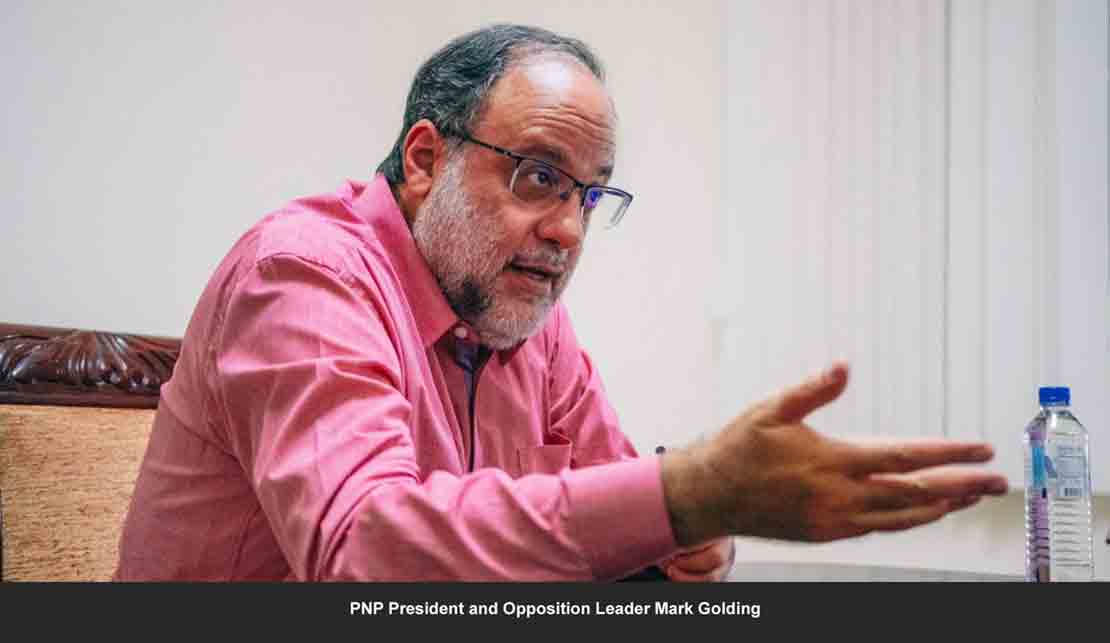 Opposition Leader Mark Golding seized on exactly that gap on October 8. Because JamRROC has no legal status, and NaRRA cannot share information with an outside body without specific legal authority, he said “it's not clear to me how JamRROC could provide any oversight.”
He called NaRRA's governance structure “an aberration” that “should never have been allowed to become law,” and placed the lease squarely on the Prime Minister's desk as the minister with oversight of NaRRA, accusing him of trying to backpedal after the public outcry.
Partisan or not, the point is hard to dismiss. The person who decides whether the CEO earns his bonus answers to no independent board. Where is the public register? Where are the reporting dashboards showing how many homes have been repaired?
The stakes go beyond domestic politics. NaRRA is funded partly by multilateral lenders and insurance payouts, and a reconstruction agency that fumbles its own housekeeping weakens Jamaica's hand in every future climate-finance negotiation.
What Would Fix This
The remedy is not complicated. Before the anniversary on October 28, NaRRA should do five things:
- publish the criteria for the CEO's performance bonus;
- give JamRROC legal standing, or appoint an independent board;
- release the list of government buildings it considered and rejected;
- table the National Land Agency valuation;
- publish a first scorecard of roofs restored, homes rebuilt and bridges reopened.
Jamaicans can forgive a reconstruction agency an expensive office. They will not forgive an expensive office with nothing to show from its windows.
— 30 —
