
JAMAICA | Caribbean Beauty Industry Has Raw Talent — But Is Losing the War for Global Relevance
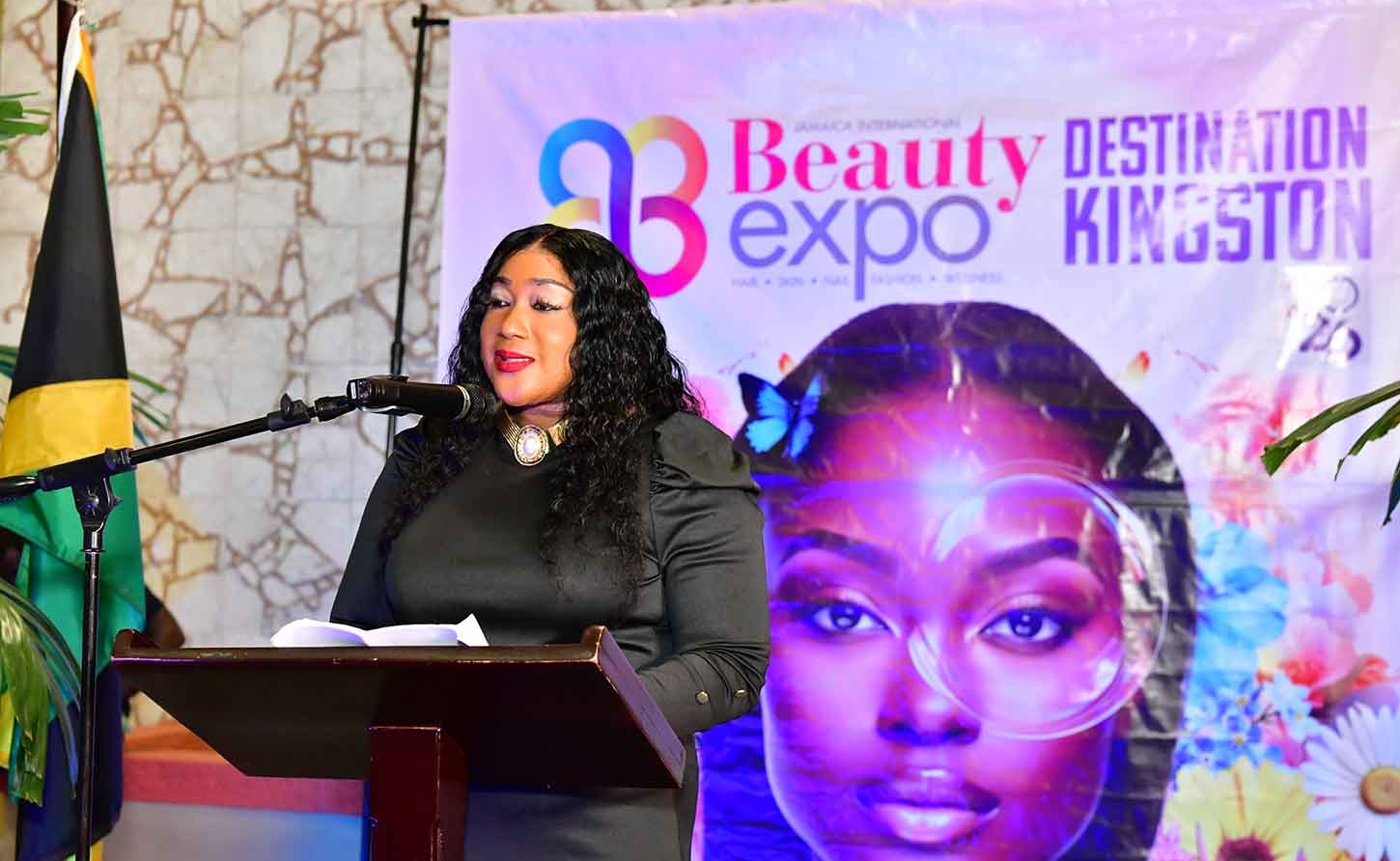
Dr. Onika Campbell-Rowe addresses the media launch of Jamaica International Beauty Expo at JAMPRO on Thursday evening.
At the launch of Jamaica’s most significant beauty trade event, Ambassador Dr. Onika Campbell-Rowe delivered a frank diagnosis: the region is long on creativity, and dangerously short on capital, certification, and scale.
KINGSTON, Jamaica, April 30, 2026— The Jamaica International Beauty Expo 2026 had its media launch on Thursday evening at the Jamaica Promotion Corporation, with a fanfare befitting the seventh annual staging of the Caribbean’s premier hair, wellness, and fashion trade event — the brainchild of founder and coordinator Suzette Brown.
But the diplomat chosen to launch this year's presentation wasted little time in making it known that the business of beauty was one of the Caribbean's largest entreprenural challenges that must be conconquered in the interest of the region. The Expo runs from June 26 to 28 at the National Arena.
Ambassador Dr. Onika Campbell-Rowe — Ambassador-at-Large for the Western Hemisphere, United Nations Special Envoy, and global human rights specialist — used her opening address not to flatter the room, but to confront it. Her central argument was as uncomfortable as it was necessary: the Caribbean beauty industry is losing the global game, and it is doing so with a full hand of talent and an empty hand of infrastructure.
“We cannot only be the inspiration behind global trends. We must become owners of global brands.”— Amb. Dr. Onika Campbell-Rowe
“The world has taken inspiration from Caribbean culture for decades,” she told government officials, JAMPRO representatives, and industry leaders assembled at the Jamaica Promotion Corporation. “Now the Caribbean must take ownership of its value.”
It was a line that landed hard in a room full of entrepreneurs who know, intimately, what she was describing. Caribbean aesthetics copied without credit. Caribbean ingredients sourced without compensation. Caribbean style amplified on global runways and social media feeds, while the originators remain trapped in what Campbell-Rowe called the cycle of survival — talented, visible, and chronically undercapitalised.
The Gaps She Named
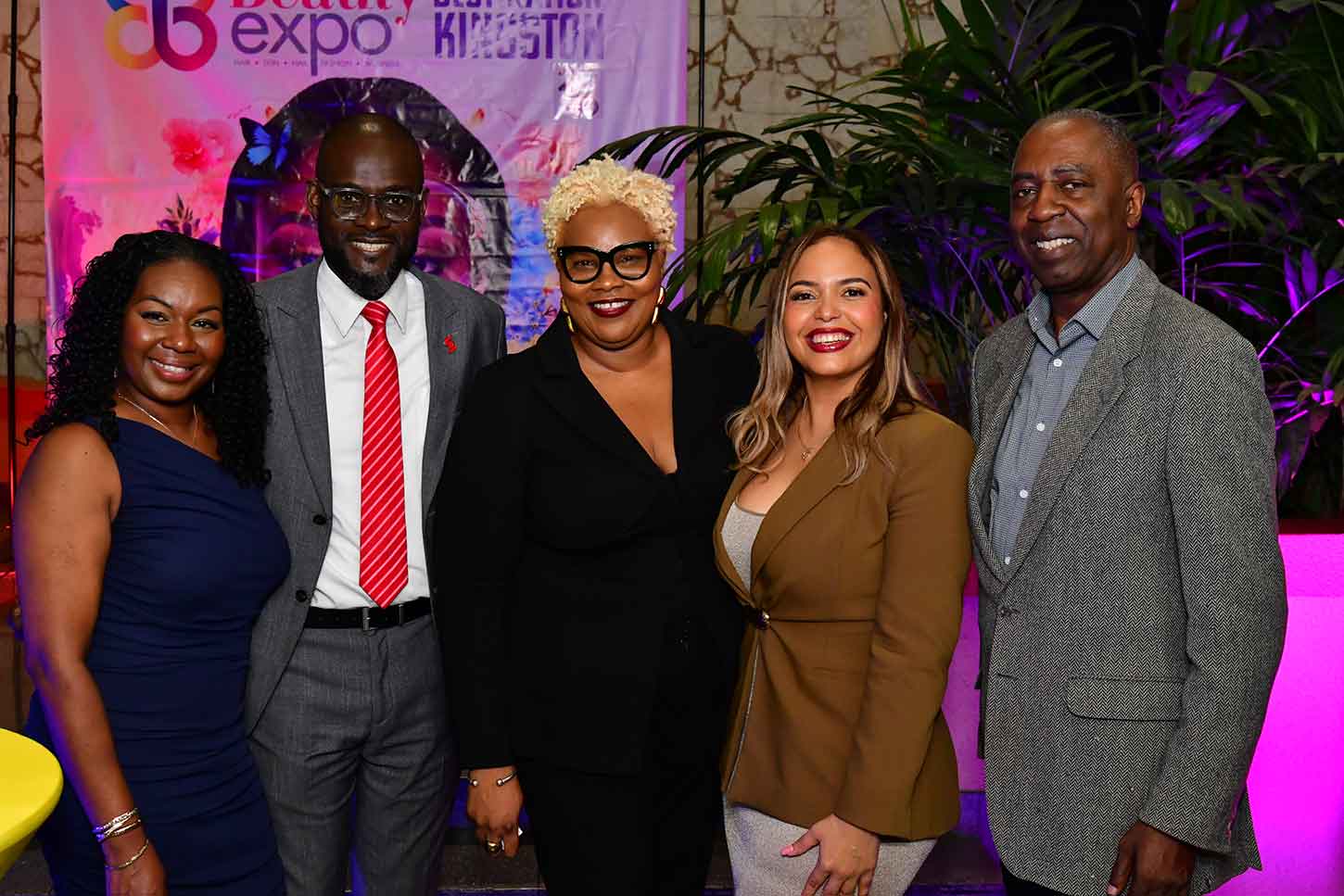
In photo from left are Keisha Pinto, JIBE Ambassador - Canada, Oral Heaven, Manager Private Banking Scotia and Immediate Past President, Montego Bay Chamber of Commerce and Industry, Suzette Brown, founder and coordinator, Jamaica International Beauty Expo, Luz Tejada, CEO of Solvex International and Leo Williams, Executive Director at Williams and Associates
The gap between creativity and capital. The gap between training and certification. Between local excellence and international standards. Between raw talent and export readiness. Between social media popularity and sustainable business infrastructure. Taken together, they paint a portrait of an industry that is rich in everything except the systems required to convert richness into wealth.
“In too many cases, Caribbean brands are admired but underfunded,” she said. “Our ingredients are used but underprotected. Our aesthetics are copied but under-credited. Our entrepreneurs are celebrated but under-supported.”
She was not speaking in hypotheticals. Across the Caribbean, beauty businesses — many of them women-owned micro-enterprises operating from home salons, rented booths, and online storefronts — are generating real economic activity with no formal business registration, no intellectual property protection, no export plan, and no pathway to the kind of scale that transforms a brand into an industry.
Beauty Is Diplomacy. And It Is Economics.
What gave Campbell-Rowe’s address its particular weight was her insistence on reframing beauty itself — not as lifestyle or vanity, but as a serious instrument of economic and diplomatic power. The beautician, she argued, is not merely applying makeup. The nail technician is not merely designing nails.
The fashion designer is not merely sewing fabric. Each is operating at the intersection of culture, commerce, and identity — and each deserves the systems and support structures that other industries take for granted.
“Caribbean beauty is not generic,” she said. “It is rooted in African heritage, indigenous memory, European interaction, Asian contribution, and the lived experience of a people who transformed struggle into style and survival into sophistication.”
When a Jamaican entrepreneur formulates a natural hair product, she argued, that is not just commerce. It is cultural restoration. When a Caribbean fashion designer reaches for regional colour and symbol, that is not just design. That is diplomacy through fabric.
The Structural Reckoning
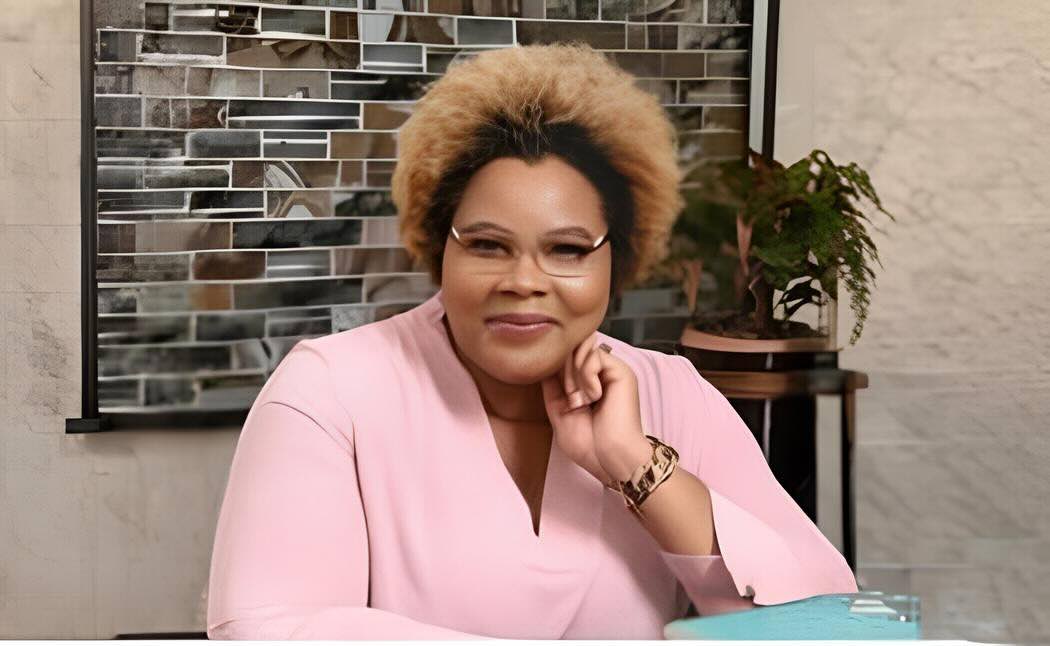
Founder and coordinator of The Jamaica International Beauty Expo, Suzette Brown
From that modest beginning, she built what is now the region’s dominant beauty, wellness, and lifestyle trade platform, attracting exhibitors from Nigeria, Canada, the United States, the United Kingdom, El Salvador, Colombia, and across the Caribbean. By the fourth staging in 2023, over 100 exhibitors were on the floor.
By the fifth, JIBE had outgrown Montego Bay entirely — moving to Kingston’s National Arena for the 2025 sixth staging, a relocation Brown has described as a deliberate signal that the expo is ready for serious global engagement. Her institutional partnerships tell the same story: JAMPRO, HEART/NSTA Trust, and an expanding roster of international development partners have all placed their flags in her corner.
Brown has also been thinking regionally from the start — fielding overtures from Barbados for a potential Caribbean International Beauty Expo and signalling her intent to take the model throughout the region. “We are about the business of beauty,” she has said, “and building an industry that is seen by too many as a hustle. A multibillion-dollar industry cannot be a hustle.”
The Expo, now in its seventh year, draws manufacturers, distributors, and entrepreneurs from across the region. JAMPRO and international development partners were present, alongside representatives of Jamaica’s MSME sector — the micro, small, and medium enterprises that form the backbone of the Caribbean beauty economy.
Campbell-Rowe’s charge to that gathering was direct: the Expo must become a bridge. From informal work to formal enterprise. From local sales to regional distribution. From passion to profitability. From small business to sustainable industry.
“Talent alone is not enough,” she said. “Talent must be organised. It must be protected. It must be financed. It must be certified. It must be marketed. It must be scaled.”
It was a message calibrated not for applause, but for action. The Caribbean beauty industry, she made clear, is not lacking inspiration. It is lacking architecture. And until governments, development partners, and industry bodies close the gaps she named on Thursday night in Kingston, the region will remain what it has too long been — the world’s mood board, and someone else’s profit margin.
-30-
