
GUYANA | Opposition Leader Azruddin Mohamed is a Political Prisoner says Lincoln Lewis
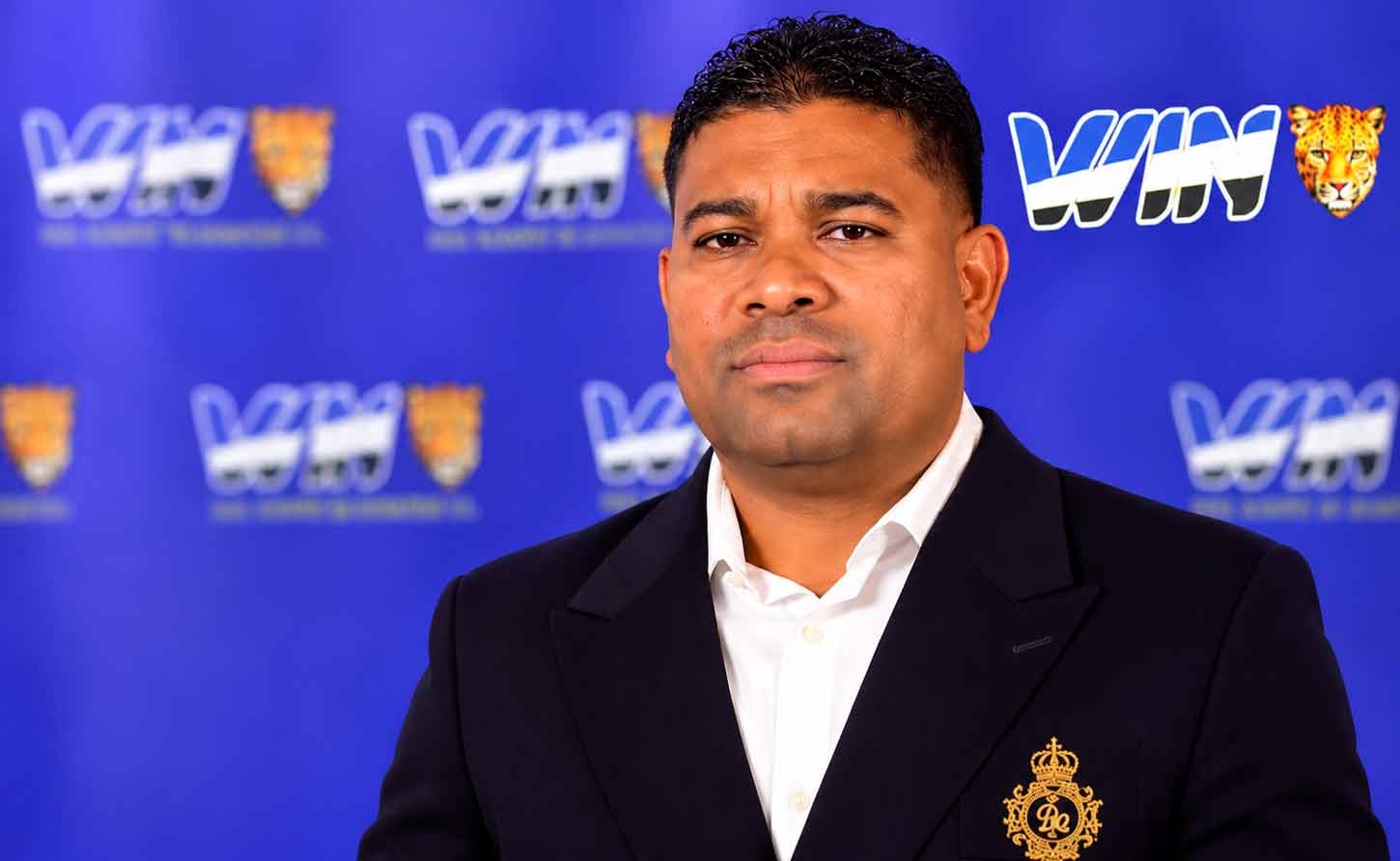
Guyana's Embattled Opposition Leader Azruddin Mohamed, being held as a political prisoner says trade unionist Lincoln Lewis
Veteran trade unionist says the jailing of Guyana’s Opposition Leader on a bailable charge should alarm every MP, every citizen and every opposition leader in the Caribbean
MONTEGO BAY, Jamaica, By Calvin G. Brown | November 20, 2026 — Guyana’s most senior trade unionist has put a name to what he says is happening inside Lusignan Prison. “Leader of the Opposition, the Hon. Azruddin Mohamed, is a political prisoner,” Lincoln Lewis declares in the opening line of his op-ed this week. He does not soften the charge anywhere in the piece.
Lewis, General Secretary of the Guyana Trades Union Congress (GTUC), builds his case on a simple contradiction. Mohamed, he writes, “remains on remand on a bailable offence, despite having been granted bail in other, more serious matters before the courts.”
The Opposition Leader, who heads the We Invest in Nationhood (WIN) party, has been behind bars since October 30. That day Magistrate Abigail Gibbs refused him bail on a charge under Section 9 of the Cybercrime Act. On Wednesday, High Court judge Justice Priscilla Chandra-Hanif dismissed a judicial review challenge to that refusal, leaving him in custody.
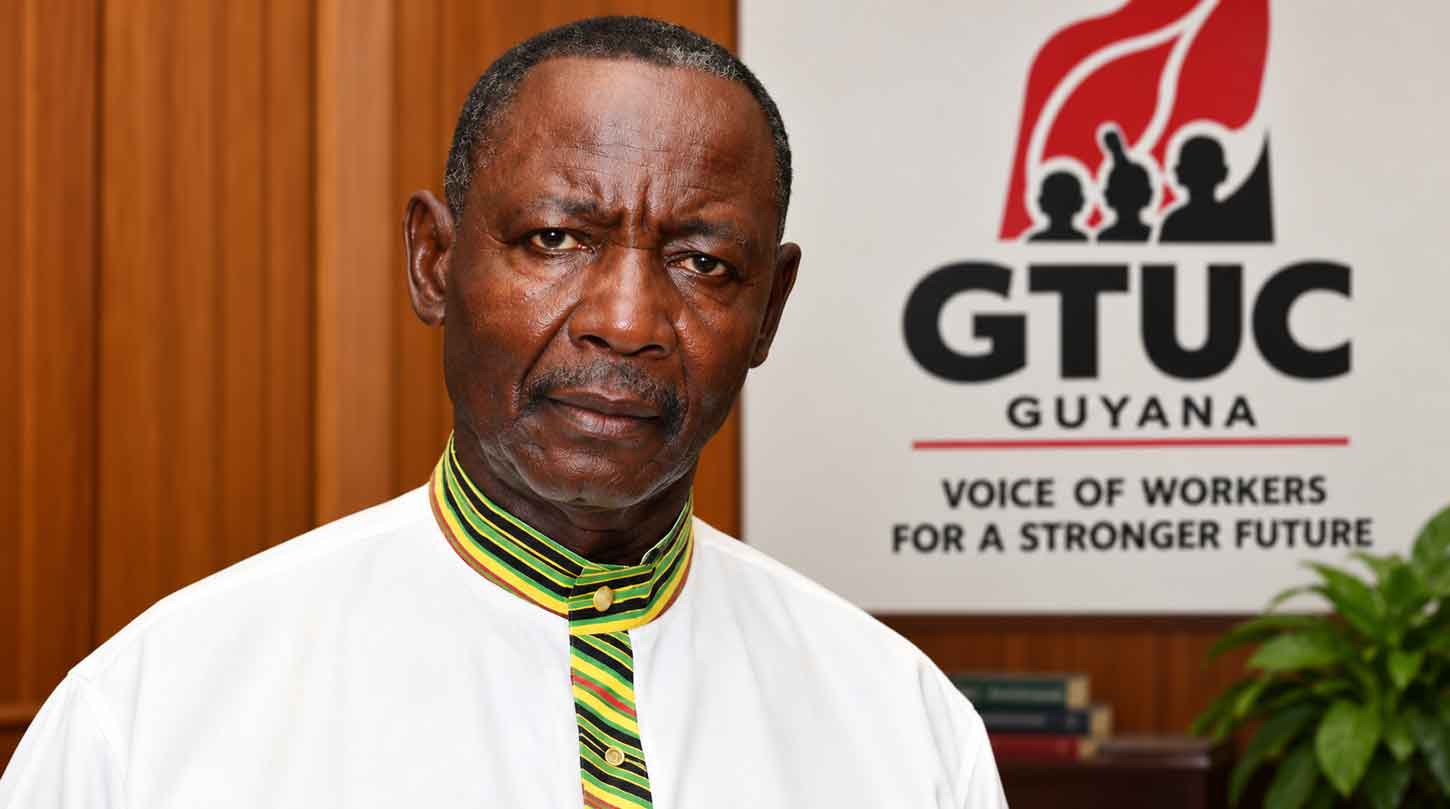
Lincoln Lewis, General Secretary of the Guyana Trades Union Congress (GTUC) says Azruddin Mohamed is a political prisoner.
“Even more troubling, he has been denied the opportunity to attend and participate in the National Assembly, although he has not been convicted of an offence that would constitutionally disqualify him from performing his duties as an elected parliamentarian,” Lewis writes.
“When an elected representative can be deprived of his liberty and prevented from exercising his parliamentary responsibilities without a conviction, the danger extends far beyond one individual or political party,” he continues. “It strikes at the very foundations of democratic governance and the rights of every citizen.”
They were charged too, and they went home
The sharpest passage in the op-ed is a history lesson aimed squarely at the men now running Guyana. Lewis reminds readers that the governing People’s Progressive Party (PPP) leadership once sat where Mohamed sits, on the opposition benches and before the courts.
“Guyanese must remember that, under the David Granger/Moses Nagamootoo APNU+AFC administration, then Opposition MP Irfaan Ali was charged on November 28, 2018, with 19 counts of conspiracy to defraud the State to the tune of $174 Million,” he writes. “He was not remanded but released on self-bail.”
Ali is now President. Lewis moves next to the man who today leads the State’s legal fight to keep Mohamed in custody.
“In April 2017 then Opposition MP Anil Nandlall was charged with lawbook theft, he was not remanded but released on self-bail,” Lewis writes. Nandlall is now Attorney General.
The third name is the Vice President. “Similarly, then Opposition Leader Bharrat Jagdeo was charged in May 2015 with inciting racial hatred. He too was not remanded but released on his own recognisance.”
Each of them, Lewis argues, was entitled to the presumption of innocence, as every accused person is. “That same principle must apply to Mohamed,” he insists. “The question of equal treatment before the law cannot be dismissed because of political affiliation or personal differences.”
“The question of equal treatment before the law cannot be dismissed because of political affiliation or personal differences.” — Lincoln Lewis
He is careful to say that his argument does not depend on liking the Opposition Leader. “The issue is not whether one agrees with Mohamed politically or approves of his conduct,” Lewis writes. “It is whether the Irfaan Ali/Bharrat Jagdeo regime can get away with curtailing the freedom of an elected constitutional office holder and what that means for the rest of society.”
The footage, the constables and the silent benches
The charge keeping Mohamed in prison grows out of surveillance footage. Prosecutors allege that he and Police Constable Ryan Greene unlawfully obtained and transferred police CCTV recordings tied to an October 12 incident outside the home of a senior police officer. A second constable, Ashton Chappelle, was later charged and remanded as well.
Lewis tells the same story from the other side. In his account, Mohamed went public to clear his name. “The man came out and declared: ‘I am innocent. It is not I who tried to kill him, but he who tried to kill me,’” he writes. “Having expressed distrust in the police, he appealed to members of the public to provide information, at a cost, to prove his case.”
People came forward, Lewis says, and the footage “showed who the aggressor was.” Instead of the evidence being weighed dispassionately, he complains, those who supplied it now face charges.
“In other societies these young men would be commended and release of the CCTV regarded as an act of civic responsibility,” he writes.
His summary of the two positions is blunt. Mohamed “allegedly attempted to save his life by appealing for evidence to be made available to the public, while the two constables allegedly sought to salvage the integrity of the police force.”
Mohamed’s situation, he argues, “could be equated to a man being taken to the gallows on accusation and treated as though already convicted, without due process, including the disclosure of evidence.”
Lewis saves some of his harshest words for Mohamed’s own colleagues. He finds “particularly disturbing” what he calls the willingness of some opposition parliamentarians “to treat this matter as though it is business as usual.”
“Do they not appreciate the implications?” he asks. “Do they not understand that the same powers and institutional arrangements they appear prepared to overlook today could one day be turned against them?”
“Their responsibility is not simply to occupy seats in the National Assembly but to defend the constitutional principles upon which their own freedom and democratic participation depend,” he adds.
What the State and the court say
The government and the courts reject the picture Lewis paints. The prosecution opposed bail by pointing to Mohamed’s other pending charges and to allegations of obstructing justice and interfering with witnesses. The magistrate cited the risk of witness interference and the likelihood of further offending.
Attorney General Nandlall has said publicly that the case involves an allegation that Mohamed paid a police constable $800,000 for the footage. In court he argued that judicial review is not an appeal on the merits.
Justice Chandra-Hanif agreed that her role was limited to testing the lawfulness of the magistrate’s decision. She found no ground to quash it. She also noted that Mohamed may renew his bail application before the magistrate at any stage.
Mohamed, who is under United States sanctions and the subject of a US extradition request, faces more pressure next week. The Director of Public Prosecutions is asking the High Court on Monday to revoke the bail he holds in the extradition proceedings.
“Tomorrow, it could be you”
None of that moves Lewis. “The Ali/Jagdeo regime is doing its utmost to silence Mohamed’s voice,” he writes. “His activism and exposure since entering politics appear to have unnerved those who have things to hide and wish to continue riding roughshod over this nation.”
His warning is addressed to the whole region. “What is happening in Guyana should also concern the wider Caribbean,” he writes. “Our countries share common laws, legal traditions and constitutional frameworks.”
“If an administration can get away with restricting the liberty of an elected Opposition Leader under circumstances that raise questions about equal treatment and due process, no Opposition Leader in the region should consider himself immune,” he continues. “The domino effect is real.”
Invoking Dr Martin Luther King Jr, Lewis closes with a demand that Guyanese speak, whatever they think of the man in the cell.
“Today, it is Mohamed and the two constables. Tomorrow, it could be you,” he writes. “In these dangerous times, silence is not an option.”
-30-
