
CARIBBEAN | The Cuba Question Washington Would Not Answer
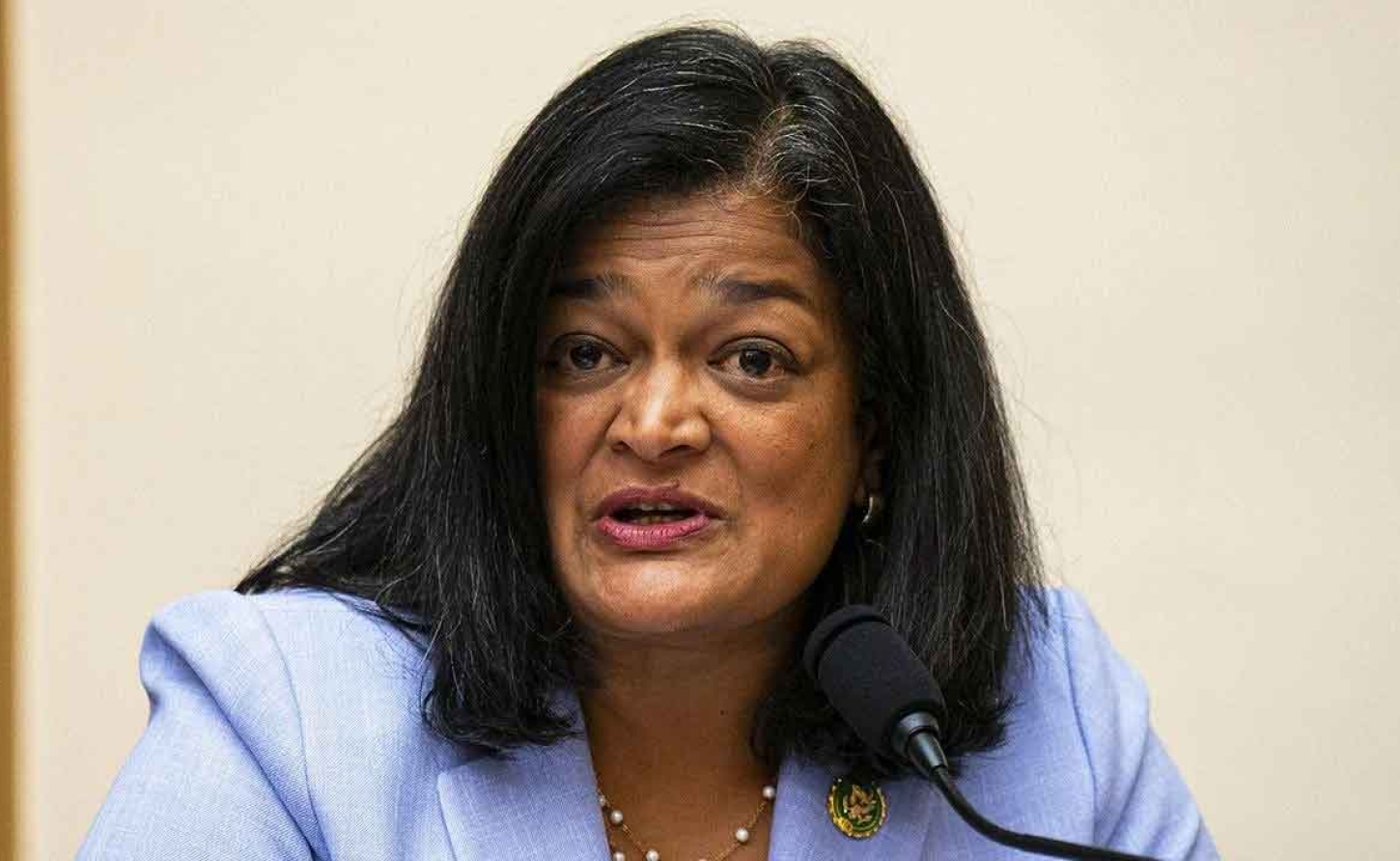
US Washington State Representative Pramila Jaypal
A US congresswoman put the Fourth Geneva Convention to the State Department official who runs sanctions policy. He had no answer. The Caribbean has been circling the same question for eighteen months — in far gentler language.
KINGSTON, Jamaica — By Calvin G. Brown | July 28, 2026 - The most revealing moment in a Washington hearing room this month was not an answer. It was the absence of one.
Rep. Pramila Jayapal, the Washington State Democrat, put a narrow question to Caleb Orr, the Assistant Secretary of State for Economic, Energy and Business Affairs: was he aware that the Geneva Conventions prohibit collective punishment? Orr reached for the standard-issue reply — the Cuban regime. Jayapal cut him off. “Obviously you don’t know, so let me tell you what it is,” she told him.
She then directed him to a declassified State Department memorandum from 1960, in which an official set out the purpose of economic pressure on Cuba in language no press officer would sign today: deny money and supplies to the island, and bring about hunger, desperation and the overthrow of its government. Six and a half decades later, Jayapal observed, the government still stands. The people do not.
The man who could not answer
It would be easy to file this as another partisan exchange in a chamber that produces them by the hour. That reading misses what makes it serious.
Orr is not a junior witness who wandered into an unfamiliar subject. Sanctions policy sits inside his bureau. He is a Georgetown-trained lawyer and a longtime aide to Secretary of State Marco Rubio — seven years alongside him in the Senate before his confirmation in November 2025.
The Economic, Energy and Business Affairs portfolio he now heads spans international trade, finance and investment, energy security, critical minerals and sanctions policy.
So the deflection is the story. The official who administers the most aggressive economic-pressure campaign in this hemisphere was asked for its basis in international humanitarian law and had nothing to offer but the name of the target.
Nor is the pattern of non-response confined to the hearing room. In April, Jayapal, Rep. Jonathan Jackson, Foreign Affairs ranking member Gregory Meeks and Western Hemisphere subcommittee ranking member Joaquin Castro wrote to the State Department complaining that officials at the US Embassy in Havana had apparently been prohibited from engaging with committee members travelling to Cuba on official oversight business. Congress asks; the Department declines to be asked.
What Article 33 actually says
Honesty about the law is what separates journalism from advocacy, so let us be precise about the strength of Jayapal’s claim — including its weakness.
Article 33 of the Fourth Geneva Convention is unambiguous on its face: no protected person may be punished for an offence he or she has not personally committed, and collective penalties are prohibited. The difficulty lies in the machinery around it.
The Fourth Convention is a law-of-armed-conflict instrument. Its protections attach to “protected persons” — broadly, civilians who find themselves in the hands of a party to a conflict of which they are not nationals, in occupied territory or in internment. Its provisions are triggered, under Common Article 2, by declared war or armed conflict between contracting parties.
On a strict reading, then, Cuban civilians living in Cuba are not protected persons, and a trade embargo — however punishing — is not an armed conflict. That is the orthodox position. It is why sanctions regimes have gone unprosecuted for decades despite persistent findings of civilian harm, and any Caribbean commentator who skips past it is producing propaganda rather than analysis.
Mark Weisbrot of the Center for Economic and Policy Research, who has pressed the collective-punishment argument hardest in the American press, concedes the point outright: such acts generally cannot be prosecuted as war crimes precisely because the Conventions require armed conflict.
The bridge — and why it is not frivolous
The argument now being advanced is that Cuba has become the exception, because Washington stopped relying on paperwork alone.
Since January, the United States has used military means to keep oil away from the island, following its capture of Venezuelan leader Nicolás Maduro and the severing of Caracas’s shipments. That is the bridge: if force is being used to maintain the blockade, the armed-conflict predicate is arguably satisfied, and Article 33 comes alive.
What gives this more weight than a think-tank thesis is that the United States Congress has itself adopted the vocabulary. In March, three Democratic senators introduced a joint resolution to remove US armed forces from hostilities within or against Cuba that Congress has not authorised; Rep. Nydia Velázquez introduced companion legislation in the House.
War powers resolutions are not invoked over customs regulations. They are invoked over hostilities. The legislature has, in effect, characterised the blockade as a military operation — which is the very characterisation the legal theory requires.
Whether a tribunal would accept it is another matter, and none has been asked. But the claim has moved from rhetorical flourish to serious question of law, and it will not be retired by ignoring it.
The record the question rests on
Jayapal was not speaking from a briefing paper. She travelled to Cuba in April with Jackson, and the two returned describing the fuel cutoff as cruel collective punishment and, in effect, an economic bombing of the country’s infrastructure.
They reported premature infants at risk because ventilators and incubators cannot run without electricity, cancer patients unable to receive treatment for want of medicines, children out of school for lack of fuel to move them or their teachers, and water shortages because there is too little power to run the pumps.
A second delegation followed in July. Reps. Mark Pocan, Teresa Leger-Fernández, Maxine Dexter and Delia Ramirez described conditions in Havana as a “silent Gaza”. Dexter, a physician, met Cuban doctors short of basic surgical supplies. Rep. Jim McGovern told the House that infant mortality on the island has doubled and that childhood cancer survival rates have fallen sharply since the embargo was tightened.
These are the accounts of American legislators, not Cuban officials — a distinction worth holding onto, because the administration’s habitual answer to such testimony is that it originates in Havana’s propaganda apparatus. It did not.
One caution on the numbers now circulating in this debate. The widely cited estimate of 564,000 annual deaths from sanctions, drawn from a study published in The Lancet Global Health, refers to unilateral sanctions worldwide — not to Cuba alone. It is a devastating figure. It is not a Cuban figure, and it should not be reported as one.
Washington’s case, stated fairly
The administration’s position deserves to be put properly rather than caricatured.
No state is obliged to trade with another; the embargo is an exercise of sovereign discretion over American commerce. US sanctions programmes carry humanitarian exemptions for food and medicine.
And Washington argues the suffering is authored in Havana: the State Department puts the military conglomerate GAESA’s control of the Cuban economy at between 40 and 70 per cent, and attributes fuel shortages to decades of under-investment rather than to American policy. On the medical missions specifically, the Department maintains that the Cuban state retains between 50 and 95 per cent of the wages host countries pay for its doctors — a labour-export model it characterises as coercive.
Washington also points to a US$100 million humanitarian package now moving into Cuba through Catholic Relief Services.
Each of these merits an answer. Humanitarian carve-outs exist on paper but are routinely nullified in practice by financial de-risking — banks, insurers and shippers decline lawful transactions rather than absorb the compliance risk of touching a designated economy.
And the aid package, whatever its intent, is not a rebuttal to the collective-punishment charge. A government that must ship emergency relief to a population it is simultaneously cutting off from fuel has conceded the humanitarian fact and is arguing only about authorship.
It took a legislator in Washington to name the legal category the region has spent eighteen months describing without naming.
The Caribbean ledger
None of this is a spectator sport for this region.
The designations announced on 23 July reached beyond oil and into the machinery that staffs Caribbean clinics: nine entities and two individuals, including Cuba’s health minister, the state company that manages overseas medical missions and the agency that recruits doctors for them — alongside the Mariel port terminal, the island’s principal remittance processor and the research arm of the state oil company.
It was the fourth major round in under three months, issued under an executive order signed on 1 May that extends secondary sanctions to non-US firms.
Sanctioning the brigade apparatus is not an abstraction in Kingston, Georgetown or Kingstown. It is a policy aimed at the dialysis chair, the ophthalmology clinic and the rural posting no other country will fill.
CARICOM has not been silent, but it has been careful. Meeting in Paramaribo in May, the Council for Foreign and Community Relations affirmed Cuba’s sovereign right to import fuel, condemned the obstruction of energy supplies, reaffirmed the Caribbean as a Zone of Peace and expressed alarm at suggestions of possible military action against Cuba.
Trinidad and Tobago, under Prime Minister Kamla Persad-Bissessar, declined to associate itself with that statement — the first open fracture in the bloc’s Cuba position in living memory. Eight former CARICOM heads of government, among them Jamaica’s P.J. Patterson and Bruce Golding, had gone further in February, describing the fuel measures as economic warfare inflicting unconscionable suffering.
Note what none of them said. Not one of these statements framed the matter as a violation of international humanitarian law. Concern, alarm, condemnation — the diplomatic register throughout.
The precedent runs both ways
Here is the part that should trouble every Caribbean foreign ministry, whatever it thinks of Havana.
If economic coercion of this severity carries no legal consequence because the Geneva Conventions were drafted with armies in mind, then the protection small states believe they enjoy is a great deal narrower than they have assumed.
The Zone of Peace is either a claim in law or it is a phrase for communiqués. A doctrine that cannot restrain a fuel blockade ninety miles from Florida will not restrain anything applied to Georgetown, Port of Spain or Kingston.
Jayapal’s question was not rhetorical, and it was not answered. The region with the most to lose from the answer has not yet asked it in any forum with jurisdiction to rule.
— 30 —
