
BARBADOS | ‘Let us ask Pearly’: Barbados bets on homegrown AI app to end the citizen runaround

Pearly, Barbados homegrown AI app designed to end the citizen run-around
Mottley government launches Bajan-built citizen engagement platform that routes complaints to the right agency — no guesswork, no holding on
BRIDGETOWN, Barbados —June 9, 2026 - Barbados is moving decisively ahead with the practical application of technology and artificial intelligence to the everyday business of governing — from road repair and water complaints to incident reporting and traffic monitoring — with this week’s launch of Pearly, a homegrown, AI-powered citizen engagement app unveiled by Prime Minister Mia Amor Mottley at Ilaro Court.
For generations, reporting a pothole, a leaking water main or a derelict building meant playing a frustrating game of bureaucratic roulette — guessing which of government’s roughly 155 ministries, departments and agencies was responsible, then waiting on hold hoping somebody picked up.
Pearly ends that guessing game: citizens describe the issue, pin its location and upload photographs, and artificial intelligence determines which agency is responsible, routing the complaint automatically without manual triage.
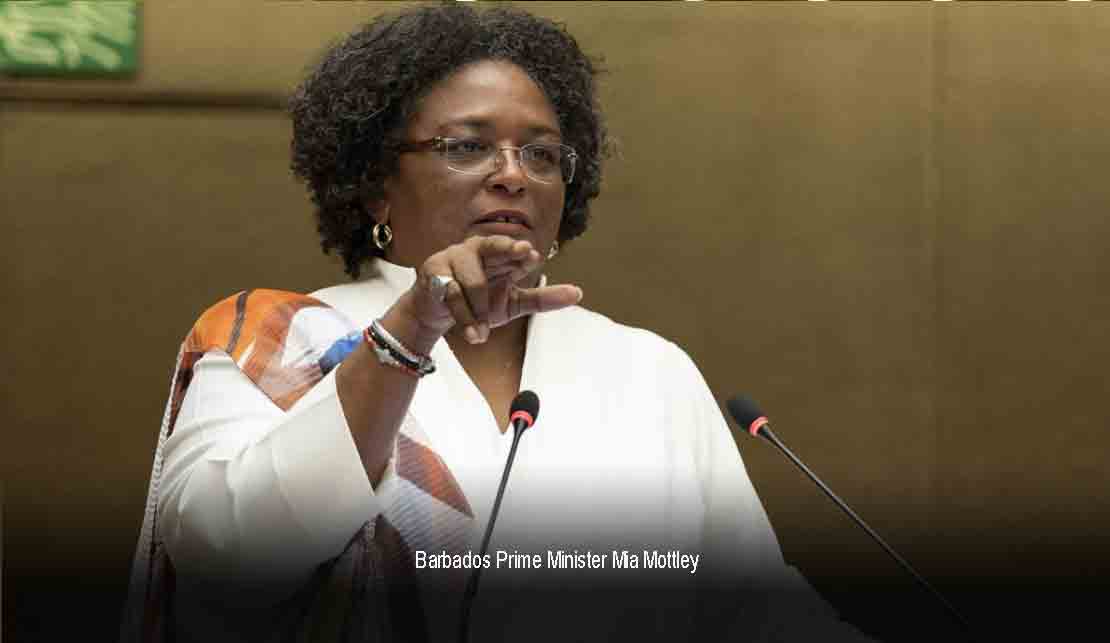 Mottley cast the launch as a milestone in her administration’s drive to drag public services out of the analogue era, noting that many of the systems her government inherited were decades old — some tracing their origins back more than a century.
“We have seen countries across the world be able to benefit from technology in a way that allows them to leapfrog,” she said. “It is important for us to understand why this Government set as its mission moving from an analogue Barbados to moving to a digital Barbados.”
The Prime Minister drew laughter when she observed that Barbadians now live in a world of instant global communication — “I can pick up this phone, see people, talk with people, and do everything other than ‘Beam me up Scotty’” — yet still depend on public services running on processes their grandparents would recognise.
“Technology that is still remote from the citizens is not using technology in a way that helps us build out this nation,” she said.
Mottley was equally blunt about the everyday frustrations the app is meant to cure. “We have not only been elected to do the big transformational things… but also the small things that irritate people. The things that cause people to become frustrated because they don’t understand how this pipe has been leaking for three days and every time they call, they are left holding on.”
Built by Bajans, for Bajans
What sets Pearly apart from the wave of e-government tools rolling out across the region is its pedigree: the system was built entirely by Barbadian developers at the TouchStar Group, whose chief executive officer Ramon Dummett said the technology was designed specifically to untangle government’s sprawling administrative web.
“The Government of Barbados has just about 155 different entities. Up until today, a citizen requiring support from their Government had to figure out which one of these specific departments to contact,” Dummett explained. “We built a piece of technology… that allows a user to just describe a problem, submit the photos and it automatically routes it to the correct department without manual triage.”
The young team behind the platform includes project lead and lead software engineer Teyana Forde, software developer and data compliance lead Akira Jemmott, and head of AI and platform architecture Kurn Hector.
Beyond complaint reporting, Pearly bundles live Transport Board bus tracking with estimated arrival times, traffic monitoring, government notices and alerts, and an AI-powered assistant that can answer questions about public services such as licence renewals. An emergency management mode, activated during hurricanes and other national crises, allows rapid incident reporting while giving authorities a real-time, island-wide operational picture.
Caribbean tech with export potential
Minister of Innovation, Industry, Science and Technology Senator Jonathan Reid framed the app as proof that local innovators can partner with the state to solve national problems — and then sell those solutions abroad.
“This could be taken, once done well, and brought anywhere. It would have been Barbadian intellectual property with Barbadian ideas, Barbadian skills, using Barbadian data,” Reid said.
Mottley revealed that her government deliberately turned down a generic, ready-made overseas product to give the local team its shot. “We turned down an app from overseas… in order to give you the chance not only to prove what you could do, but to give you the confidence of being able to see something, solve something,” she said. “Let us ask Pearly. Let us tell Pearly.”
For a region where digital transformation often means importing foreign platforms wholesale, Barbados’ bet on homegrown talent may prove to be Pearly’s most significant feature of all.
© WiredJa Media | Calvin G. Brown
