
ANTIGUA | Rights Body ABCRE Flags Gaston Brown's Flawed Prime Ministerial Oath to King Charles
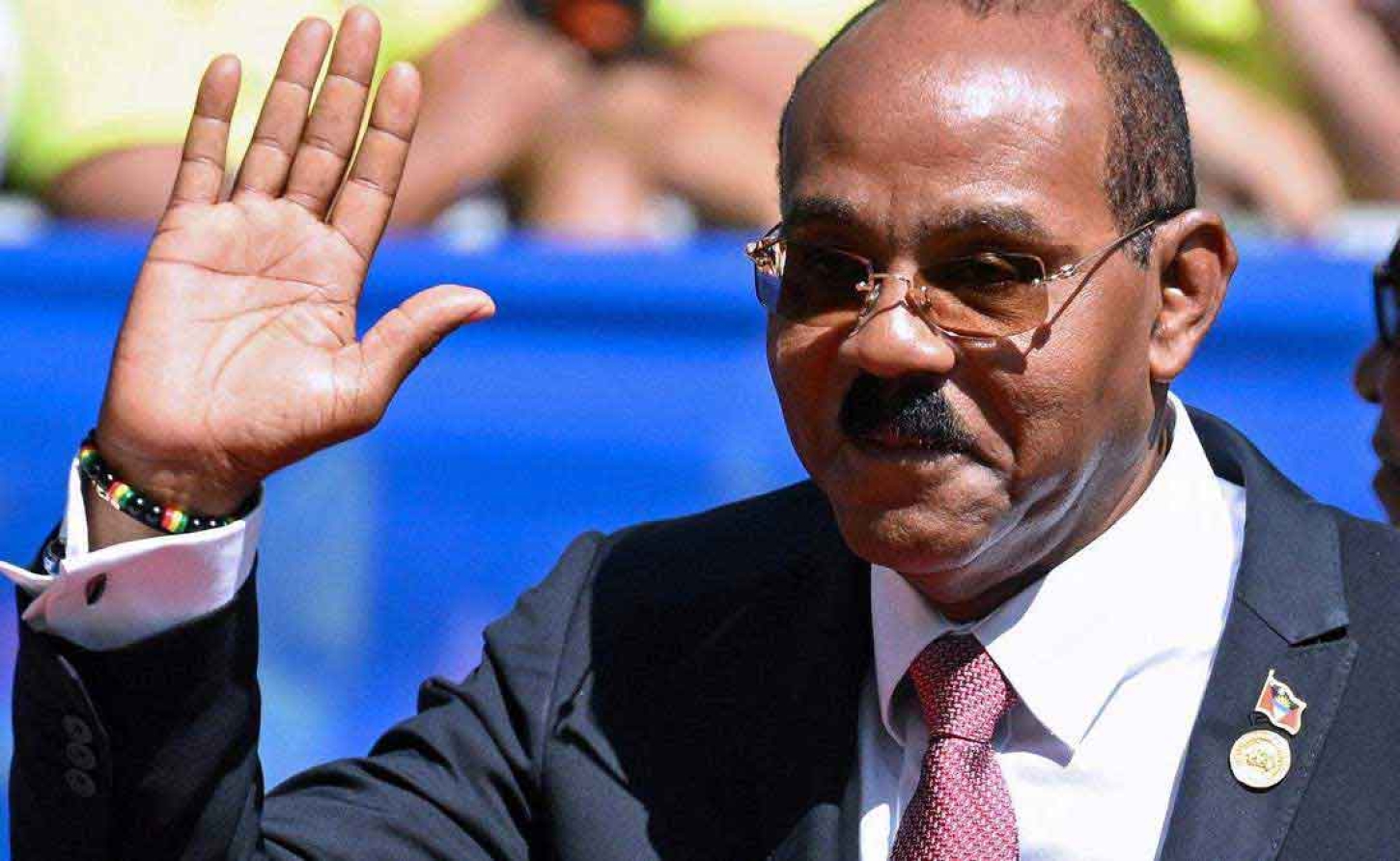
Prime Minister Gaston Browne being sworn in as prime minister for the fourth time
Hours after winning a historic fourth consecutive term, Prime Minister Gaston Browne’s new administration faces a potentially destabilising legal challenge — one rooted not in the ballot box, but in the words spoken at his own swearing-in ceremony.
ST JOHN'S Antigua and Barbuda, May 2, 2026 - The champagne had barely settled on Antigua and Barbuda Labour Party headquarters when a constitutional bombshell landed on the steps of Government House.
The New York based Antigua and Barbuda Campaign for Republic and Electoral Reform (ABCRE) issued a formal statement on Friday declaring that Prime Minister Gaston Browne was not constitutionally installed in office — because the oath he swore was the wrong one.
The allegation is stark: Browne, sworn in on May 1 following his party’s commanding 15-of-17-seat sweep of the April 30 snap election, made an oath of allegiance to King Charles III, his heirs, and successors. That oath, ABCRE argues, was rendered unconstitutional four and a half months ago.
THE AMENDMENT THAT CHANGED EVERYTHING
On December 17, 2025, the Constitution of Antigua and Barbuda was formally amended to replace the monarchical oath with one pledging allegiance to the State of Antigua and Barbuda, its Constitution, and its laws. The amendment was a landmark step in the country’s ongoing conversation about full republican identity — and it came with immediate legal force.
Section 76 of the Constitution is unambiguous: the Prime Minister, every other Minister, and every Parliamentary Secretary must make and subscribe the oath of allegiance before entering upon the duties of office. By swearing fealty to the British Crown rather than the Antiguan state, ABCRE contends that Browne failed to satisfy that constitutional requirement — and therefore cannot be legally considered installed as Prime Minister.
“Mr. Browne, having sworn the incorrect oath, is not constitutionally installed as Prime Minister of Antigua and Barbuda and Minister of Finance.”— ABCRE Statement, May 2, 2026
THE PARADOX OF THE CORRECT AG
The situation carries a sharp irony. Attorney General and Minister of Legal Affairs Steadroy “Cutie” Benjamin — the nation’s chief law officer — is reported to have taken the correct, amended oath of allegiance at the same ceremony. But that very compliance has created a cascading constitutional problem rather than resolving one.
ABCRE notes that under constitutional convention, the Prime Minister must be properly installed before the Attorney General can be appointed. If Browne’s installation is constitutionally defective, Benjamin’s appointment flows from a flawed premise — and is, by extension, equally compromised. The man who swore the right oath is undone by the man who did not.
VOID FROM THE OUTSET
The legal stakes could not be higher. ABCRE’s statement invokes the Latin doctrine of void ab initio — invalid from the very beginning — to characterise any actions taken by either Browne or Benjamin in their respective capacities since the flawed swearing-in. Cabinet decisions, ministerial directives, any executive action taken in the hours since the ceremony falls under a legal shadow that will deepen with each passing day unless resolved.
ABCRE has called on Governor-General Sir Rodney Williams to summon both Browne and Benjamin to his office so that the error can be publicly and formally rectified. The organisation was careful to characterise the episode as an oversight rather than deliberate wrongdoing — but it was equally clear that the legal implications are “far too serious to ignore.”
A MANDATE QUESTIONED BEFORE IT BEGINS
The timing renders this crisis particularly delicate. Browne’s ABLP won approximately 60 per cent of the popular vote against opposition leader Jamale Pringle’s United Progressive Party. The Labour Party increased its parliamentary majority to 15 of 17 seats, in what represented one of the most decisive electoral mandates in the country’s modern history. The snap election — called two years ahead of schedule — was framed as a referendum on economic stability and the government’s handling of Washington’s suspension of visa processing for Antiguan nationals.
To have that hard-won mandate immediately called into constitutional question is a sobering reminder that electoral legitimacy and constitutional legitimacy, while closely related, are not interchangeable. A landslide at the polls cannot substitute for a lawfully administered oath of office.
A CORRECTABLE CRISIS — IF ACTED UPON SWIFTLY
Constitutional lawyers across the region are likely to watch the Governor-General’s response with keen interest. The remedy ABCRE proposes is straightforward: a re-swearing of the correct oath, publicly conducted, to repair the constitutional breach. Should the administration resist or delay that corrective action, what is currently an embarrassing oversight risks hardening into a genuine legitimacy crisis.
For a nation that embedded constitutional republicanism into its founding law in December 2025, the spectacle of its newly re-elected Prime Minister swearing allegiance to the British Crown is not merely a procedural misstep. It is a symbolic contradiction that cuts to the heart of Antigua and Barbuda’s evolving national identity — and one that demands immediate, transparent resolution.
-30-
