ST LUCIA | Washington Pressures St. Lucia to Stop Training Doctors and Nurses in Cuba
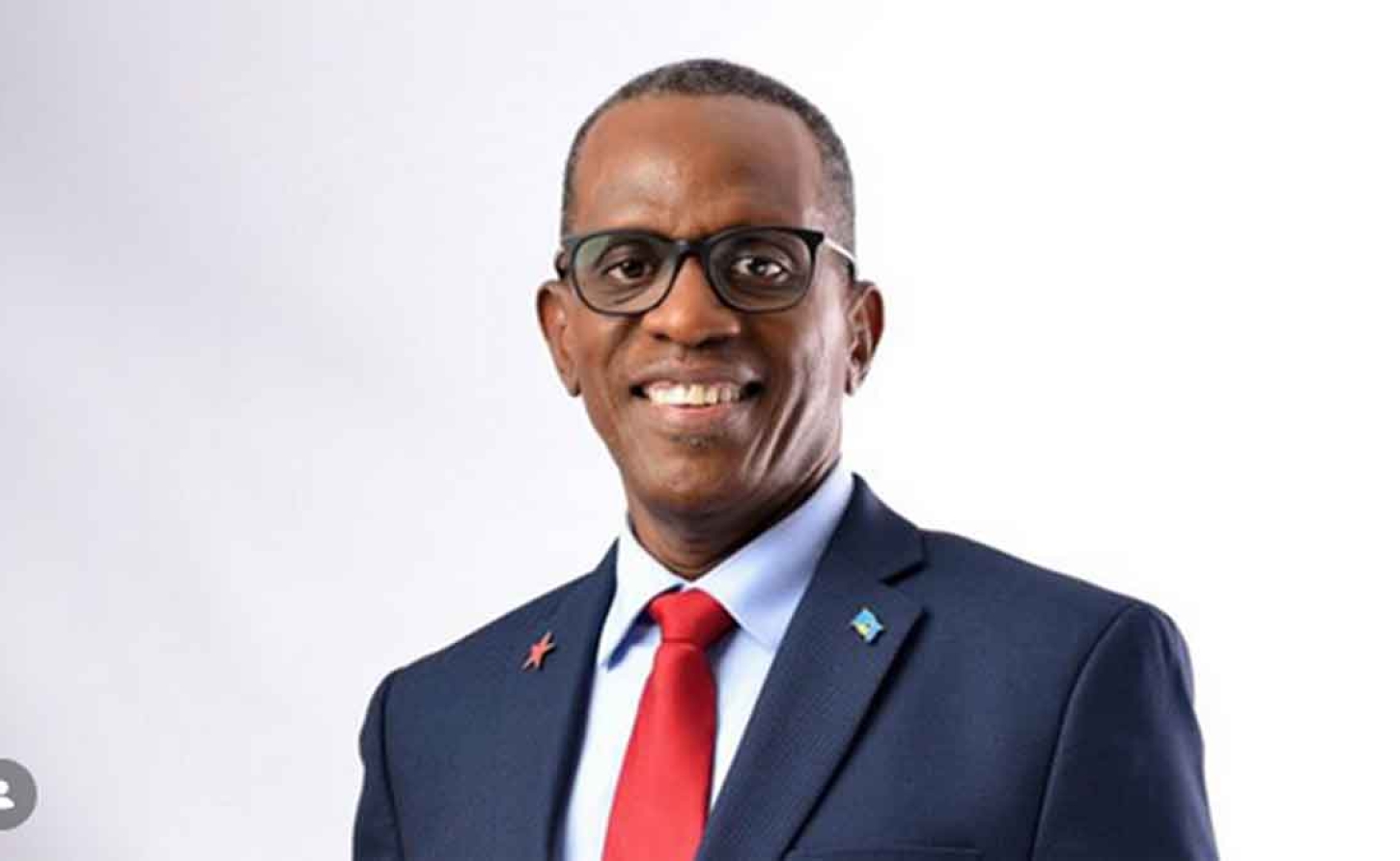
Saint Lucia's Prime Minister Philip J. Pierre has confirmed that the United States has formally communicated to his government that it should stop sending its nationals to study medicine in Cuba.
PM Pierre stands firm as Washington's anti-Cuba campaign collides with the Caribbean's right to train its own doctors
WiredJa | March 5, 2026
There are two kinds of pressure in Caribbean diplomacy. There is the pressure that arrives with formal declarations, public statements, and the full weight of international law behind it. Then there is the pressure that arrives quietly—in conversations between governments, in veiled warnings about consequences, in the slow reshaping of policy before any public announcement is made. Washington, it appears, has been operating in that second register.
Saint Lucia's Prime Minister Philip J. Pierre confirmed what many in the region have long suspected: that the United States has formally communicated to his government that it should stop sending its nationals to study medicine in Cuba.
Speaking at the Second World Congress on Racial and Ethnic Health Disparities in Castries, Pierre was blunt. "Many of our doctors got trained in Cuba, and now the great United States has said we can't do that any longer," he told delegates. "This is a major problem I have to face."
A Denial That Changes Nothing
Washington moved quickly to manage the optics. The U.S. Embassy issued a statement claiming it had "not recently talked to St Lucia about international education" and that it "respects countries' sovereign decisions regarding the education of their citizens."
But in the same breath, the Embassy labelled Cuba's overseas medical programs as relying on "coercion and abuse"—an assertion long deployed to discredit Cuban medical cooperation, and one that conveniently provides diplomatic cover for the pressure Pierre described.
In short: Washington denies giving an order while making the intended direction unmistakable. Call it plausible deniability, Caribbean edition.
A Healthcare System Built on Cuban Training
The stakes for Saint Lucia are not abstract. For decades, Cuba's Latin American School of Medicine (ELAM) has provided tuition-free or heavily subsidized medical training to Caribbean students who could not afford education in the United States, United Kingdom, or Canada. Pierre was unambiguous about the structural dependency this has created: a significant proportion of doctors currently practicing in Saint Lucia were trained in Havana.
Pierre's challenge is compounded by the presence of Cuban medical professionals currently serving in Saint Lucia—professionals whose status could also fall under the widening net of American diplomatic pressure. "We also have Cubans who come over to work," Pierre noted. "So the American government has said we can't even train them in Cuba. So I have a major issue on my hands."
The government has begun quietly exploring alternative medical education pathways in Mexico and across Africa for students who have not yet commenced studies—an acknowledgment that U.S. influence is already reshaping policy even before any formal compliance is demanded.
Pierre Holds the Line—For Now
At the 50th CARICOM Heads of Government Meeting in St. Kitts and Nevis, PM Pierre met directly with U.S. Secretary of State Marco Rubio. He emerged from those talks reaffirming Saint Lucia's position without flinching. "Saint Lucia has enjoyed a long-standing relationship with Cuba with regard to medical professionals," Pierre told reporters. "Many of our young people have studied in Cuba. Therefore, it is a very important issue for us. As a region, we have our own problems that we must resolve."
That last phrase—"as a region, we have our own problems that we must resolve"—is the most important thing Pierre said. It was a quiet but firm assertion of Caribbean autonomy: these are our healthcare decisions, our sovereignty questions, and we will navigate them on our own terms.
Sovereignty Is the Real Prescription
This is not, at its core, a story about medical education. It is a story about the right of small island states to make sovereign decisions about their own healthcare systems without seeking the approval of a hemisphere-spanning superpower. Cuba's medical cooperation with the Caribbean stretches back to the 1970s—a relationship older than many of the professionals who have benefited from it—and it has filled critical gaps that no American or European program has volunteered to replace.
The United States is entitled to its foreign policy positions on Cuba. It is not entitled to treat the Caribbean as an extension of its domestic political battles over Havana, particularly when the price of that position is paid in doctors that small islands like Saint Lucia can ill afford to lose.
PM Pierre is standing his ground. The region should stand with him.
-30-
