JAMAICA | BOJ Holds Rate at 5.50% as Middle East Fires Fan Jamaica’s Inflation Threat
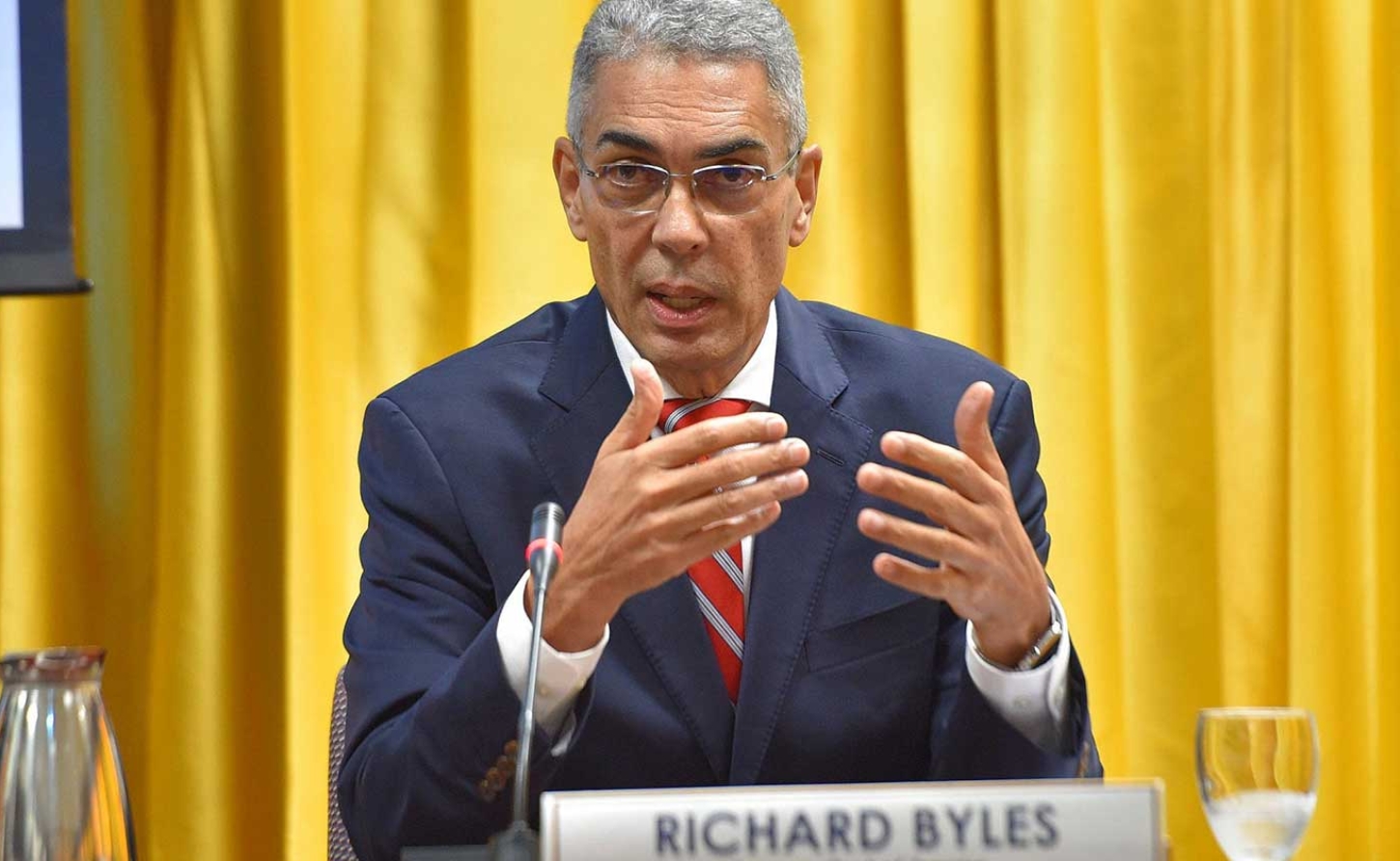
Governor of the Bank of Jamaica Richard Byles says the MPC has decided to hold its policy rate at 5.50 per cent per annum
The Bank of Jamaica is standing pat on interest rates, but do not mistake stillness for calm — rising commodity prices, hurricane-battered supply chains, and global uncertainty are converging on an economy with little margin for error.
Calvin G. Brown | Economy & Finance |
KINGSTON, Jamaica, Tuesday, March 31, 2026 - The Bank of Jamaica’s Monetary Policy Committee has decided to hold its policy rate at 5.50 per cent per annum, a decision announced on March 31 following deliberations on March 27 and 30. At first glance, the decision to hold appears unremarkable — a steady hand on a steady wheel.
Look closer, however, and the picture that emerges is of a central bank navigating treacherous waters with limited tools, issuing a quiet but unmistakable warning that Jamaica’s economic honeymoon with below-target inflation may be drawing to a close.
The MPC’s communiqué confirmed that alongside holding the policy rate, it will continue special measures that include directly supplying foreign exchange to selected energy sector players — a targeted intervention designed to insulate the fuel supply chain from the volatility now rattling global commodity markets.
WHY RATES WERE HELD
The Committee’s rationale is rooted in a fundamental tension that any honest reading of the data makes plain. Inflation stood at just 3.9 per cent in February 2026 — below the lower limit of the BOJ’s 4.0 to 6.0 per cent target range. By that single measure, prices appear subdued. But the MPC is not looking at where inflation is. It is watching where inflation is going, and what it sees is deeply concerning.
The engine driving that concern sits thousands of miles away, in the burning skies over the Middle East. The ongoing conflict there has triggered a sharp spike in international commodity prices, with West Texas Intermediate crude oil surging a staggering 39.5 per cent in March 2026 alone — far exceeding the Bank’s previous projections.
Liquefied natural gas prices offer modest relief after a slight decline, but fertiliser costs have jumped 20.3 per cent, a figure with direct implications for Jamaica’s food prices and the agricultural recovery efforts still underway in the wake of Hurricane Melissa.
“The risks to the projected path for inflation over the next eight quarters are skewed to the upside.” — Bank of Jamaica MPC, March 2026
THE HURRICANE MELISSA MULTIPLIER
Here is where the story becomes distinctly Jamaican. The BOJ’s own analysis flags that stronger-than-anticipated domestic spending amid the post-hurricane recovery effort could generate additional upward pressure on prices.
In plain terms: as government, businesses, and households pump money into rebuilding what Melissa destroyed, that spending surge can push prices higher across the economy. Recovery is necessary and unavoidable — but it carries an inflationary price tag that the Bank is already factoring into its calculations.
The primary downside risk to GDP growth is equally direct. Tourism and its related services — the industries on which Jamaica’s growth story has long depended and which Hurricane Melissa has battered — face a prolonged period of disruption.
The Bank projects GDP growth of between 1.0 and 3.0 per cent for fiscal year 2026/27, but it is candid that the downside risks are real. A sector still shuttered cannot generate the foreign exchange earnings, employment, or tax revenues that underpin Jamaica’s economic stability.
THE FOREIGN EXCHANGE BUFFER — AND ITS LIMITS
The BOJ points to Jamaica’s high foreign reserve levels as a critical buffer against the turbulence ahead, and it is fair credit. Hard-won fiscal discipline over several years has built up reserves that provide genuine ammunition in any currency market defence.
The continuation of direct FX supply to energy sector players is the operational expression of that buffer — ensuring that Jamaicans’ lights stay on and fuel reaches the pumps even as global prices swing wildly.
But reserves are finite, and a protracted Middle East conflict — the MPC’s stated major upside risk — would test any buffer. If second-round effects materialise, meaning if rising energy and food prices translate into broader wage and price expectations spiralling upward, the Bank has signalled it stands ready to act.
The next policy decision is scheduled for May 20, 2026, and between now and then, the geopolitical dashboard will be watched as carefully as any domestic economic indicator.
WHAT THIS MEANS FOR ORDINARY JAMAICANS
Mortgage holders and borrowers who had hoped for rate relief will find none here — and should temper expectations for the immediate months ahead. Business operators importing inputs — fuel, fertiliser, raw materials — face a cost environment that is becoming hostile with alarming speed.
Workers still displaced by Hurricane Melissa, waiting on hotel reopenings and income restoration, now face the additional spectre of a higher cost of living eating into whatever savings and support they have managed to preserve.
The BOJ has done what it can within its mandate. Holding the rate is defensible — cutting would risk accelerating inflation at precisely the wrong moment; hiking would strangle the post-Melissa recovery before it finds its footing. But monetary policy alone cannot rebuild a country.
The burden of protecting Jamaican households from the compound pressures of global commodity shocks and domestic disaster recovery falls equally on fiscal policy, on corporate responsibility in the tourism and energy sectors, and on a government that must answer the question the numbers are already asking: who bears the real cost of all this uncertainty, and who is protected from it?
-30-
