GUYANA | "Wheels of Justice" — and Slashed Tyres: Guyana's Opposition Leader Faced Bail Threat in Court Room Showdown
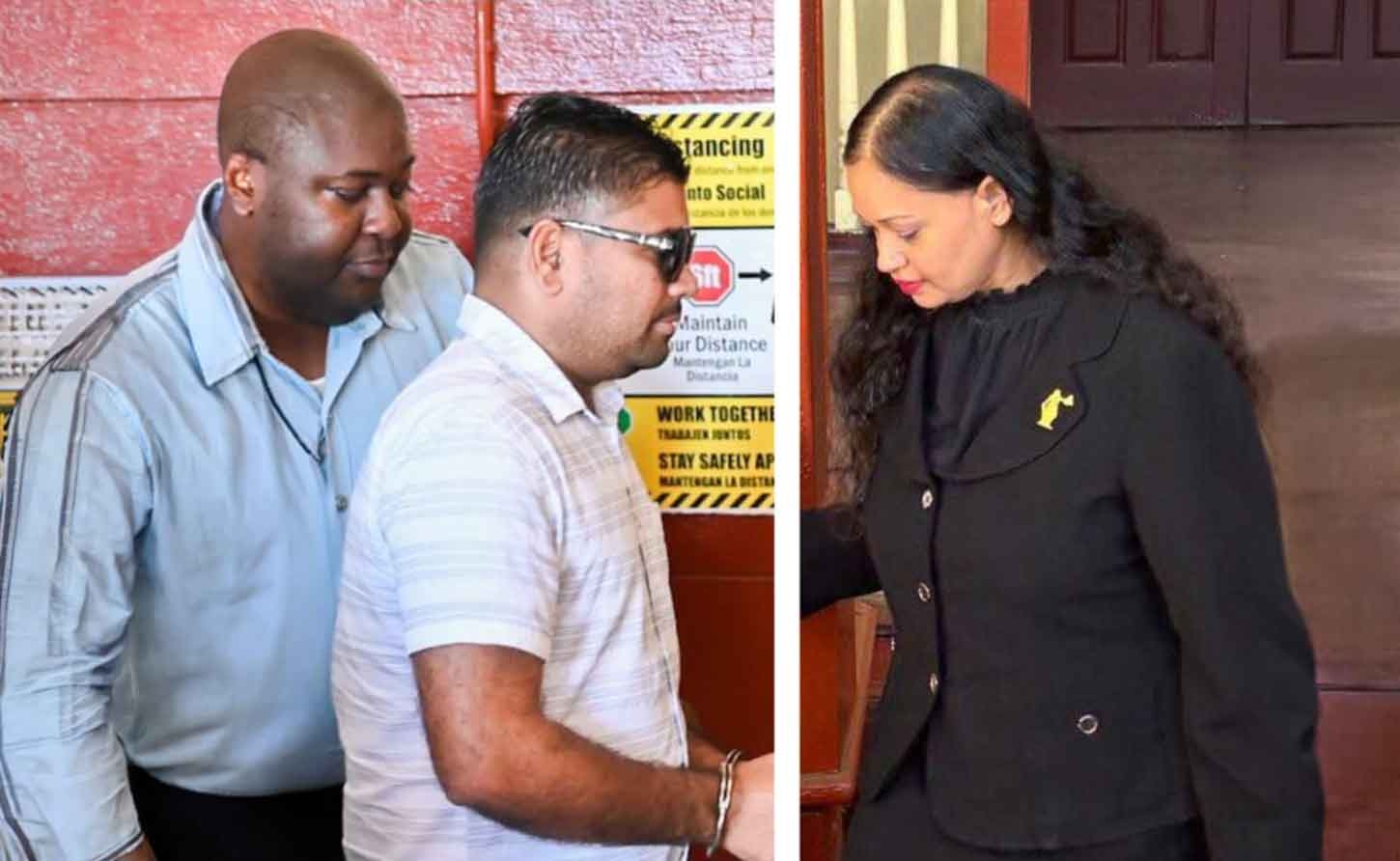
Opposition Leader Azruddin Mohamed and Magistrate Judy Latchman
Principal Magistrate's sharp rebuke of Azruddin Mohamed exposes deepening fault lines between judiciary, opposition, and the PPP administration
GEORGETOWN, GUYANA | WiredJa Staff | February 2026
The courtroom tension was thick enough to cut — much like, according to Guyana's Leader of the Opposition, the tyres that nearly cost him his freedom on Monday.
Azruddin Mohamed arrived approximately thirty minutes late for the resumption of his extradition committal proceedings before Principal Magistrate Judy Latchman at the Georgetown Magistrate's Courts, triggering a dramatic sequence of events that saw him briefly subjected to an arrest warrant, threatened with bail forfeiture, and ultimately released — but not before a stinging judicial dressing-down that laid bare the combustible intersection of law and politics in today's Guyana.
"I'm inclined to escheat your bail and ensure that you are on time on the next occasion."
— Principal Magistrate Judy Latchman
It was a sentence that silenced the room — and reverberated well beyond it.
A Warrant Issued, Then Withdrawn
The arrest warrant had been issued earlier that Monday morning after Mohamed, leader of the We Invest in Nationhood (WIN) party and the nation's principal opposition figure, failed to appear at the scheduled hour. By the time he arrived, the legal machinery had already been set in motion against him.
His explanation was extraordinary. Two tyres on the vehicle that regularly transports him had been deliberately slashed, Mohamed told the court, leaving him scrambling for alternative arrangements. He said he had several other vehicles available but was unable to drive them — because, he alleged, the Guyanese government had instructed insurance companies not to renew his vehicle insurance.
"I have just reasons why I'm late."
— Azruddin Mohamed, Leader of the Opposition
Her response was withering: "In your mind, your reasons are just."
Magistrate Latchman ultimately relented, rescinding the arrest warrant after hearing from Mohamed's lawyer, Siand Dhurjon, who offered the court a personal guarantee that his client would be punctual for all remaining proceedings. "I will personally take steps to ensure he is here," Dhurjon pledged — a commitment the magistrate acknowledged with dry understatement: "That is a bold move."
The matter has been adjourned to February 18 for continuation of the committal proceedings. Mohamed's father, Nazar "Shell" Mohamed — who is also sought by the United States — remains absent due to illness, and the magistrate expects a second medical update on that date.
The Tyre-Slashing Allegation
Outside the courtroom, Mohamed was unambiguous about who he holds responsible. Speaking to reporters, he pointed directly at the Guyana Police Force, which he alleged acted on government orders to orchestrate his late arrival by cutting the wheels of his employee's vehicle.
"I want to make it categorically clear — I want to be pellucid — that the victimisation that I'm going through in this country is unbelievable under the PPP administration," he said, his language as deliberate as it was forceful.
His defence lawyer, Roysdale Forde, backed the claim with a pointed declaration: "We have the evidence that the tyres were slashed." Forde also questioned the very basis for Monday's arrest warrant, noting that the day's proceedings were not scheduled for the prosecution to call witnesses — making the severity of the judicial response, in his assessment, disproportionate.
The PPP's Shadow Over the Courtroom
The prosecution's own conduct added fuel to the fire. Herbert McKenzie, the Jamaican lawyer representing the United States in the extradition matter, told the court that Mohamed appeared "bent on ensuring that the case drags on for five years," citing previous public statements by the opposition leader. It was a characterisation Mohamed's camp swiftly rejected, pointing out that he had been late only once before in twelve court appearances — and by just two minutes.
Mohamed faces serious allegations. He and his father are wanted by the United States on charges of wire fraud, mail fraud, and money laundering, with both currently on bail of GY$150,000 each pending the committal hearing that will determine whether they face trial stateside.
But for many Guyanese observers, the charges are inseparable from the political context surrounding them. In a country where the PPP's relationship with the opposition has long been defined by mutual suspicion and sharp institutional contestation, Monday's courtroom drama was never going to be viewed as merely procedural.
Democracy on the Docket
Principal Magistrate Latchman's parting words captured the official position with precision: "Under this court's watch, the wheels of justice will continue to turn in a timely manner."
The opposition's counter-narrative is equally pointed: that those same wheels are being steered — and occasionally sabotaged — by hands with political interests.
What happened in Georgetown on Monday was a bail hearing. What it represents, for a watching Caribbean, is something considerably larger: a stress test for democratic norms in a nation where the boundary between judicial accountability and political weaponisation grows harder to define with every passing court date.
The next date is February 18. The nation will be watching.
— WiredJa | Caribbean Digital News | wiredja.com
-30-
