
GUYANA | Presumtive Opposition Leader Mounts Constitutional Challenge to US Extradition
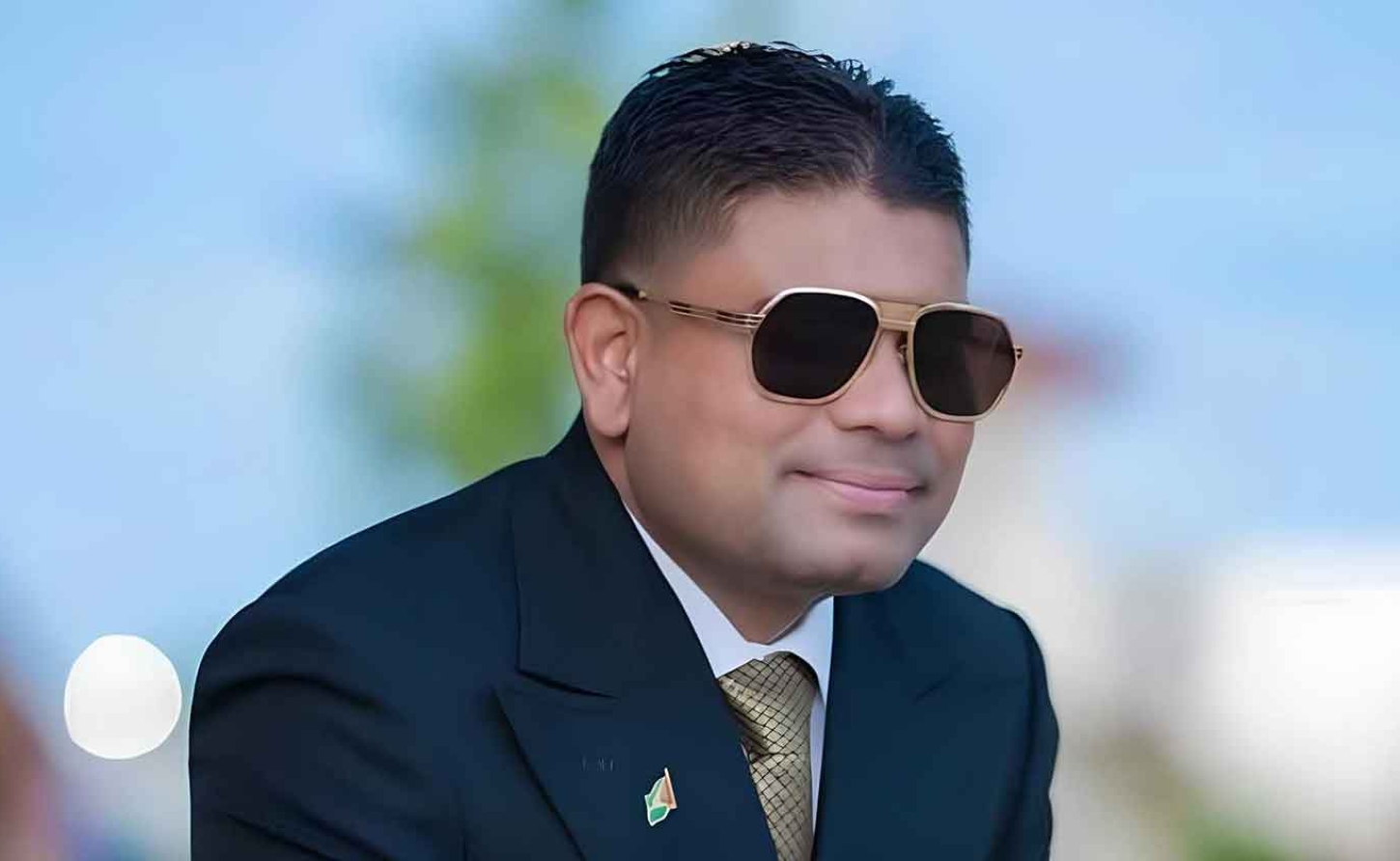
Azruddin Mohamed, leader of the We Invest in Nationhood (WIN) party that won 16 of the 65 parliamentary seats which makes him Opposition Leader Elect.
Legal filing argues 2009 amendments created "unconstitutional framework" that strips courts of power and citizens of rights
Georgetown, Guyana, December 9, 2025 — In a 53-page constitutional challenge that reads like an indictment of Guyana's extradition framework itself, lawyers for that country's presumtive opposition leader Azruddin Mohamed and his father Nazar Mohamed have asked the Guyana Supreme Court to rule on whether Parliament exceeded its authority when it amended extradition laws in 2009.
Their legal team argue that the amendments strip citizens of fundamental protections and subordinate the judiciary to executive and legislative direction.
The Mohameds are among Guyana's leading gold miners and exporters, as well as easily the country's largest foreign exchange cambio dealers. They face US charges of wire fraud and money laundering in Florida, where a grand jury indicted them on 11 criminal counts last month.

Leader of Mohamed's legal team Attorney-at-law Roysdale Forde
They challenge the very legal architecture that would permit such extradition to proceed, arguing that the 2009 Fugitive Offenders (Amendment) Act represents an unconstitutional power grab that violates the separation of powers, judicial independence, and due process guarantees enshrined in Guyana's Constitution.
At the heart of the challenge lies a legal problem that has haunted Guyana's relationship with the United States for nearly two decades: the 1931 UK-USA extradition treaty that Guyana inherited upon independence contains no provision preventing the re-extradition of surrendered individuals to third countries—a safeguard that Guyana's own Fugitive Offenders Act explicitly requires in Section 8(3)(b).
The Dataram Precedent
In 2008, the Full Court ruled in Barry Dataram v. The State that this treaty deficiency made extradition to the United States categorically unlawful. The court found that without explicit treaty language preventing onward extradition to third countries, no Authority to Proceed could legally be issued, no warrants could be executed, and no one could be lawfully detained for the purpose of extradition to America.
Parliament's response came in 2009, with amendments that Forde's submissions characterize as nothing less than an attempt at "judicial lawmaking" by legislative fiat.
Section 8(3B)(b) of the 2009 amendments directs that where a treaty lacks required safeguards, "the law or treaty shall, by necessary implication, be read and construed by the Minister, magistrate, High Court, Full Court and Court of Appeal as if the provision was incorporated into the law or treaty."
In other words: Parliament commanded the courts to pretend that protections exist in treaties where they demonstrably do not.
Three Constitutional Questions
The Mohameds' legal team has asked Principal Magistrate Judy Latchman to refer three questions to the High Court under Article 153(3) of the Constitution, which permits lower courts to refer constitutional questions to higher tribunals:
First, whether Sections 8(3B)(a) and (b)—which instruct courts to read non-existent treaty provisions into existence—violate fundamental rights to legal protection, personal liberty, and the constitutional principles of rule of law, separation of powers, and judicial independence.
Second, whether Sections 8(3A)(a) and (b)—which grant the Minister power to authorize extradition "notwithstanding" any law or treaty requirement if deemed "in the interest of justice"—similarly breach constitutional protections by vesting unreviewable discretion in the executive.
Third, whether Section 8(3B)(c)—which explicitly bars accused persons from complaining about treaty infractions "to the court in any proceedings"—strips citizens of their constitutional right to access courts and seek protection of the law.
"If this can be done to a person seeking to lead the opposition," the logic of the challenge suggests, "it can be done to any citizen."
Separation of Powers at Stake
The submissions cite extensively from Caribbean Court of Justice precedent, particularly Marcus Bisram v. The DPP, which held that "parliament is not permitted to enact legislation that would compromise the decisional authority properly vested in a court."
Forde argues that by directing courts on how to interpret treaty language—indeed, by commanding them to find provisions that objectively do not exist—Parliament has crossed the constitutional line separating legislative and judicial functions.
"It strikes the Court as being somewhat curious," Justice Barlow observed in a related case cited in the submissions. "If the Law or any Treaty provision is devoid of any express or implied provision then to ask that a Court or any other Authority should read that provision into the treaty or law seems to be an invitation to indulge in unofficial or judicial lawmaking in a most unalloyed form."
The challenge argues that these provisions don't merely violate abstract constitutional principles—they fundamentally compromise the fairness of extradition proceedings themselves, which the Privy Council has recognized involve "a serious invasion of fundamental rights."
The Ouster Clause Problem
Perhaps most troubling is Section 8(3B)(c), which purports to strip accused persons of any right to challenge treaty deficiencies in court. The submissions argue this creates an unconstitutional "ouster clause"—an attempt by Parliament to place executive action beyond judicial review.
Caribbean jurisprudence has long held that such clauses cannot insulate government action from scrutiny where fundamental rights are at stake. As the Privy Council held in AG v. Dumas: "A statutory ouster clause will not protect a purported determination from a legal challenge that it is ultra vires and therefore a nullity."
The defense notes the bitter irony: Section 8(3B)(c) suggests accused persons should raise treaty objections in the requesting state—meaning the Mohameds should challenge US violations of Guyana's treaty rights in American courts, after they've already been extradited.
"A challenge to the constitutionality of the extradition arrangements pursuant to the Constitution of Guyana in the courts of the U.S.A. is doomed to fail in its conception," the submissions state. "Further, the Accused Persons would have already been extradited, making such a remedy even if capable of being relied upon useless and inefficacious."
Political Implications
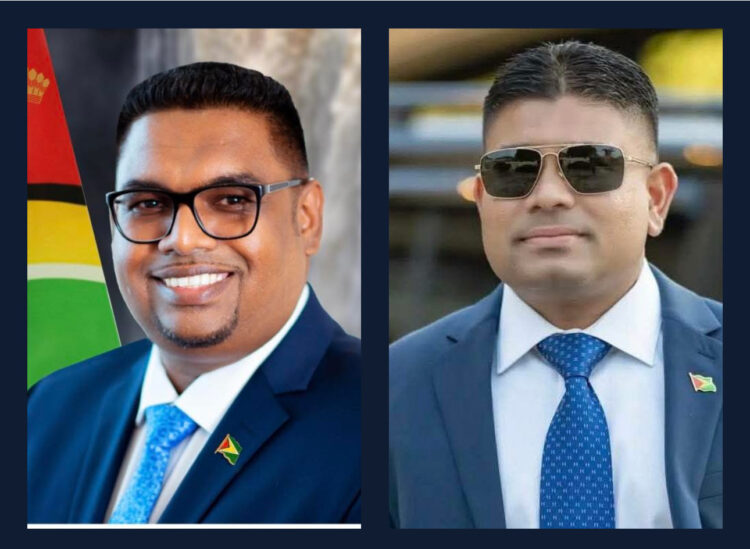
President Irfaan Ali and Opposition Leader elect Asruddin Mohamed for whom the PPP leadership has developed quite a pronounced disdane.
Mohamed claims they are hoping he will be extradited before parliamentary proceedings can formalize his leadership role. "They are doing everything possible to stop me," he said in a social media posting this week. "The constant attacks, whether directly or indirectly, are to weaken me, with the hope that if they hit hard enough, I will cower and retreat."
Vice President Bharrat Jagdeo has dismissed the stalling allegations as "garbage," noting that WIN "must go through a process, through a selection or voting process, to determine who will be the next opposition leader." But the convergence of extradition proceedings with the leadership vacuum has fueled suspicions that the Mohameds' legal troubles serve a convenient political purpose for the governing PPP.
The stakes extend far beyond one family's legal battle. If the High Court upholds the defense's arguments, it could invalidate not just the Mohameds' extradition but potentially dozens of prior extraditions conducted under the 2009 framework—and force a fundamental reckoning with how Guyana negotiates and implements extradition treaties with major powers like the United States.
If the court rejects the challenge, it will affirm Parliament's authority to direct judicial interpretation and constrain access to courts in ways that would have profound implications for the rule of law and separation of powers far beyond extradition cases.
For now, the Mohameds remain free on $150,000 bail with reporting conditions, awaiting Magistrate Latchman's decision on whether these constitutional questions warrant referral to the High Court—a decision that will itself test whether lower courts still possess the independence to recognize fundamental rights violations when they see them.
-30-
