CARICOM | The Jamaican Statesman and the Trinidad and Tobago Surrogate
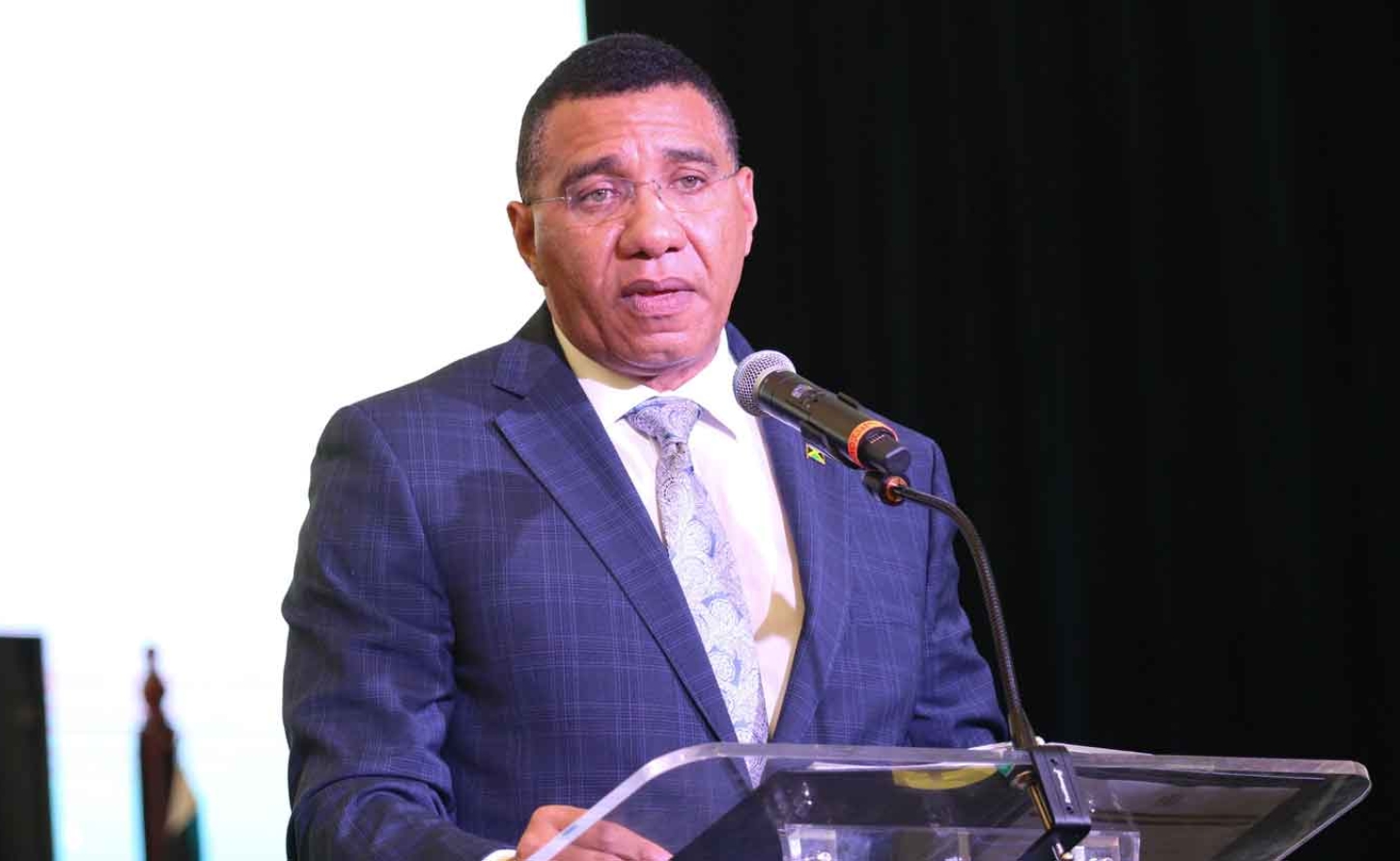
Jamaica's Prime Minister Dr. Andrew Holness addressing the opening of CARICOM 50.
Holness Speaks for the Caribbean. Persad-Bissessar Speaks for Washington.
By WiredJa Editorial | February 26, 2026 | Basseterre,
BASSETERRE, St. Kitts & Nevis - When Jamaican Prime Minister Dr. Andrew Holness rose to address the opening ceremony of the 50th Regular Meeting of the CARICOM Heads of Government in Basseterre on Tuesday, he did something that is increasingly rare in Caribbean diplomacy: he told a powerful truth to a powerful audience, with composure, conviction, and a clear Caribbean compass.
He spoke about Cuba — not through Washington’s lens, not through Havana’s eyes, but through the lens of a Caribbean neighbourhood confronting a humanitarian emergency on its doorstep.
“Humanitarian suffering serves no one,” Holness declared. “A prolonged crisis in Cuba will not remain confined to Cuba. It will affect migration, security, and economic stability across the Caribbean basin.”
“Jamaica supports constructive dialogue between Cuba and the United States aimed at de-escalation, reform and stability,” Holness said. “We believe there is space - perhaps more space now than in years past – for pragmatic engagement that protects the Cuban people from any further deterioration in their circumstances and instead promotes national and regional prosperity.”
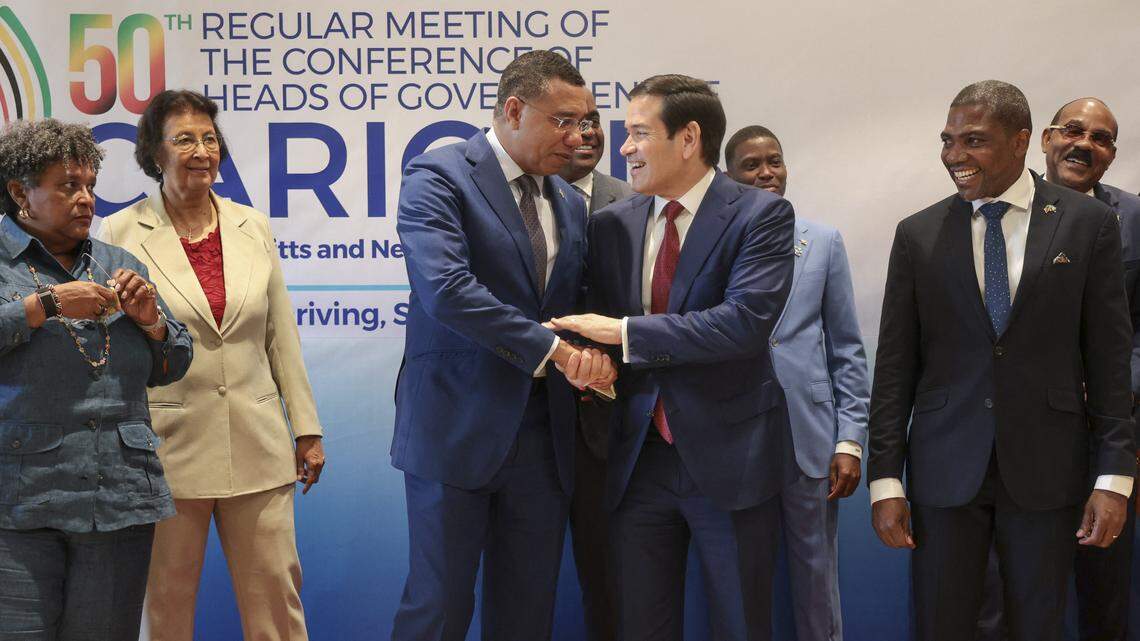
US Secretary of State Marco Rubio shakes hands with Jamaica's Prime Minister Andrew Holness during a photo with Caribbean Community (CARICOM) heads of government in Basseterre, Saint Kitts and Nevis, February 25, 2026. Rubio is meeting with Caribbean leaders seeking a common line on Venezuela and pressure on Cuba. He's also addressing President Donald Trump's priorities, including combating illegal immigration, drug trafficking and regional security. (Photo by Jonathan Ernst / POOL / AFP via Getty Images) JONATHAN ERNST POOL/AFP via Getty Images Read more at: https://www.miamiherald.com/news/nation-world/world/americas/article314849622.html#storylink=cpy
A Broader Vision
Holness did not limit himself to Cuba. In what was a substantive, wide-ranging address, he challenged CARICOM to graduate from reactive disaster response toward systemic institutional readiness — a pointed reference to the region’s ongoing struggle to absorb the catastrophic damage inflicted by Hurricane Melissa. He called for interoperable border management, stronger intelligence sharing, and investment in regional competitiveness. He reframed internal disagreements within CARICOM not as weakness, but as the natural expression of sovereign democracies navigating complex terrain.
And he closed with a statement that deserves to echo well beyond the conference hall: “If our economies are to scale, we must scale our ambitions. If our voice is to carry weight, we must speak with coherence — recognising that unity does not require uniformity.”
That is a mature, sophisticated, and genuinely Caribbean articulation of what this region must become. It honours sovereignty while demanding solidarity. It acknowledges difference while insisting on collective purpose.
Then There Was Trinidad
Against the backdrop of Holness’s principled diplomacy, the posture of Trinidad and Tobago Prime Minister Kamla Persad-Bissessar stands in stark and troubling relief.
According to reports from the summit, Persad-Bissessar used the occasion to thank the Trump administration — publicly, at a CARICOM summit — and to praise US military strikes on boats in Caribbean waters. She further criticised fellow CARICOM members for their reluctance to publicly endorse what she called the “elephant in the room”: US military intervention in Venezuela that resulted in the ousting of President Nicolás Maduro.
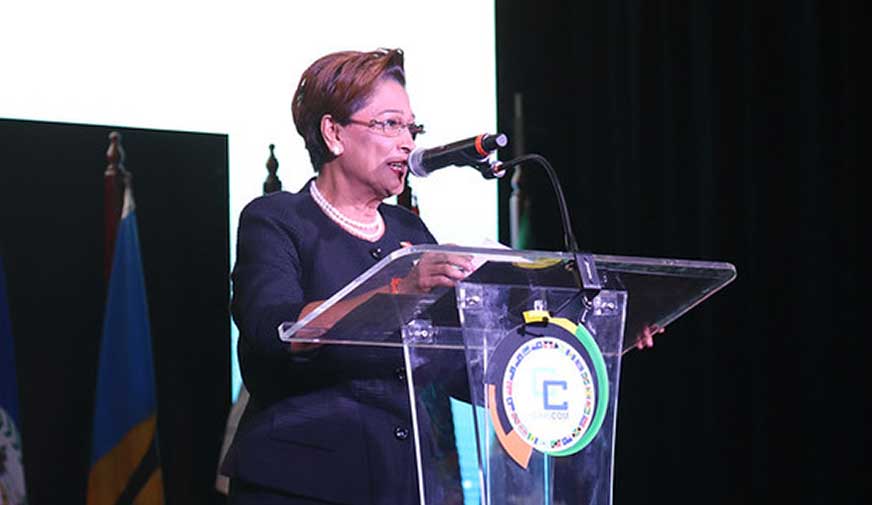
Prime Minister of Trinidad and Tobago, Kamla Persaud Bissessar
Let that sit for a moment. A Caribbean head of government facilitated a US military operation, then appeared at a CARICOM summit to chastise her regional colleagues for not applauding it.
The Sovereignty Test
CARICOM was not built to be a relay station for American foreign policy. It was built on the founding principle that small states, through collective action and principled diplomacy, could protect their sovereignty and project their interests on the global stage. That principle was forged not in rhetoric but in an act of extraordinary political courage.
On December 8, 1972 — defying the United States government and the Organization of American States at the height of Washington’s iron-fisted hemispheric embargo — four Caribbean prime ministers simultaneously and collectively announced the establishment of diplomatic relations with Cuba. Michael Manley of Jamaica. Eric Williams of Trinidad and Tobago. Forbes Burnham of Guyana. Errol Barrow of Barbados. Four newly independent nations, the youngest sovereign states in the Western Hemisphere, looked Washington in the eye and chose principle over pressure. As the late Shridath Ramphal, who orchestrated the move as Guyana’s Foreign Minister, later recalled: the effect was immediate. The hemispheric embargo did not merely crack. It collapsed.
“Friends of all and satellites of none.” That was the rallying cry — five words that should be carved above every CARICOM chamber door.
That is the tradition Persad-Bissessar has chosen to abandon. And let the irony be stated plainly: Eric Williams — the intellectual titan who founded the People’s National Movement, led Trinidad and Tobago to independence, and stood in defiance of Washington to recognise Cuba — is her own political predecessor. The party she leads exists in the shadow of a man who would not recognise the foreign policy she is now conducting.
Persad-Bissessar’s approach fails this test categorically. Praising US military strikes in Caribbean waters is not pragmatism. It is an endorsement of the doctrine that Washington may use lethal force in the region’s maritime domain at will, with Caribbean blessing. Thanking the Trump administration at a regional summit — while that same administration has placed Jamaica, Antigua, Dominica, and other Caribbean nations on visa restriction lists and threatened tariff hikes against any country supplying oil to Cuba — is not diplomacy. It is appeasement dressed as cooperation.
The Trump administration’s “America First” posture has been unambiguous in its contempt for multilateral Caribbean interests. It has used migration as a weapon, energy as a chokehold, and visa policy as a cudgel. The appropriate Caribbean response to that posture is the one Holness modelled: engage firmly, advocate for the region’s interests, and refuse to validate coercion.
The Difference a Leader Makes
The contrast at Basseterre was not merely stylistic. It was a clash of fundamentally different conceptions of what Caribbean leadership is for.
Holness demonstrated that a small island state can advocate for a neighbouring people in crisis, frame that advocacy in terms of regional self-interest, and produce a tangible diplomatic outcome — all without compromising democratic principles or antagonising Washington beyond repair. He called for Cuba’s people to be protected from further deterioration while simultaneously affirming Jamaica’s commitment to democracy, human rights, and open markets. That is nuanced. That is skilled. That is Caribbean statecraft at its best.
Persad-Bissessar offered a different vision: one in which Trinidad’s geographic proximity to Venezuela becomes a strategic asset not for Caribbean benefit, but for American operational convenience. In exchange, Trinidad receives what — goodwill from an administration that has already restricted Caribbean nationals’ access to the United States?
The Caribbean is watching. Its people are watching. And they deserve leaders who understand that the region’s voice carries weight only when it is their own.
-30-
WiredJa is a Caribbean-centred digital news publication committed to accountability journalism and regional sovereignty.
