BRITAIN | The King's Brother in Handcuffs: Who's Next?
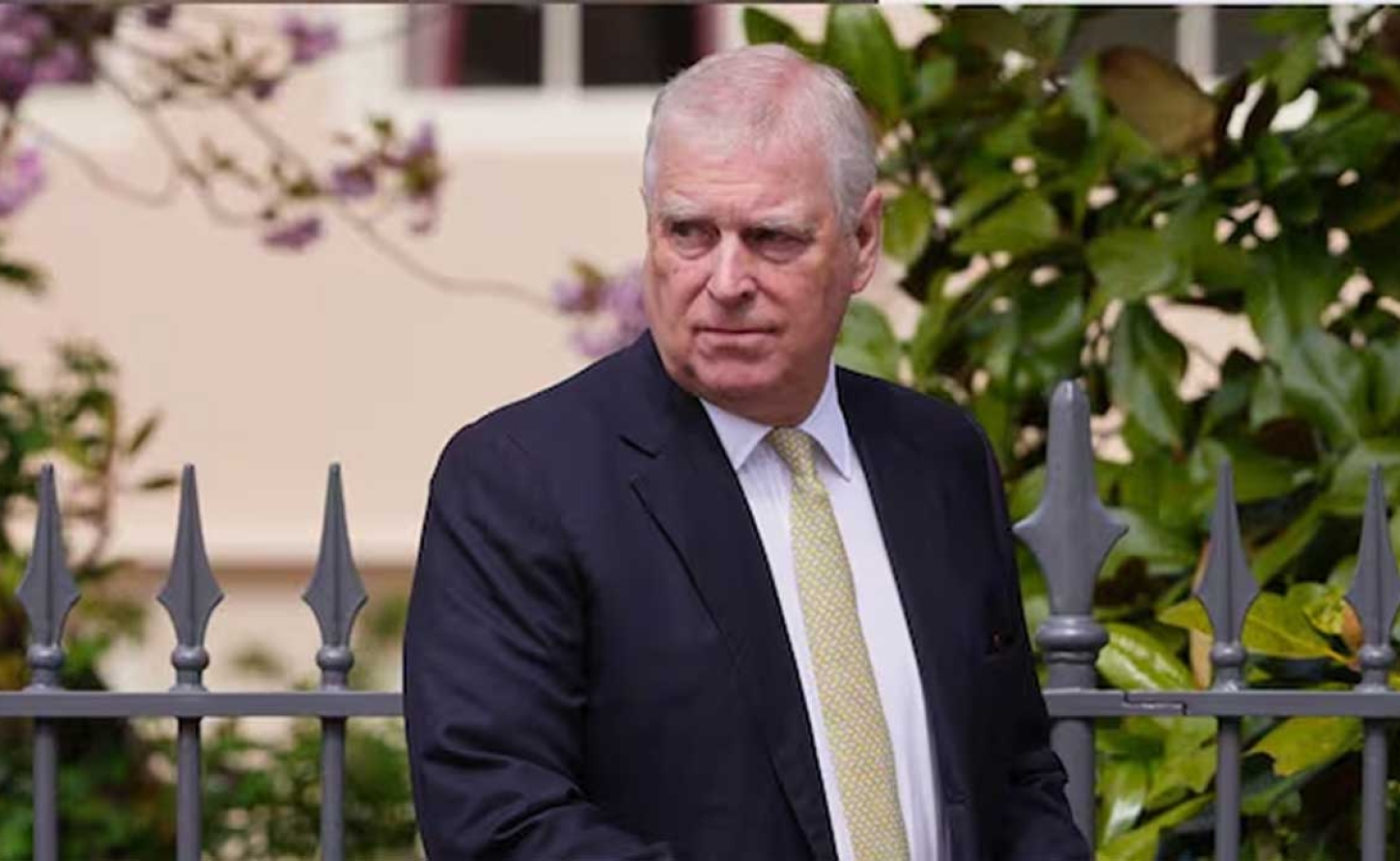
Andrew Mountbatten-Windsor, brother of King Charles and a former prince, has been arrested by Thames Valley Police on suspicion of misconduct in public office over allegations he sent confidential government documents to Jeffrey Epstein, according to multiple U.K. media reports.
Andrew's arrest sends shockwaves through the Epstein web — but the biggest name remains untouched
When Thames Valley Police placed Andrew Mountbatten-Windsor in handcuffs on suspicion of misconduct in public office, they didn't just arrest a disgraced former prince. They cracked open a door that powerful men on both sides of the Atlantic have spent years and fortunes trying to keep sealed.
The former Duke of York — stripped of his titles, cast from the royal inner circle, and long regarded as the monarchy's most embarrassing liability — now sits in a custody suite facing allegations that he passed confidential British government documents to Jeffrey Epstein, the convicted sex offender whose little black book reads like a who's who of global power.
No bed of silk for Andrew. Just, as policing commentator Danny Shaw so bluntly put it, "a cell with a bed and a toilet."
The irony is almost Shakespearean. The man who notoriously claimed in his catastrophic 2019 BBC interview that he couldn't sweat — a biological impossibility he offered as an alibi — is now sweating in the most consequential way imaginable.
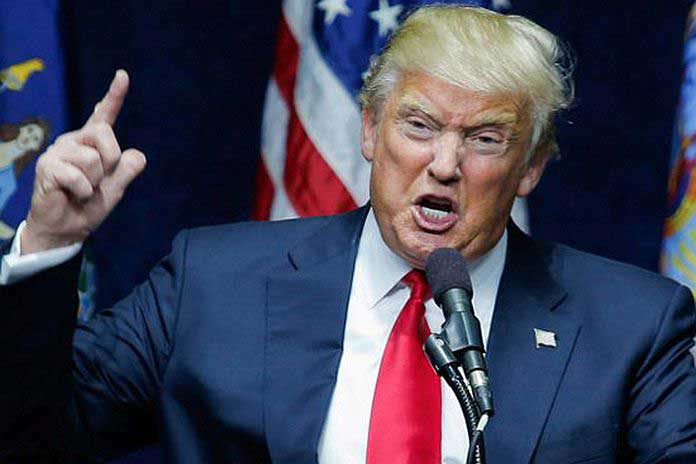
United States President Donald Trump is said to feature quite a bit in the Epstein Papers.
The release of millions of pages from the U.S. investigation into Epstein didn't just embarrass British royals. Those documents formed a mosaic of the late financier's extraordinary network — a constellation of billionaires, politicians, celebrities, and power brokers who dined, flew, and socialized in Epstein's orbit.
Trump was a fixture in that constellation. Photographs, flight logs, documented social connections, and Epstein's own reported boast that he had introduced Trump to his wife Melania — all of it sits in the public record, largely undisturbed by serious prosecutorial scrutiny.
Trump has, of course, since distanced himself from Epstein, claiming they had a "falling out" years ago. But the timeline of that falling out, like Andrew's carefully constructed alibis, has a habit of shifting under pressure.
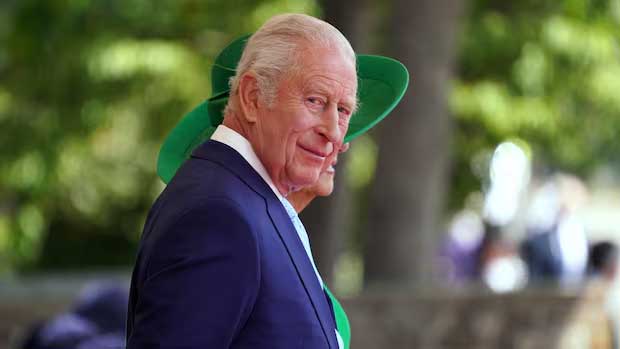
King Charles and Queen Camilla at Windsor Castle on July 8, 2025. (Alberto Pezzali/WPA/Getty Images)
Contrast that with the political environment surrounding Epstein's American connections, where investigations have been slow-walked, documents classified, and powerful defendants have benefited from what critics call a carefully maintained accountability gap.
Royal historian Rafe Heydel-Mankoo called Andrew's arrest "completely unprecedented in modern history." And he's right — the last royal detained was King Charles I in 1647, a man who ultimately lost his head. The symbolism, however uncomfortable for Buckingham Palace, is not lost on those who have long argued that wealth and title should offer no immunity from justice.
Andrew's arrest is a watershed moment. But watersheds are only meaningful if the water flows in all directions. Justice that reaches a disgraced prince in Windsor but somehow cannot find its way to a former American president — one who appears in Epstein's orbit with similar frequency and comfort — is not justice. It is selective enforcement dressed in judicial clothing.
The Epstein files are open. The names are documented. The question is no longer whether justice can reach the powerful.
The question is whether it has the political courage to try.
-30-
