ANTIGUA | Boxing Day Interrogation: When Law Enforcement Becomes Political Theatre in Antigua
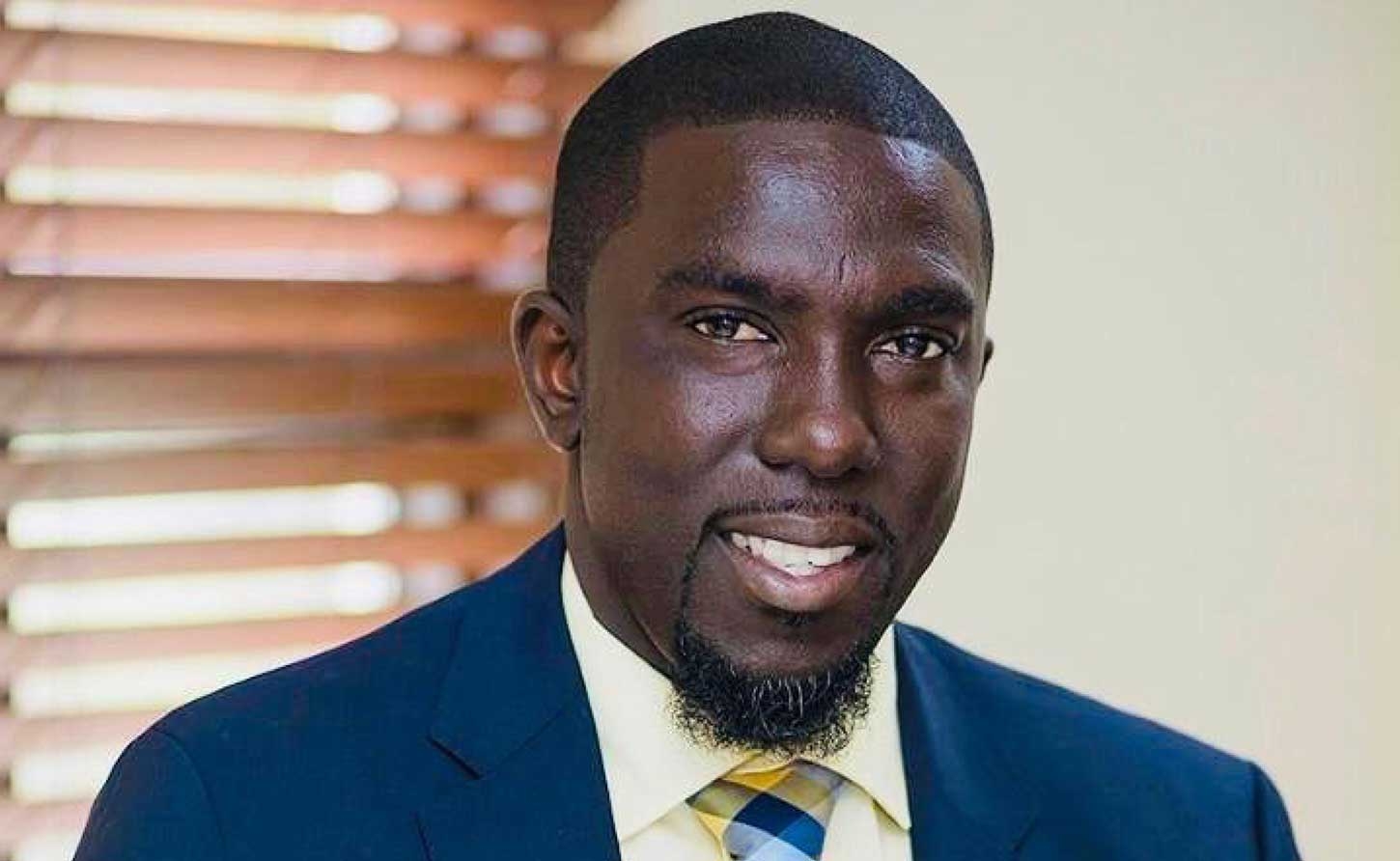
Leader of the United Progressive Party and Opposition Leader Hon. Jamale Pringle
Opposition Leader Jamale Pringle's Boxing Day police questioning exposes Caribbean's weaponized justice systems
ST. JOHN’S ANTIGUA - December 26, 2025 - An opposition leader summoned for police questioning on Boxing Day—based on accusations hurled from Parliament by the prime minister who controls the police force.
In Antigua and Barbuda, this became reality on December 26, 2025, as United Progressive Party leader Jamale Pringle reported to headquarters at 10 a.m. to answer questions about an arson Prime Minister Gaston Browne had already publicly convicted him of inciting.
Pringle was released without charge hours later. The damage to Antigua's democratic credibility may prove permanent.
The Anatomy of Political Persecution
The sequence of events reads like a textbook case of authoritarian overreach dressed in democratic clothing. It began when the Development Control Authority demolished Pringle's $65,000 USD tent structure at Morris Bay—a facility used by Old Road residents to raise funds for beach maintenance.
Days later, thousands of dollars worth of APUA (Antigua Public Utilities Authority) telecommunications equipment was destroyed by fire at the same location.
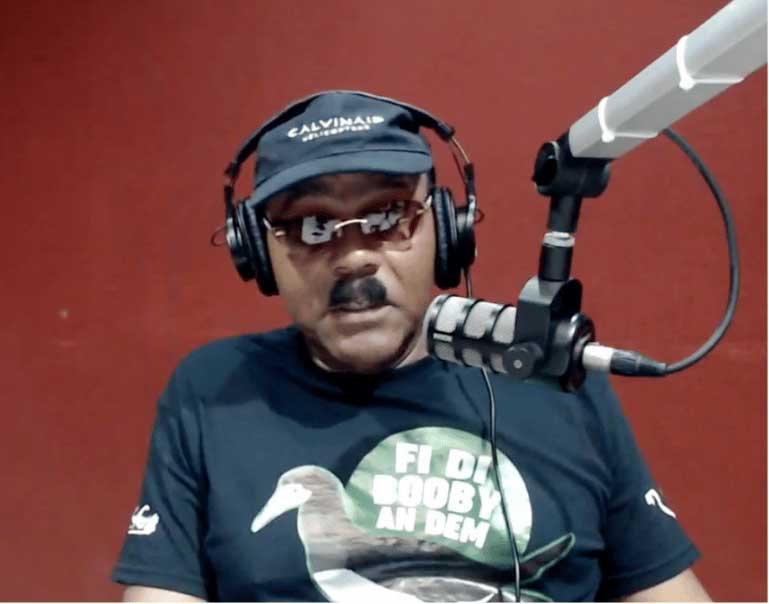
Gaston Browne on his Saturday morning radio programme
If he did not burn those things himself or cause them to be burnt, he would have incited others to do so."
Read that again. The Prime Minister—who controls the police, who appoints the Commissioner, who wields parliamentary privilege as a shield against defamation suits—publicly accused the Opposition Leader of arson or incitement, then expressed "surprise" that police hadn't yet questioned him.
The summons arrived shortly thereafter, timed for maximum humiliation on a day when most Antiguans were still celebrating Christmas with family.
The Caribbean Playbook
This pattern extends beyond Antigua. In Trinidad and Tobago, former Prime Minister Keith Rowley found his name on an Interpol watch list after leaving office—confronted by police at an airport while traveling for scientific work.
No explanation. No charges. Just bureaucratic persecution grinding away at democratic norms.
The parallels are chilling. Opposition figures face law enforcement action suspiciously close to public attacks by sitting prime ministers. Accusations remain vague, evidence undisclosed, processes opaque. The message to ordinary citizens: if we can do this to opposition leaders, imagine what we can do to you.
The Silence That Indicts
What makes Pringle's ordeal particularly revealing is not just what happened, but what hasn't. Despite being released without charge, no government official has explained what evidence justified summoning an opposition leader on a public holiday. No one has clarified why the Prime Minister felt entitled to publicly accuse Pringle before any investigation concluded.
House Speaker Osbert Frederick—charged with maintaining parliamentary standards—remained silent while Browne used the chamber to launch attacks that would land any ordinary citizen in court for defamation.
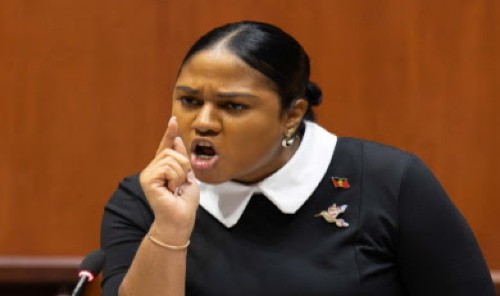
A defiant Minister Maria Browne defending her role in the so-called vehicle-gate during the budget debate
The admitted $15 million fraud known as "Vehicle-gate"—involving the unauthorized sale of government vehicles—has produced precisely zero police action, despite the prime minister's own wife being implicated in the scandal.
She has declared the matter "case closed." Read that again: the spouse of the head of government has determined what qualifies as concluded police business.
Since when does $15 million in public funds vanish without investigation? Since when do police commissioners defer to political spouses on matters of criminal inquiry?
The answer, apparently, is since Antigua's police force became an instrument of political control rather than public accountability.
Jeffers can mobilize on a public holiday to question an opposition leader over damaged equipment based solely on the PM's radio accusations, but cannot find the resources or authority to investigate millions in missing public funds when the trail leads toward the Prime Minister's Office.
The United Progressive Party condemned what it called "baseless and dangerous" allegations, with Deputy Political Leader Sherfield Bowen warning officers that detaining Pringle would constitute "a dangerous political move."
The warning proved prescient: supporters mobilized outside police headquarters, turning Pringle's questioning into a public spectacle that exposed just how deeply Antigua's political climate has deteriorated.
Democracy's Slow Death
This is how Caribbean democracies die—not through coups or suspended constitutions, but through institutional corruption. Police forces answering to political masters. Speakers protecting governing parties over parliamentary integrity. Prime ministers wielding criminal accusations as weapons while hiding behind privilege.
Pringle emerged defiant, vowing he "will not be intimidated." But intimidation is the point. The process is the punishment. The questioning itself—regardless of outcome—sends the message that opposing government carries costs beyond the ballot box: criminal investigation, public humiliation, defending yourself against unlimited state resources.
As Caribbean nations approach crucial elections, Pringle's ordeal should alarm regional watchdogs, international observers, and citizens who believe democracy means more than holding elections.
When prime ministers publicly accuse opponents of crimes, when police summonses arrive on command, when $15 million in government funds vanishes without investigation while opposition leaders face Boxing Day interrogations—democracy has already descended into something darker.
Antigua stands at a crossroads. Will its institutions reclaim independence or continue as political tools? Based on December 26th, the answer grows more troubling daily.
The precedent is set. The playbook is written. Across the Caribbean, aspiring authoritarians are taking notes.
-30-
