
DIASPORA | US$3.12 Billion and Counting: Jamaica’s Diaspora Is the Other Tourism Industry — and It Never Closed
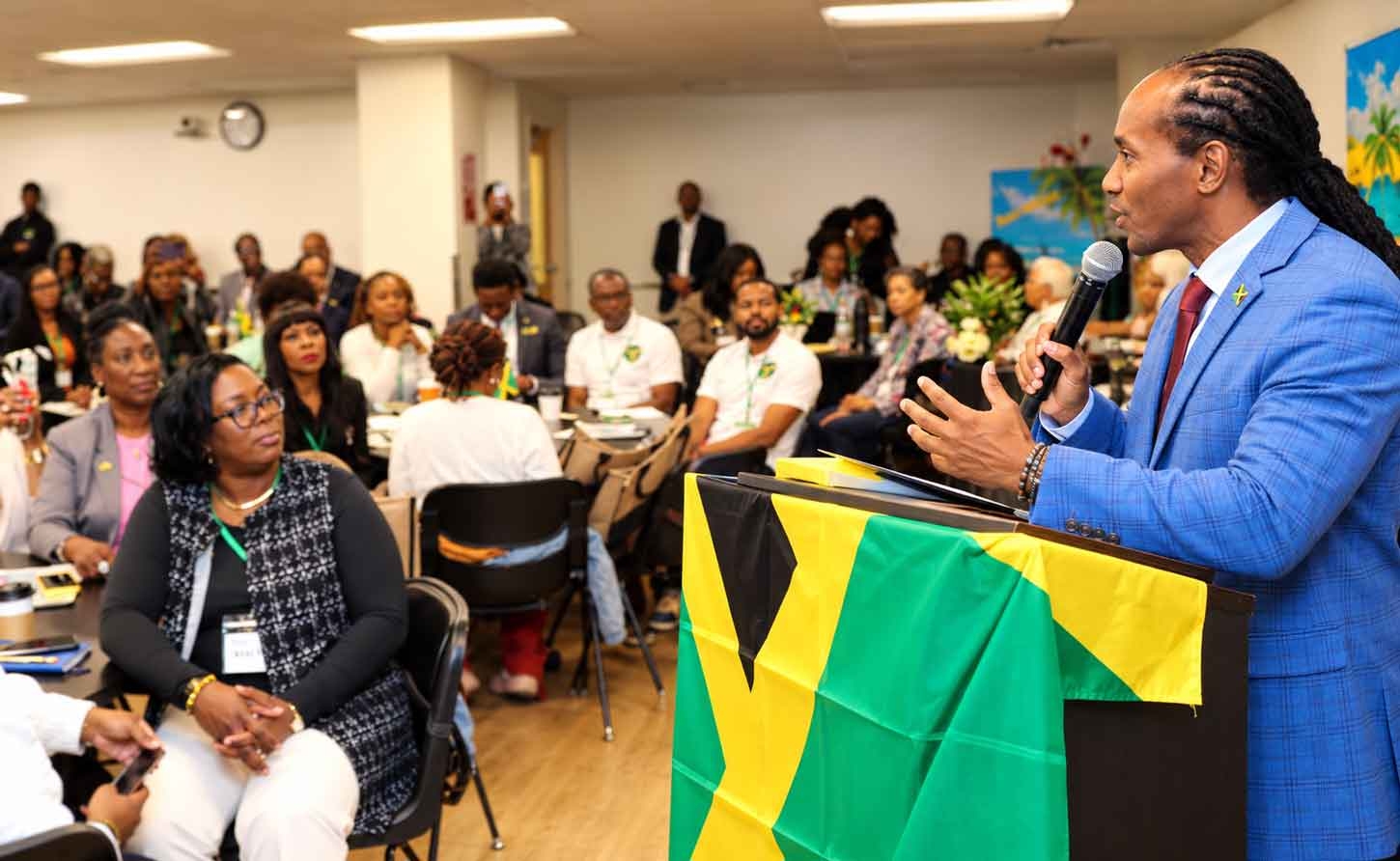
Minister of State in the Ministry of Foreign Affairs and Foreign Trade, with responsibility for diaspora affairs, Hon. Alando N. Terrelonge, delivers the keynote address at the opening of the second Jamaica Diaspora Northeast USA Conference at Temple University in Philadelphia, Pennsylvania, on Friday, October 23, 2026. | Derrick Scott Photo
As Hurricane Melissa knocked a third of Jamaica's hotel rooms offline, Jamaicans abroad sent home US$3.12 billion in a single fiscal year — closing the gap on tourism and raising a hard question for a country that still treats its overseas citizens as an afterthought.
MONTEGO BAY, Jamaica, October 23, 2026 | CALVIN G. BROWN | BUSINESS | When Hurricane Melissa tore through western Jamaica in late October 2025, it shuttered resorts from Negril to Montego Bay, emptied hotel lobbies and sent thousands of hospitality workers home without a pay cheque. One industry, however, did not close for repairs. It needed no reopening date, because it never stopped trading.
That industry is the Jamaican diaspora.
Jamaicans overseas sent home US$3.12 billion in remittances during the 2025/2026 fiscal year, Minister of State for diaspora affairs Alando N. Terrelonge told more than 300 delegates at the opening of the second Jamaica Diaspora Northeast USA Conference at Temple University in Philadelphia on Friday, according to a report by Derrick Scott. In the three months immediately after the storm, the diaspora sent an additional US$93 million compared with the same period a year earlier. December 2025 alone brought in US$296 million, a monthly high.
Those numbers are not abstractions. They are a nurse in the Bronx wiring money for zinc and board. A care worker in Croydon covering school fees in Westmoreland. A retiree in Toronto who let her own bills wait so a roof in St Elizabeth could go back up before Christmas.
Tourism's Shadow Rival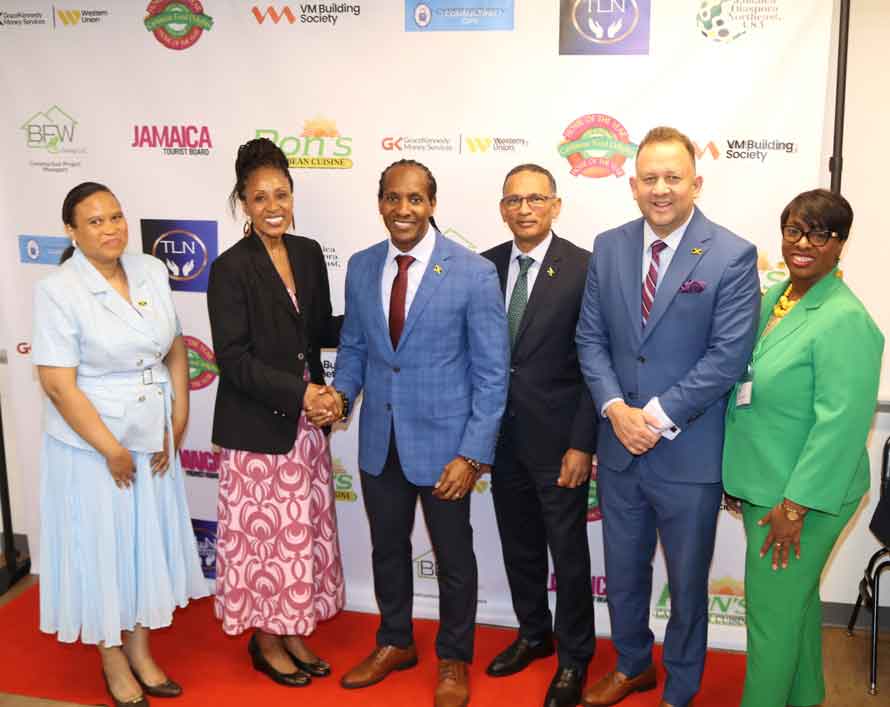 Minister of State in the Ministry of Foreign Affairs and Foreign Trade, with responsibility for diaspora affairs, Hon. Alando N. Terrelonge, is welcomed to the City of Philadelphia by Ms. Donna Jackson Stephens of the Philadelphia Mayor’s Office. Sharing in the welcome are, from left, Lishann Salmon, Chargé d’Affaires at the Embassy of Jamaica in Washington, D.C.; Brian Wallace, Jamaica’s Ambassador to the United Nations; Jamaica's Consul General to New York, Oliver Mair and Michelle Tulloch-Neil, Global Jamaica Diaspora Council representative for the Northeast United States. The welcome took place at the opening of the second Jamaica Diaspora Northeast USA Conference at Temple University in Philadelphia on Friday, October 23, 2026.| Derrick Scott Photo
Tourism has long worn the crown as Jamaica's leading foreign-exchange earner, and it still does. Tourism Minister Edmund Bartlett has put 2025 calendar-year earnings at an estimated US$4.09 billion, hurricane notwithstanding. But the gap is narrowing, and the trend line tells a story the brochures do not.
With roughly 30 per cent of the island's room stock still offline, tourism earned US$2.5 billion between January and August 2026 — 18 per cent below the same period last year. In its December 2025 Quarterly Monetary Policy Report, the Bank of Jamaica warned that the hurricane's blow to tourism would drag down the services account for FY2025/26, a deterioration partly offset by higher remittance inflows.
Read that again. When the flagship earner stumbled, it was the diaspora that caught the fall.
Even before Melissa, the central bank's own indicators showed remittances worth nearly 78 per cent of total tourist expenditure in 2024, roughly one-sixth of GDP, and well ahead of everything Jamaica exports in goods.
When the flagship earner stumbled, it was the diaspora that caught the fall.
Money That Stays Home
There is a further distinction worth making. A tourist dollar enters through the hotel lobby, and a good share of it leaves through the kitchen door — imported food, furniture, fuel and profits returned to overseas owners. A remittance dollar lands in a household in Hopewell, Hanover or Harbour View and is spent at the hardware store, the school bursary and the corner shop.
Nor did the diaspora wait for incentives. It kept sending despite a 1 per cent federal tax on cash remittances imposed by the Trump regime from January 2026, and despite an immigration climate that has many Jamaicans in the United States keeping their heads down.
This is the old covenant. You go abroad not to disappear, but to send for the family, build the house, pay the fees. The barrel and the money-transfer queue are not footnotes to Jamaica's development. They are load-bearing walls.
Beyond the Wire Transfer
Terrelonge was careful to stress that the contribution goes beyond cash. According to Scott's report, the minister said the Government intends to strengthen its relationship with Jamaicans overseas by moving beyond individual acts of goodwill towards sustainable programmes, enduring partnerships and measurable national outcomes.
He pointed to the Ministry of Health and Wellness' Adopt-a-Clinic programme as an example of the diaspora's impact on public services. As of October 2025, Scott reported, 37 of the 59 adopted health clinics had received diaspora support, representing a commitment of more than J$100 million towards improving access to primary healthcare in communities across Jamaica. In a health system stretched by the storm, that is not charity at the margins. It is reinforcement at the front line.
The minister also highlighted the work of Farm Up Jamaica, a New York-based non-governmental organisation whose agricultural initiatives seek to strengthen local production, reduce food imports and increase exports through the cultivation of organic produce. For an island whose food import bill has long drained its foreign exchange, diaspora money planted in Jamaican soil does double duty: it earns, and it saves.
Other diaspora-driven efforts, Scott noted, have included professional development programmes in education, public health, science and technology, along with contributions to school and health infrastructure through the National Education Trust and the National Health Fund.
"The Jamaica diaspora is, therefore, a reservoir of professional expertise, entrepreneurial capacity, innovation, networks and international experience," Terrelonge said.
Partner or Piggy Bank?
Here is the hard question. The minister said the Government is also exploring ways to reduce institutional barriers to trade, business, investment and philanthropy, and to widen diaspora participation on advisory boards, knowledge-transfer programmes and policy committees.
All welcome. All overdue. Tourism has a full ministry, a tourist board, an enhancement fund and a minister who announces arrivals with the regularity of a weather report. The diaspora, whose money now rivals tourism's, is served by a minister of state. Sending money home still costs fees. Investing from abroad still means paperwork and patience. And Jamaicans overseas still cannot vote from where they live.
Fairness demands the other side of the ledger. Economists caution that remittances largely finance household consumption rather than new production, that they cannot replace a strong export base, and that a country leaning too heavily on its emigrants risks normalising the departure of its brightest. Tourism, for all its leakages, employs Jamaicans directly and builds linkages with farmers and manufacturers. The goal is not to crown one earner over the other, but to stop treating the second as a lucky accident.
The Real Give-Back
Looking to Jamaica's 65th anniversary of Independence, Terrelonge invited the diaspora home for official celebrations from August 5 to 8, 2027, under the theme "Celebrate, Connect, Experience, Give Back."
The diaspora has been giving back for 65 years, one transfer at a time, hurricane or no hurricane. The question for 2027 is whether Jamaica will finally give back in return — in policy, in representation and in respect.
— 30 —
