
JAMAICA | The Nicodemus Deal: How Jamaica Could Quietly Become Washington’s Deportee Dumping Ground
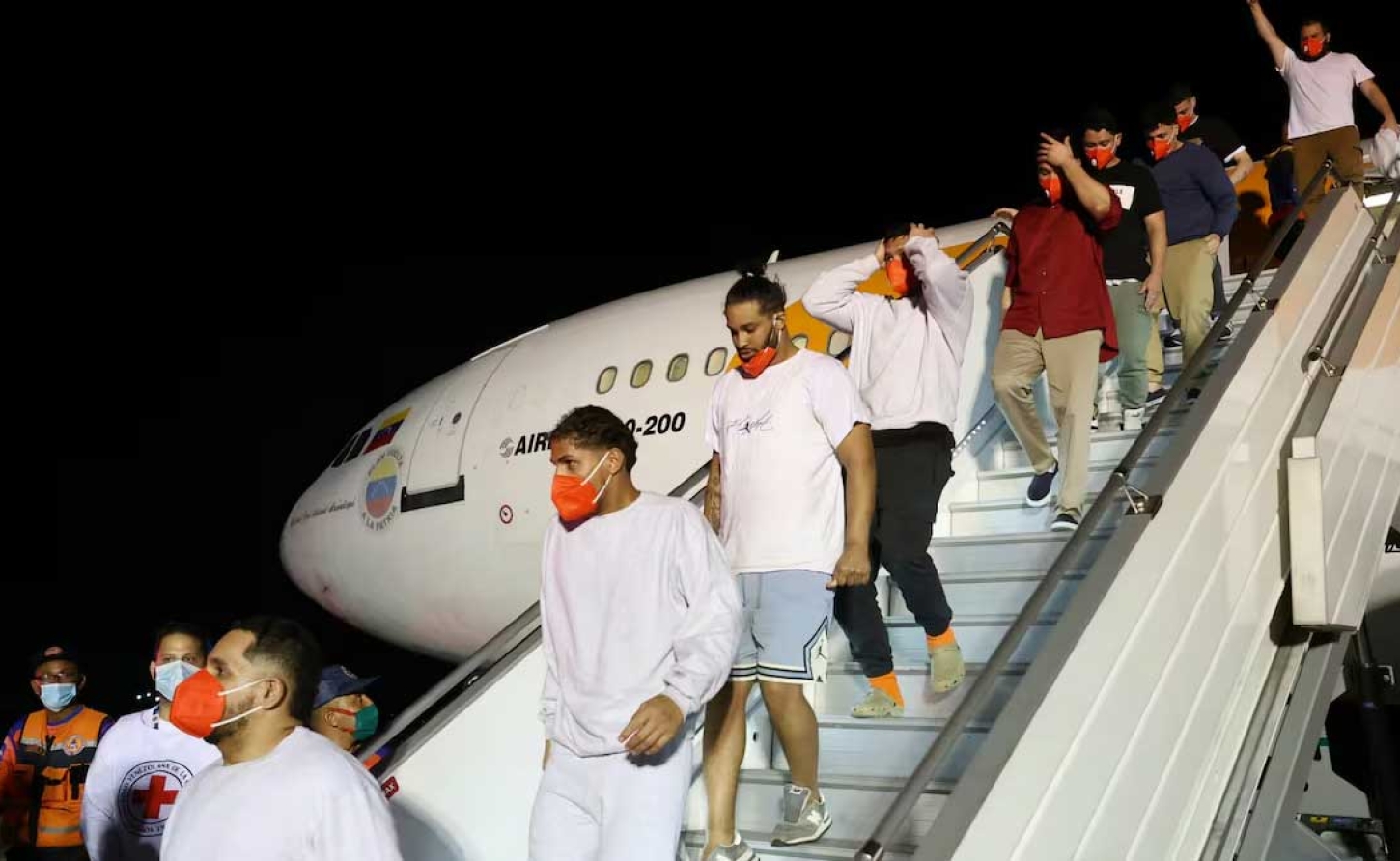
Migrants deported from the United States disembark from a plane in Caracas, Venezuela, March 28, 2025.
A US Embassy document seen by The Gleaner reveals Kingston and Washington are set to open talks on an arrangement that could see Jamaica accepting up to 10,000 non-Jamaicans deported from the United States — a proposal hatched behind closed doors, without parliamentary debate, public consultation, or so much as a press briefing from the Holness administration. Former Prime Minister P.J. Patterson, it turns out, was already asking the hard questions months before the document surfaced.
A Deal Born in the Dark
MONTEGO BAY, JAMAICA, JUNE 16, 2026 - Calvin G. Brown | Caribbean Affairs| Jamaicans found out about it the way they find out about most things their government would rather they didn’t: through a leak. Not a ministerial statement. Not a parliamentary white paper. Not even a press release timed for a quiet Friday afternoon.
According to The Gleaner, which obtained a US Embassy document outlining the operational framework, Kingston and Washington are expected to begin formal talks on a Third-Country Nationals arrangement first pitched by a senior Jamaican government official — one that could see this island, population 2.8 million, absorbing as many as 10,000 people who hold no Jamaican passport, no Jamaican birth certificate, and in many cases no connection to this country whatsoever, simply because the United States no longer wants them.
Ten thousand. Let that number sit. It is not a rounding error or a worst-case hypothetical buried in legal boilerplate — it is the figure splashed in the same breath as “expected to begin talks,” meaning the scale of this commitment was apparently settled before the public, or Parliament, ever got a whisper of it.
The Fine Print Doesn’t Match the Headline
Here is where the document gets curious. The operational detail buried inside it speaks of a far more modest cadence: up to 25 individuals transferred every two weeks, with the US obligated to pause further transfers if ten or more deportees remain in Jamaica beyond 30 days.
Run that math and it would take well over a decade of uninterrupted, frictionless transfers to approach five figures — never mind ten thousand.
Either the 10,000 figure is the ceiling of a far larger ambition that hasn’t been disclosed in full, or it’s a number designed to test public tolerance before the real terms are negotiated. Jamaicans are entitled to know which it is, and they are entitled to know before ink touches paper, not after.
Eswatini Already Showed Us How This Ends
This is not a hypothetical risk dreamed up by skeptics. It has already happened to one of our own.
In July 2025, Jamaican national Orville Etoria was deported from the United States not to Jamaica, but to Eswatini, a country with which he had no ties whatsoever — a maneuver only possible because of the same third-country deportation architecture now being extended to us.
It took international scrutiny and sustained diplomatic pressure before Eswatini released him in September and he was finally reunited with his family.
If that is what third-country deportation does to a Jamaican wrongly routed into the system, what assurance exists that Jamaica’s own vetting — relying on biographical and criminal records “to the extent available and permitted by law,” in the document’s own hedging language — will be any more reliable for the strangers Washington intends to send here?
Patterson Asked This Question Three Months Before Jamaica Answered It
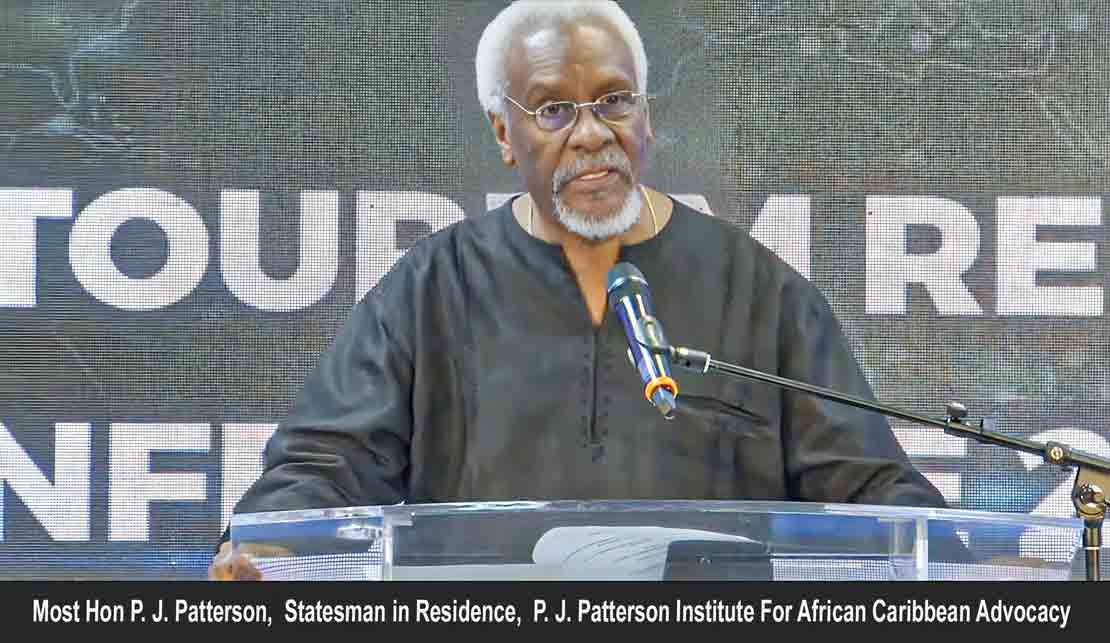 Long before The Gleaner obtained the leaked Embassy framework, the most senior elder statesman in Jamaica’s modern political history was already asking, in public, the very questions Kingston has yet to answer.
Delivering the 2026 Norman Manley Distinguished Lecture at UWI Mona on April 1 — titled “Constitutional Renewal, Caribbean Integration and the Rule of Law:
Charting the Region’s Next Chapter” — former Prime Minister P.J. Patterson moved from a blistering rebuke of Washington’s Cuba fuel blockade, which he called ‘a violation of the universal right to life’, directly into a line of questioning that reads, in hindsight, like a forecast of this very story.
Patterson asked plainly: “Has Jamaica entered any agreements to accept incarcerated migrants in the USA from 3rd Party countries, allegedly deported for criminal convictions?”
He invoked the Etoria case directly — “One of ours had to be brought back from Eswatini” — before widening the question to one of basic fairness: under what law would such migrants be detained, and where?
From there, Patterson drew the same contrast this newspaper has drawn independently: the incongruity of a country prepared to accept thousands of unnamed foreign deportees while routinely turning back Haitians who land on Jamaican shores before their asylum claims are even heard — a practice he tied to what he called a ‘convenient lapse of memory’ about Haiti’s own history as the first nation to grant freedom and citizenship to any enslaved person who reached its soil after defeating Napoleon’s army.
Patterson’s closing volley aimed past migration entirely, into the deeper question of sovereignty itself: if Jamaica can be pressured to accept Washington’s deportees while China is warned it can no longer hold a stake in ports it helped finance — even as Beijing holds vast US Treasury debt and buys sensitive American AI technology — then, he asked, “Are we a lesser sovereign?”
It is a question this newspaper now poses directly to the Holness administration — three months after Patterson asked it first.
A Region Already Boxed In
Jamaica would not be the first, or even the tenth, CARICOM member to fall into this arrangement.
Belize, Antigua and Barbuda, Dominica, St Kitts and Nevis, and St Lucia already have signed agreements or active operational frameworks with Washington on third-country nationals — part of a wider US strategy that has leveraged bilateral deals, financial packages, and geopolitical pressure to secure similar commitments from more than 30 countries spanning Latin America, Africa, Europe, and Asia.
The pattern is unmistakable: small, aid-dependent nations are being asked, one by one, to absorb America’s immigration overflow in exchange for goodwill that costs Washington little and obligates it to even less.
“Absorption without consent is not partnership — it is imposition with a signature.”
The draft MOU is explicit that the arrangement “does not financially commit either the US or Jamaican governments” beyond a vague intention to “review available foreign assistance funds.” That is not a guarantee. That is a maybe, dressed up as diplomacy.
Why “Nicodemus” Is the Right Word
In scripture, Nicodemus came to ask his questions by night, fearful of what daylight scrutiny might bring.
There is no better description of how this proposal has moved so far: negotiated quietly, surfaced only through a document never meant for public eyes, with the draft MOU itself stipulating that “public messaging about the agreement would be coordinated by both countries” — a polite way of saying the narrative, not just the policy, was meant to be managed.
No green paper. No committee hearing. No opportunity for the Jamaican people, who will live with the security, social, and diplomatic consequences of this decision, to weigh in before their government commits the nation’s name to it.
What Jamaica Is Owed
Jamaicans are not opposed to playing a constructive regional and hemispheric role. This country has absorbed hard truths before and risen to them.
But before a single name goes on a flight manifest bound for Norman Manley International, the Holness administration owes the nation a full parliamentary accounting: the real ceiling on numbers, the actual vetting standard, the cost to taxpayers if Washington’s “review” of foreign assistance funds comes up short, and an honest answer to the question Trinidad’s Keith Rowley posed to his own government under very different circumstances but with the same underlying demand — what is being decided about us, and why are we the last to know?
The talks are reportedly only beginning. That is precisely the moment for sunlight, not after the fact.
— 30 —
