
CARIBBEAN | Judge, Jury, and Speaker: Nadir’s One-Man Court Convicts Azruddin Mohamed Before Trial
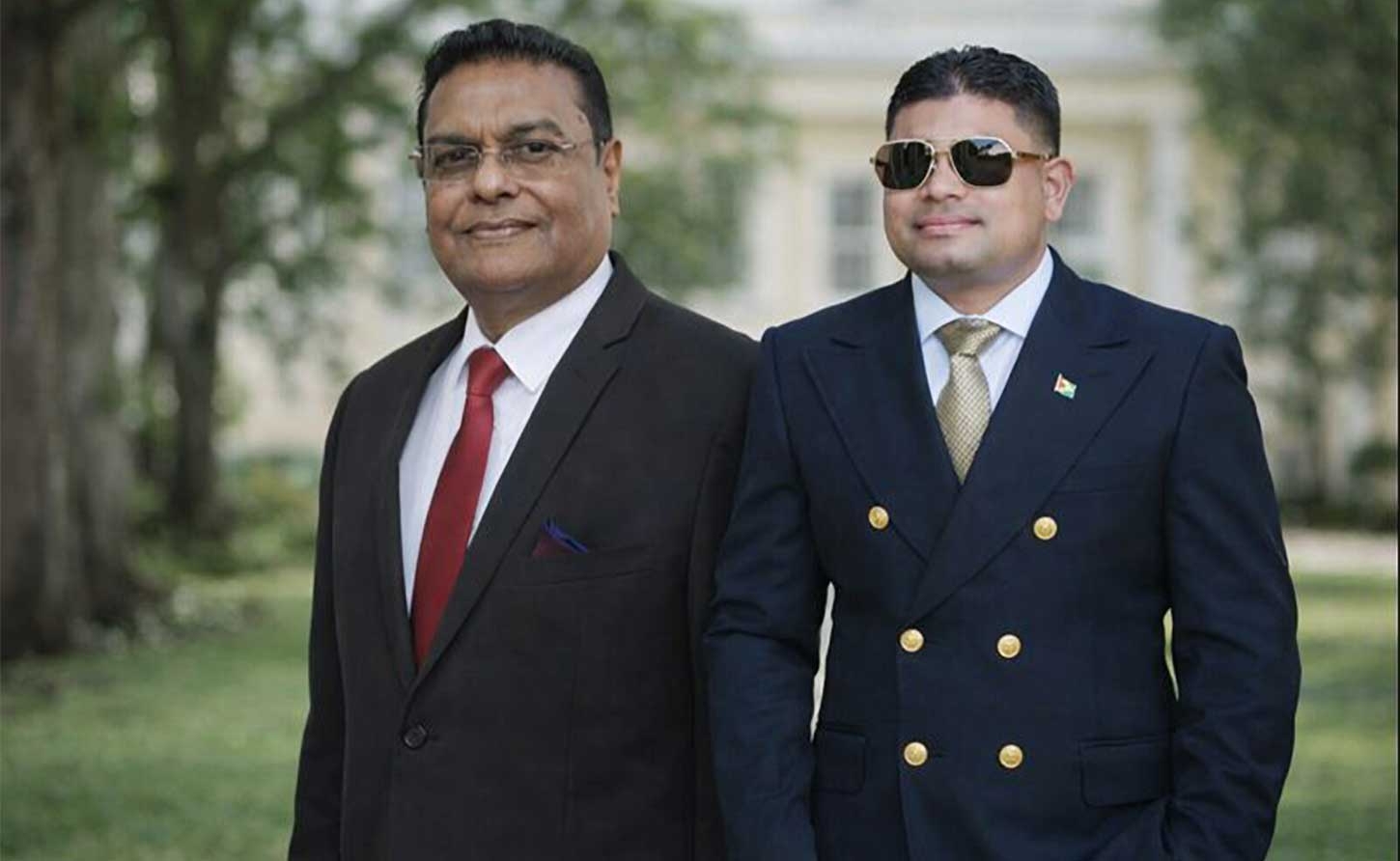
Speaker of the National Assembly, Manzoor Nadir and leader of We Invest in Nationhood (WIN), party Azruddin Mohamed
In an extraordinary breach of constitutional propriety, National Assembly Speaker pronounces guilt while extradition hearings remain ongoing
GUYANA, January 21, 2026 - On Tuesday, Azruddin Mohamed sought a meeting with Guyana's Speaker of the National Assembly, Manzoor Nadir. What should have been a routine encounter between a parliamentary officer and the presumptive Leader of the Opposition was rebuffed in what can only be described as a politically puerile refusal to engage.
Hours later, that same Speaker appeared on the state-controlled National Communications Network to announce he would “reluctantly” convene a meeting next Monday for opposition parliamentarians to elect their leader. But Nadir’s reluctance wasn’t procedural—it was theatrical.
In the same breath, he branded Mohamed an “international fugitive” and warned that any parliamentarian voting for him would bear “the stain on our parliament and our country.”
There is a word for when an official pronounces someone guilty before any court has ruled: injustice.
Democracy by the Numbers

APNU's Parliamentary Lead Dr. Terrence Campbell
A Partnership for National Unity trails with 12 seats; Forward Guyana Movement holds one. By every democratic metric, Mohamed commands the mandate to lead the opposition.
Yes, the wealthy gold dealer and his father, Nazar “Shell” Mohamed, are fighting a United States extradition request on charges of wire fraud, mail fraud, and money laundering. Their committal hearing continues on February 5 before Principal Magistrate Judy Latchman.
The operative word is “continues”—the legal process is ongoing, the charges remain allegations, and no court has determined guilt.
Yet Speaker Nadir, whose constitutional role demands procedural neutrality, has appointed himself judge and jury. He has convicted Mohamed in the court of public opinion while the actual courts have yet to rule.
The Scheduling “Coincidence”

Forward Guyana Movement leader Amanza Walton-Desir
This is no minor procedural overlap. Budget Day represents the opposition’s most critical opportunity to scrutinize government spending, challenge fiscal assumptions, and hold the administration accountable. Yet how can an opposition effectively coordinate its response without a designated leader in place?
Forward Guyana Movement leader Amanza Walton-Desir has recognized this absurdity for what it is.
Despite her party holding just one seat, she has threatened to boycott the sitting entirely if the Opposition Leader is not elected prior to the budget being read. It is a principled stand that exposes the constitutional chaos the Speaker’s maneuvering has created.
The collision of these two parliamentary functions on a single day is either breathtaking incompetence or calculated sabotage. Given Nadir’s Tuesday performance, the latter seems far more plausible.
The PPP's Convenient Enforcer
Let us dispense with pretence. Nadir is not some independent arbiter reluctantly navigating constitutional complexity. He is a veteran politician of the ruling People’s Progressive Party, and his performance Tuesday night bore all the hallmarks of political orchestration.
The PPP has found in the Speaker’s chair a convenient mechanism to delegitimize its opposition without the inconvenience of due process.
The presumption of innocence is not a legal technicality—it is the bedrock upon which democratic societies distinguish themselves from authoritarian regimes.
When a Speaker of Parliament declares a citizen guilty before trial, he does not merely prejudice one man’s case; he signals that political affiliation determines who enjoys constitutional protections and who does not.
Attacking the Messengers
Perhaps most revealing was Nadir’s broadside against the diplomatic community. He took aim at US Ambassador Nicole Theriot, demanding to know who America’s opposition leader is—a question so constitutionally illiterate it hardly warrants response.
He mocked Canadian High Commissioner Sébastien Sigouin, sneering that Canada had accepted an unelected Prime Minister “imposed” by Justin Trudeau.
These attacks serve a singular purpose: deflection. When you cannot defend your actions on principle, attack those who call attention to them.
The diplomats’ offence was straightforward—they suggested that Guyana’s democratic processes should function without interference from the ruling party’s Speaker. For this, they received public rebuke on state television.
The Precedent Being Set
What unfolds in Georgetown carries implications far beyond Guyana’s borders. Across the Caribbean, democratic institutions face mounting pressure from executives who view opposition not as legitimate competition but as obstacles to be neutralized.
The weaponization of legal processes against political opponents has become distressingly familiar—from selective prosecutions to strategic delays to, now, parliamentary officers who pronounce guilt before gavel falls.
If Mohamed is guilty of the charges alleged, let the courts so determine. Let Principal Magistrate Latchman hear the evidence. Let the legal process reach its conclusion. That is how democracies function.
But that is not what is happening in Guyana. What is happening is a Speaker who refuses to meet with a duly elected parliamentarian, then uses state media to brand him a fugitive while his trial remains pending.
What is happening is the ruling party using institutional power to preemptively discredit whoever the opposition chooses to lead it. What is happening is a budget presentation deliberately scheduled to collide with the opposition’s constitutional right to organize itself.
Manzoor Nadir has the constitutional authority to convene Monday’s election. He does not have the authority to determine its legitimacy based on his own verdict.
That power belongs to the courts—and to the courts alone.
-30-
