
CARIBBEAN | Blood in the Water: The Caribbean’s Deafening Silence as America’s Missiles Kill Our Fishermen
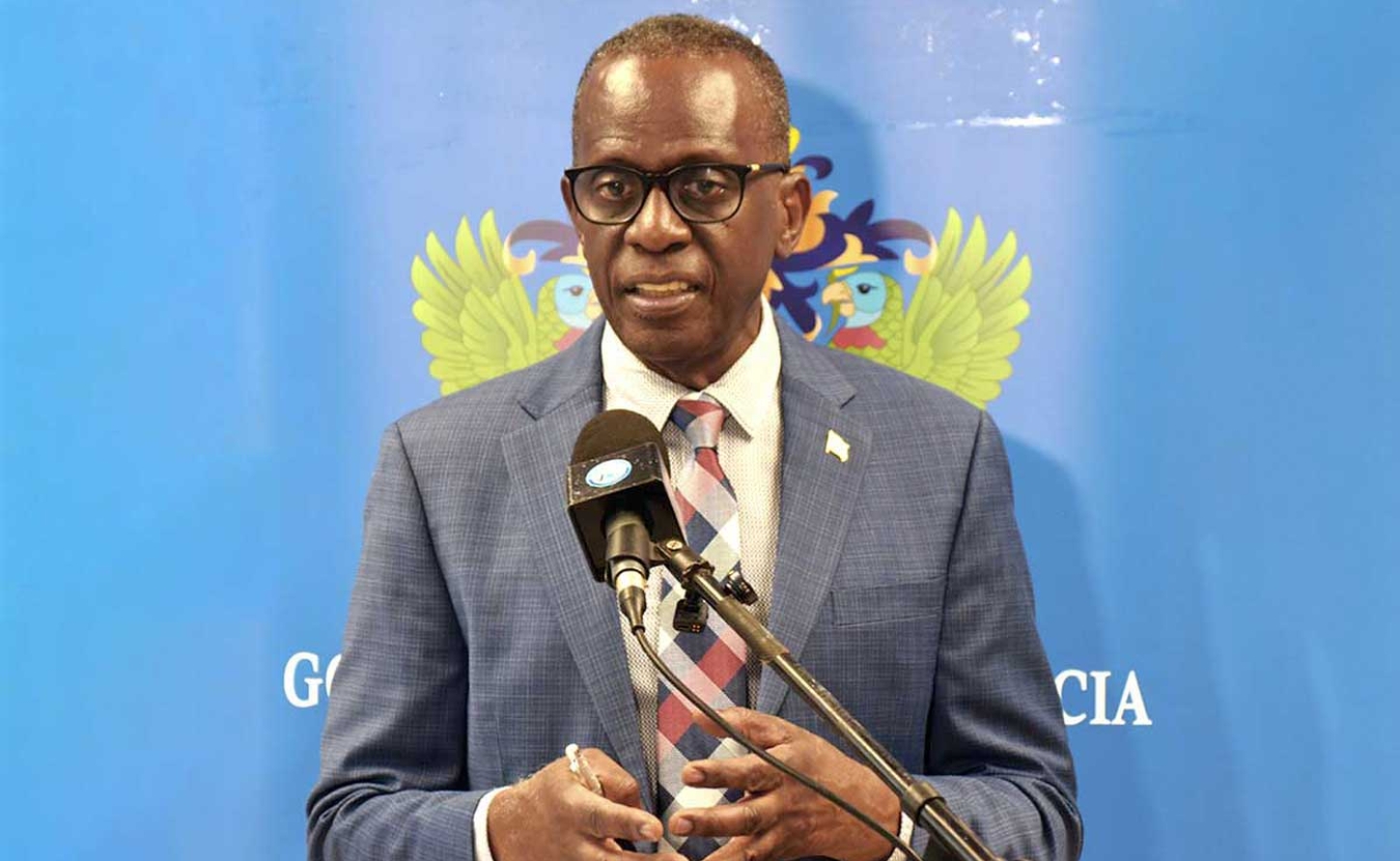
St. Lucia’s Prime Minister Phillip Pierre acknowledged that: “I can confirm that people lost their lives,”
WiredJa Editorial | February 19, 2026
MONTEGO BAY, February 19, 2026 - They went out to sea, as Caribbean fishermen have done for generations, casting their nets against the endless blue in the hope of a decent catch.
They did not come back. Instead, their vessel — a modest fishing boat named Zouti, Creole for “tools” — became a fireball, obliterated by an American missile fired from a drone high above the Caribbean Sea. Three St. Lucian men. Gone. No warning. No trial. No justice.
And from the sitting governments of the Caribbean? Silence. A silence so loud it is itself a verdict.
On Friday, February 13, 2026, the United States Southern Command (SOUTHCOM), acting at the direction of Commander General Francis L. Donovan, announced with clinical detachment that its “Joint Task Force Southern Spear conducted a lethal kinetic strike on a vessel operated by Designated Terrorist Organizations.” The military’s language was clean, bureaucratic, bloodless: “Three narco-terrorists were killed during this action. No US military forces were harmed.”
![Remnants of the alleged drug boat blown up in a lethal strike by the U.S. military last week surfaced off Canouan on Saturday [Photo credit : St Vincent Times]](/images/bombed-lucian-boat-860.jpg)
Remnants of the alleged drug boat blown up in a lethal strike by the U.S. military last week surfaced off Canouan on Saturday [Photo credit : St Vincent Times]
SOUTHCOM, with chilling bravado, released video footage of the strike — a missile slamming into a boat, igniting a fireball that consumed everything. It was presented not as a moment of shame, but as a promotional reel. A demonstration of power. A message.
The message has been received. The question is whether anyone in the Caribbean is brave enough to respond to it.
St. Lucia’s Prime Minister Phillip Pierre at least had the decency to acknowledge reality. “I can confirm that people lost their lives,” he told reporters, adding that he had received no official notification from Washington about the circumstances of their deaths.
His government, he said, was “engaging through established diplomatic and security channels.” Noble, perhaps. But careful. Diplomatic. Non-confrontational. The language of a small state that knows its place.
St. Vincent and the Grenadines, in whose territorial waters the wreckage may have been found, offered nothing from its government. Not a statement. Not a condemnation. Not even a question.
The silence from Kingstown is its own kind of confession — that when America fires missiles into Caribbean waters, the region’s ruling class has already decided that sovereignty is negotiable.
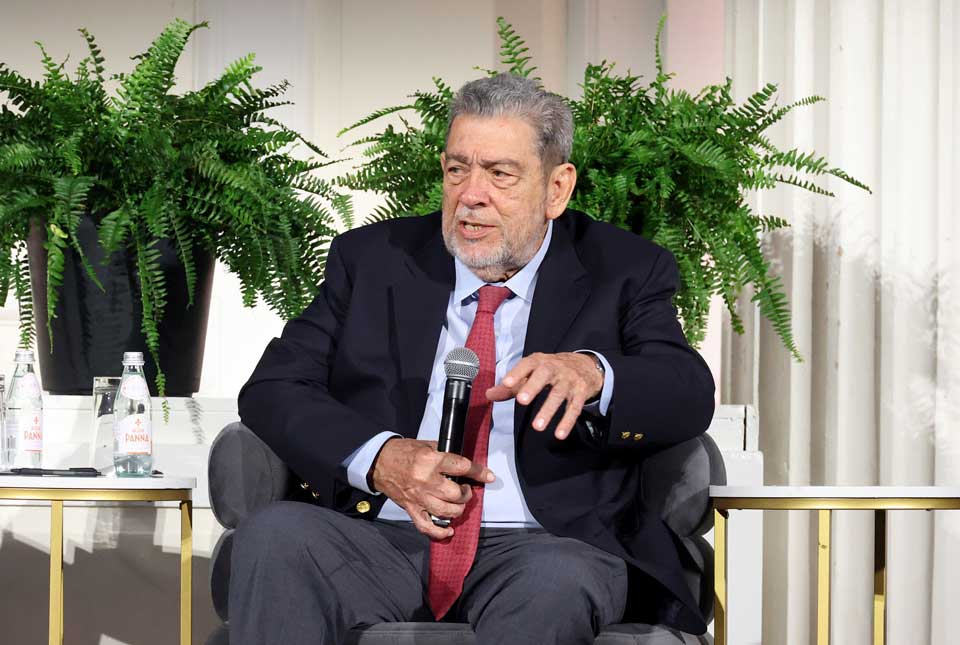
Former Prime Minister of St. Vincent and the Grenadines, Dr. Ralph Gonsalves
He called the strikes “a species of barbarism contrary to American values, contrary to international law and contrary to American jurisprudence,” and called on Washington to revisit the policy.
He also pointedly noted that his own country’s government had not yet spoken publicly on the matter. And then came the line that should echo in every parliament from Kingston to Port of Spain:
“If we can’t say that in the Caribbean, we may as well declare that we are slaves of the United States of America.” — Dr. Ralph Gonsalves, Opposition Leader, St. Vincent and the Grenadines
He is right. And the fact that it takes an opposition politician — not a sitting prime minister, not CARICOM’s Secretary General, not a regional body with actual diplomatic muscle — to articulate basic principles of human rights and sovereignty tells us everything we need to know about where Caribbean political courage currently resides.
This is not an isolated incident. The Trump administration has now struck at least 37 vessels across the Caribbean and Eastern Pacific since September last year, killing at least 145 people in operations it insists are targeting “narco-terrorists” carrying drugs that kill Americans. The calculus is unapologetic: American lives matter; Caribbean lives are collateral, or worse, they are suspects.
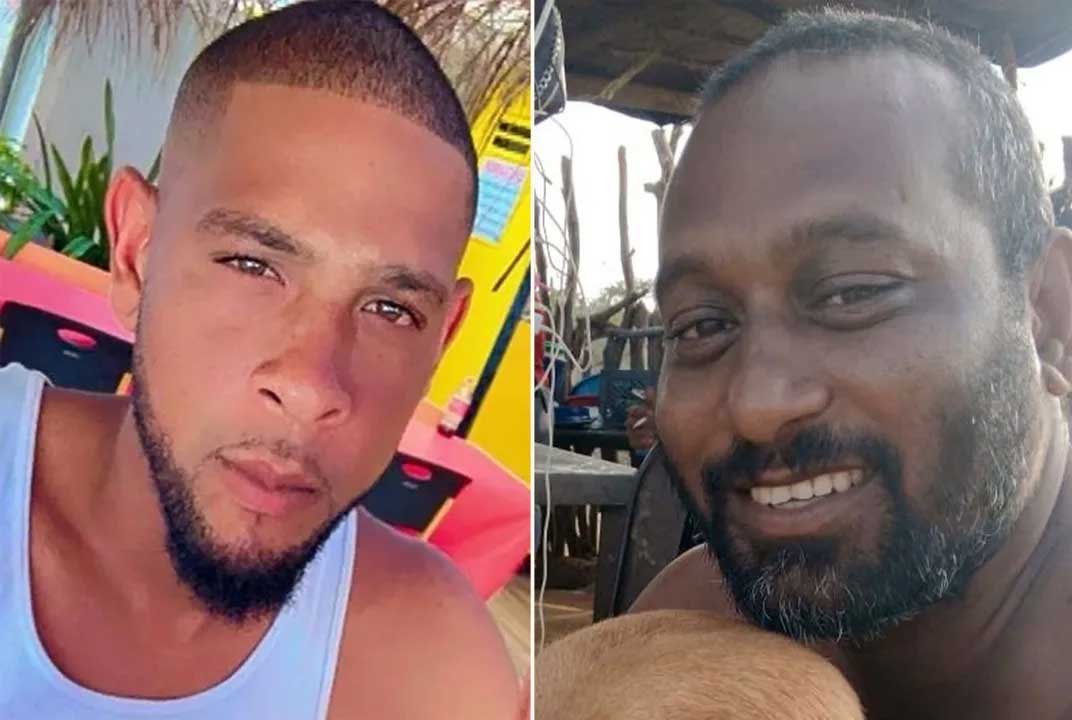
Chad Joseph, 26,(left) and Rishi Samaroo, 41, were returning from Venezuela to Las Cuevas, Trinidad and Tobago, on Oct. 14 when their boat was struck by a U.S. missile.
Killings for theatre. And the Caribbean’s sitting governments, it seems, are content to sit in the audience.
International law and human rights experts have been unambiguous. These strikes constitute extrajudicial executions — the deliberate killing of individuals without charge, without trial, without due process.
The region that has long championed the rule of law, that prides itself on its justice systems and its democratic traditions, is watching those very principles be incinerated along with Caribbean bodies, and offering little more than diplomatic throat-clearing in response.
CARICOM recently welcomed Interpol’s Secretary General to its 49th Regular Meeting in Montego Bay, celebrating “international cooperation” and “strengthening safety and security across the Caribbean.” Yet the most urgent security threat facing Caribbean citizens right now is not drugs. It is the prospect of being blown out of the water by American missiles with no accountability, no recourse, and no regional government willing to say, loudly and clearly: not in our waters, not our people, not acceptable.
Gonsalves said it. Now the question is whether those who actually hold power will find the courage to follow.
The fishermen of Zouti deserved better. Their families deserve answers. And the Caribbean deserves leaders with the courage to demand them — not in quiet diplomatic channels, but in the language that Washington understands: public, unequivocal, unyielding outrage.
The blood is in the water. The question now is who will speak for the dead.
— WiredJa Editorial
