HISTORY AND CULTURE | Jamaica's Black Holocaust: The Five Million Who Were Never Allowed to Be Born
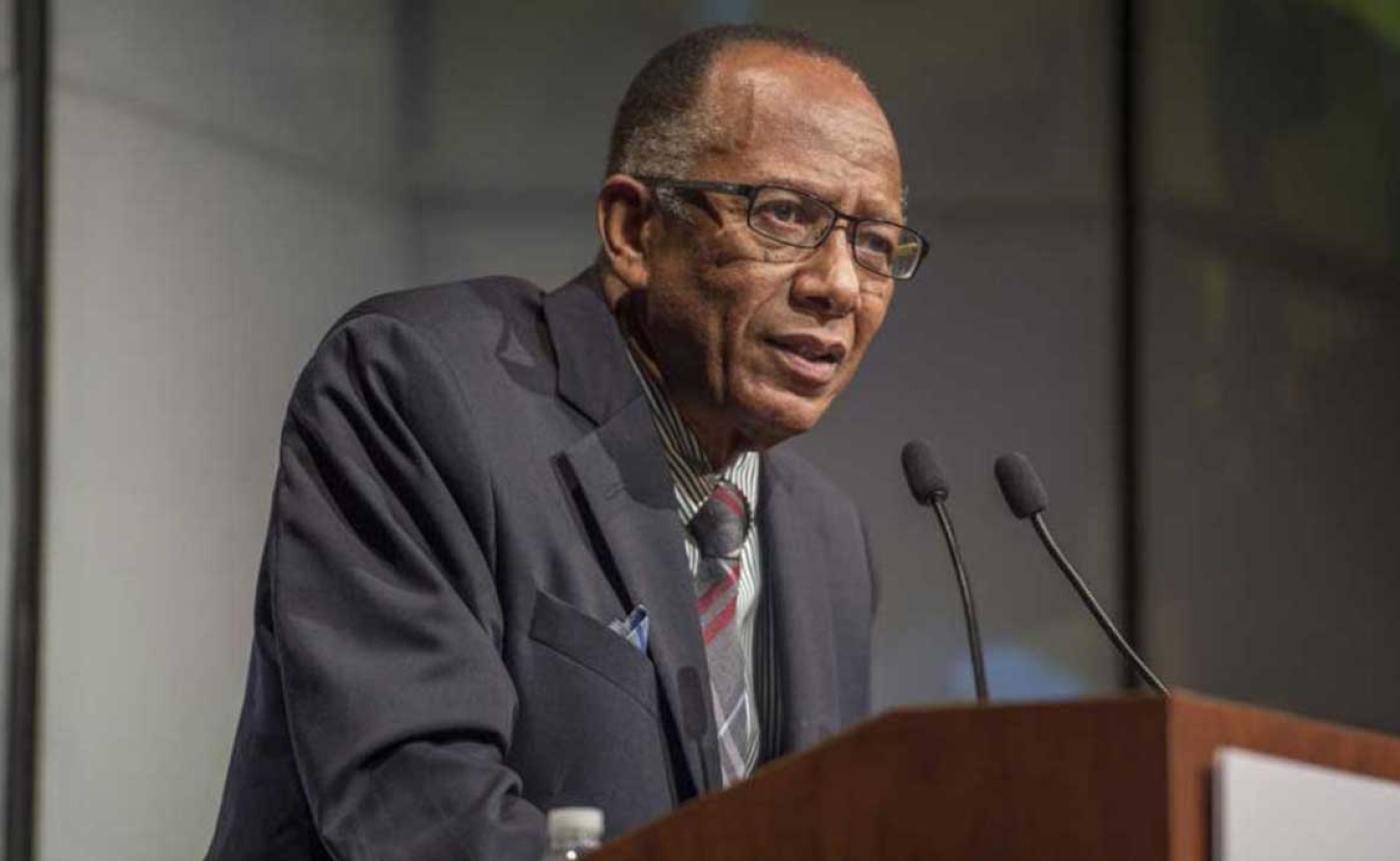
Professor H. Orlando Patterson -— John Cowles Professor of Sociology at Harvard University.
Professor Orlando Patterson names the unspeakable — and the numbers demand we listen
BY CALVIN G. BROWN | OP-ED | WIREDJA
I. A Comparison That Should Stop Us Cold
History has given us a measuring stick for atrocity. When we say "genocide," the world conjures one image above all others — the systematic annihilation of six million Jewish men, women, and children under Adolf Hitler's Third Reich between 1933 and 1945.
Twelve years of industrialized terror. Four years of concentrated slaughter. A crime so monstrous that it gave the world an entirely new legal vocabulary: genocide, crimes against humanity, never again. Now hold that image. Then consider this:
Over 183 years — not twelve, but one hundred and eighty-three — the white sugar planters of Jamaica pursued a deliberate demographic strategy that resulted in the elimination of an estimated 5,731,302 Black lives.
Not through gas chambers and firing squads alone, but through something arguably more calculated: a systematic policy of working human beings to death, starving them into oblivion, violently suppressing their reproduction, and replacing exhausted bodies with fresh cargo from the African continent — generation after genocidal generation.
Six million Jewish lives exterminated over four years of concentrated killing. Nearly six million Black Jamaican lives extinguished over 183 years of protracted, methodical annihilation. Both are holocausts. Only one has been named as such.
That is the thunderclap at the centre of the argument advanced by Professor H. Orlando Patterson — John Cowles Professor of Sociology at Harvard University, Jamaica's most globally decorated social scientist — delivering the inaugural Rex Nettleford Distinguished Lecture at the University of the West Indies in February 2023.
His verdict, delivered with the precision of a scholar and the gravity of a witness, was unambiguous: slavery in Jamaica was protracted genocide.
The Caribbean, and indeed the world, must now reckon with what that means.
II. The Accusation, Stated Without Apology
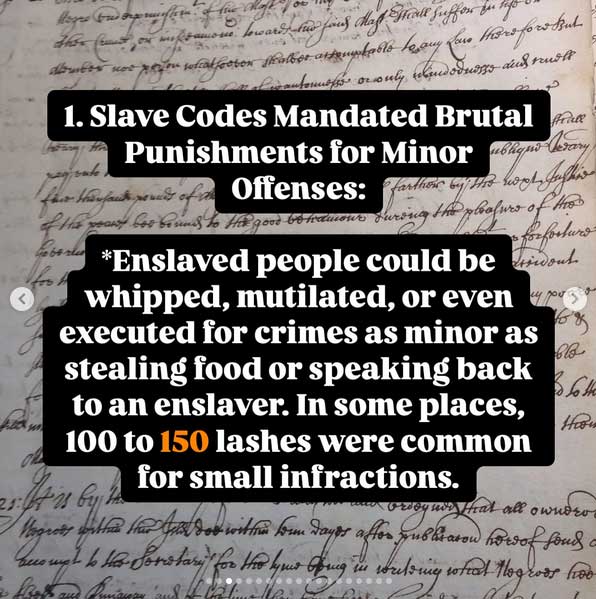 Genocide is a word that carries legal weight, moral consequence, and political risk. It is not a word serious scholars deploy carelessly, and Patterson is nothing if not a serious scholar. His academic corpus — including the landmark Slavery and Social Death — has shaped the global understanding of slavery's philosophical and sociological architecture for decades.
When Patterson calls Jamaica's plantation economy genocidal, he is not reaching for rhetorical effect. He is following evidence to its logical, if devastating, conclusion.
The strategy employed by Jamaica's planter class was fundamentally different from the model of slavery practiced elsewhere in the Atlantic world. In the American South, enslaved people were, by perverted economic logic, maintained as a self-reproducing labour force.
They were fed — barely, brutally — but fed. Families were allowed to form, children were allowed to survive, populations were allowed to grow. By 1830, the enslaved Black population of the United States had reached 2,009,048, with a total Black population — including freed persons — of 2,328,442.
Jamaica's planters made a different calculation entirely.
With per capita incomes exceeding thirty-five times that of the average American white planter, Jamaica's sugar barons were obscenely wealthy — wealthy enough to treat human beings as genuinely disposable inputs rather than long-term assets.
Their demographic strategy was as cold-blooded as any military campaign: import young, preferably male, Africans; work them until they break; replace them with new arrivals.
Historian Richard Dunn captured the essence of this system with chilling precision — Jamaica's planters treated the enslaved as "disposable cogs in a machine: importing slaves from Africa, working them too hard, feeding them too little, exposing them to debilitating disease, and routinely importing new Africans to replace those who died."
Disposable cogs. That is the clinical language of genocide.
III. The Machinery of Extermination
What distinguished Jamaica's plantation economy from other systems of slavery was not its cruelty — slavery everywhere was cruel — but its intentionality. The demographic destruction of Jamaica's enslaved African population was not an unfortunate byproduct of harsh conditions. It was the business model.
Young males were imported in disproportionate numbers, precisely because they could be worked at maximum intensity before their bodies gave out. Women were valued as labourers, not as mothers. Reproduction was not merely discouraged — it was violently suppressed.
“ Five million, seven hundred and thirty-one thousand, three hundred and two lives. Each one a person who was never permitted to exist. Each one a family that was never formed, a culture that was never transmitted, a future that was extinguished before it could take its first breath. ”
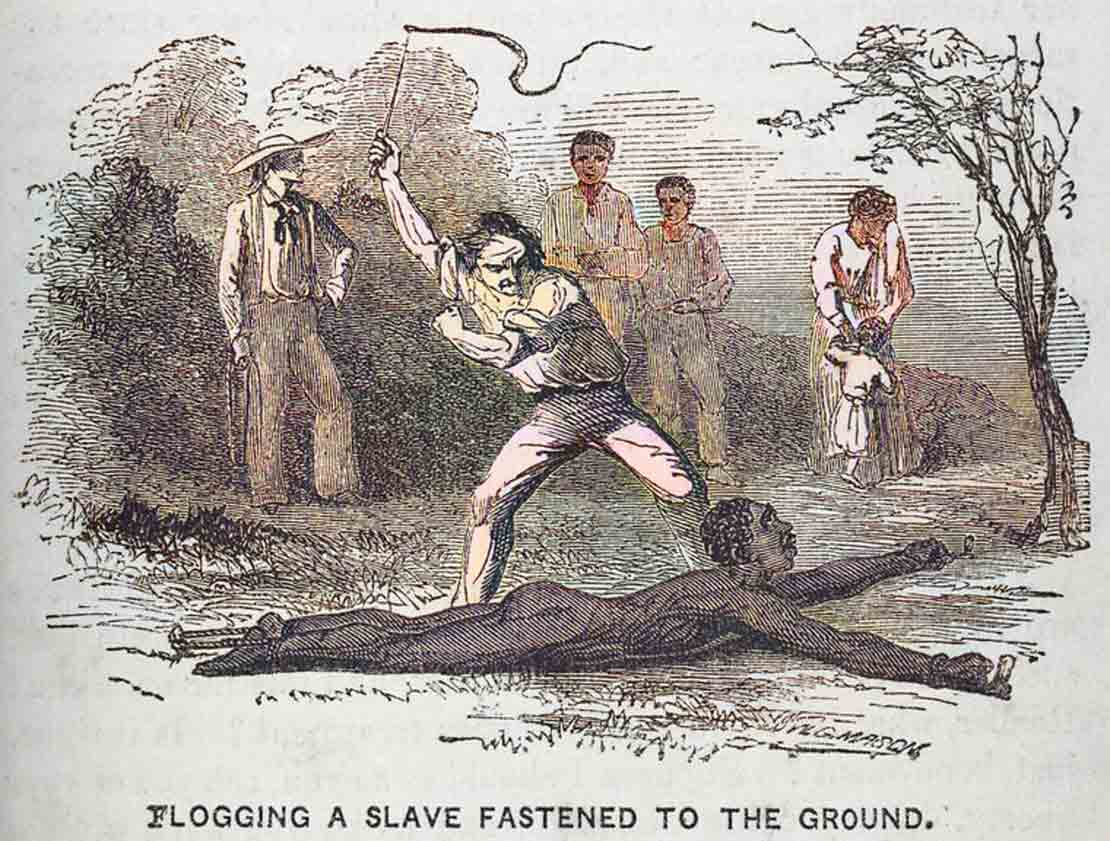
Pregnant women were whipped in the fields, forced to labour until the moment of delivery, and returned to work within days of giving birth. The infant mortality rate among enslaved children was catastrophic — not coincidentally, but consequentially.
Mass rape by the planter class compounded the biological devastation. Women newly arrived from Africa were subjected to venereal disease within months of landing in Jamaica — passed to them by their white enslavers — which devastated their reproductive capacity and accelerated infant death.
This was ethnocide layered upon genocide: not merely killing bodies, but destroying the biological future of an entire people.
"The women were valued as labourers over reproducers of new slaves. If they were pregnant, they were whipped and worked up to the time of delivery and sent back to the fields within days." — Professor H. Orlando Patterson
When enslaved workers aged beyond productive utility, they were not sustained. They were starved. Many older enslaved persons were deliberately starved to death — a final, calculated disposal of human beings whose labour value had been fully extracted.
This was a system architecturally designed to consume African lives faster than they could be naturally replenished. The transatlantic slave trade, delivering an endless supply of African youth to Kingston Harbour, made this demographic attrition not just possible but economically rational. It was extermination with a productivity target attached.
 IV. The Mathematics of Missing People
Numbers, when they reach a certain scale, become incomprehensible. The mind retreats from them, unable to translate millions of deaths into the granular human reality of individual lives, individual losses, individual futures that were never allowed to exist. It is precisely this incomprehensibility that allows historical atrocities to be minimized — to become statistics rather than the screaming moral emergencies they represent.
Professor Patterson refuses that retreat. He forces the arithmetic into the open.
“ Not killed in a single campaign. Not eliminated in a four-year industrial frenzy. But systematically, deliberately, generation by generation, prevented from being born, worked to death before they could reproduce, or killed through the thousand quiet mechanisms of a system designed to consume African life rather than sustain it. ”
Between 1650 and 1830, the transatlantic slave trade delivered 1,017,109 enslaved Africans to Jamaica's sugar plantations — compared to only 388,233 transported to the entirety of North America. Jamaica, a single island, absorbed more than two and a half times the human cargo that fed the entire American plantation economy.
Yet by 1830, Jamaica's total Black population stood at just 357,147 people. Over a million arrived. Fewer than four hundred thousand remained.
Using the modest reproductive growth rate of the American enslaved population as a counterfactual baseline, Patterson extrapolates what Jamaica's Black population should have been by 1830 had the plantation system permitted ordinary biological survival. The answer: 5,262,522 enslaved persons, with a total Black population of approximately 6,090,499.
Against the actual 1830 figure of 357,147, Patterson calculates 5,731,302 missing Black people.
Not killed in a single campaign. Not eliminated in a four-year industrial frenzy. But systematically, deliberately, generation by generation, prevented from being born, worked to death before they could reproduce, or killed through the thousand quiet mechanisms of a system designed to consume African life rather than sustain it.
Five million, seven hundred and thirty-one thousand, three hundred and two lives. Each one a person who was never permitted to exist. Each one a family that was never formed, a culture that was never transmitted, a future that was extinguished before it could take its first breath.
V. Before Hitler, There Was Von Trotha — The Genealogy of Genocide
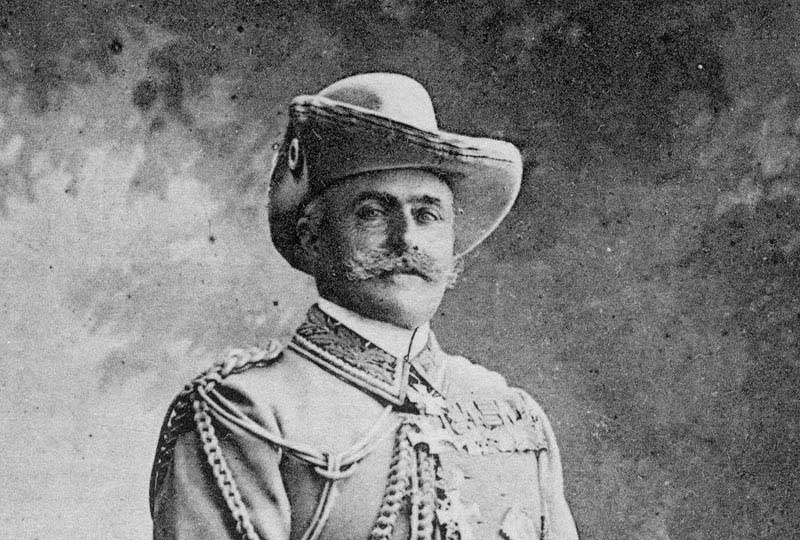
The German general named Lothar von Trotha, issued a document that would echo through the bloodiest century in recorded history. Its name was the Vernichtungsbefehl. The Extermination Order. It
This is not polemic. This is history — documented, traceable, and deliberately buried beneath the weight of European exceptionalism.
In 1904, in the territory then known as German South-West Africa — present-day Namibia — a German general named Lothar von Trotha issued a document that would echo through the bloodiest century in recorded history.
Its name was the Vernichtungsbefehl. The Extermination Order. Its language was stripped of all ambiguity: the Herero and Nama peoples were to be annihilated. Not defeated. Not subjugated. Annihilated.
Von Trotha drove approximately eighty thousand Herero and Nama men, women, and children into the merciless expanse of the Omaheke Desert.
He poisoned their water wells. He posted armed cordons to shoot those desperate enough to turn back.
Those who survived the desert were herded into concentration camps — a term the British had pioneered just years earlier during the Boer War, also on African soil.
In these camps, the surviving Herero and Nama were worked to death, systematically starved, and subjected to medical experiments of chilling scientific detachment.
Then came the detail that connects continents and crimes across half a century.
“ The Holocaust was not the invention of European barbarism visiting itself upon a shocked and innocent world. It was the perfection of a methodology — the industrialization of a logic — that had been developing for centuries in the colonized world. Africa was the laboratory. The Caribbean was the prototype. Europe was where the experiment came home. ”
Their skulls were shipped to German universities.
One of the scientists who received those skulls was a man named Eugen Fischer — a German physician and racial anthropologist who used the cranial remains of murdered African men and women to construct an elaborate pseudoscientific theory of racial hierarchy.
Fischer's work purported to demonstrate, through the cold authority of measurements and mortality tables, that African peoples represented an inferior biological category — that their extermination was not merely permissible but, in the language of Social Darwinism that infected European intellectual life, perhaps inevitable.
Fischer published. Fischer was celebrated. Fischer was read.
One of his readers was a failed Austrian painter serving a prison sentence in Landsberg Prison following the failed Beer Hall Putsch of 1923. His name was Adolf Hitler. Absorbing Fischer's racial theories — built brick by bloody brick upon the skulls of Namibian genocide victims — Hitler wove them into the manifesto he was composing in his cell. That manifesto was Mein Kampf.
The line from the cane fields of Jamaica to the Omaheke Desert to the crematoriums of Auschwitz is not metaphorical. It is historical, intellectual, and ideological.
The Holocaust was not the invention of European barbarism visiting itself upon a shocked and innocent world. It was the perfection of a methodology — the industrialization of a logic — that had been developing for centuries in the colonized world. Africa was the laboratory. The Caribbean was the prototype. Europe was where the experiment came home.
When Professor Patterson stands before the University of the West Indies and names Jamaica's plantation system as protracted genocide, he is not borrowing the language of the Jewish Holocaust for dramatic effect.
He is restoring the correct chronology — insisting that we understand not merely what happened to Jamaica's enslaved millions, but where the entire genealogy of modern genocide was conceived, tested, and refined.
VI. Holocaust Comparisons — Side by Side
The comparison Patterson draws is not designed to diminish the Jewish Holocaust, whose horror stands beyond question, or to engage in the morally perilous arithmetic of competing victimhoods. It is designed to expose the profound asymmetry in how the world has chosen to remember — and how it has chosen to forget.
Jewish social death lasted twelve years. Jamaica's lasted 183. Jewish physical destruction was concentrated over four years of industrialized killing. Jamaica's extended across nearly two centuries of methodical attrition.
In Europe, living bodies were destroyed in gas chambers and mass graves. In Jamaica, the strategy was one of preventive elimination — destroying potential lives before they could even begin.
The Jewish Holocaust produced approximately six million deaths. Jamaica's Black Holocaust produced, by Patterson's careful extrapolation, 5,731,302 missing lives — persons who, under any biologically normal conditions, should have existed, should have loved, should have built, should have passed culture and memory and possibility to future generations.
Six million over four concentrated years. Nearly six million over one hundred and eighty-three years.
Both are the same crime. Only one has a memorial in Washington. Only one features in the mandatory curricula of schools across the Western world. Only one is invoked, reliably and righteously, every time the word "genocide" enters a political conversation.
The silence around the other is not an accident. It is a choice — one that the Caribbean, and the descendants of Jamaica's missing millions, can no longer afford to leave unchallenged.
VII. The Living Wound — When History Bleeds Into the Present
If Patterson's argument ended with historical documentation, it would be remarkable. But it does not end there. The most disturbing dimension of his thesis is the connection he draws — carefully, empirically — between the protracted genocide visited upon Jamaica's enslaved population and the violence, dysfunction, and inequality that characterize Jamaican society today.
Jamaica ranks among the highest homicide rates in the world. More damning still, it holds the grim distinction of the highest rate of femicide on the planet — the highest rate of murder of women. Patterson does not treat these statistics as the inevitable expression of some innate cultural pathology, as external commentators too often do.
He traces them to their source: a 183-year demographic campaign that dismantled family structures, suppressed reproduction, weaponized rape, eliminated elder knowledge, and severed every generational transmission of culture, identity, and security that normal human societies depend upon.
The violence encoded into Jamaican society did not emerge from nowhere. It was installed — deliberately, systematically, over generations — by a plantation system that used violence as its primary management tool, and that left, in its wake, a population stripped of the social architecture that might have absorbed, processed, and healed from such trauma.
Patterson is equally direct about education. Jamaica's struggles with literacy, school performance, and educational attainment are not, in his analysis, problems of policy alone. They are the downstream consequences of ethnocide — the deliberate destruction of cultural transmission.
When you spend 183 years preventing a people from forming stable families, from raising their children, from growing old surrounded by accumulated wisdom, you do not merely destroy a generation. You sever the chain of human development itself.
The past, Patterson insists, is emphatically not past. It is present — bleeding into every crime scene, every failed examination, every broken home, every woman murdered in a society that learned, across centuries of enforced brutality, that human life is disposable.
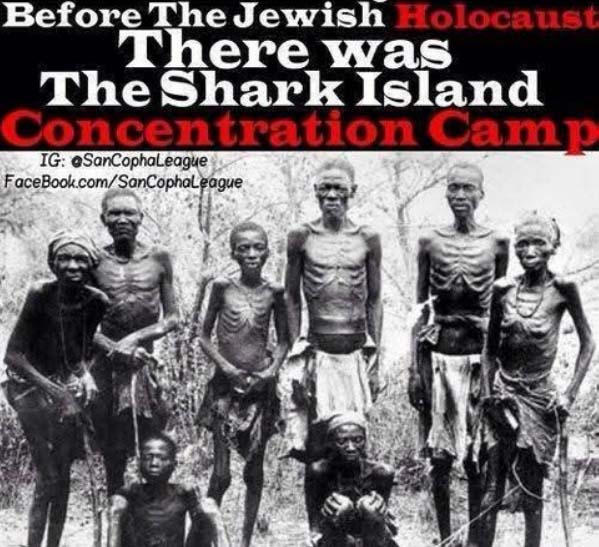 shark Island, NamibiaVIII. Why We Cannot — and Must Not — Just Move On
shark Island, Namibia
There are those who counsel patience, perspective, and forward motion. "Move on," they say. "What's done is done. Dwelling on the past serves no one." It is advice offered with particular frequency by the descendants of those who did the doing — advice that carries, beneath its surface reasonableness, a vested interest in historical amnesia.
Professor Patterson's response to this counsel is not angry. It is analytical. And it is devastating.
A clear relationship has been shown between slavery and economic development. Having slavery produces devastating long-term current consequences — for inequality, for education, for the degree of racism embedded in social structures.
These are not abstract historical grievances. They are measurable, present realities — documented in peer-reviewed scholarship, visible in national statistics, felt in the daily lives of Jamaicans who carry, without fully understanding why, the weight of what was done to their ancestors.
The reparations debate, which the Caribbean has begun to press with increasing seriousness at international forums, draws its moral authority precisely from the kind of analysis Patterson presents. This is not a demand for charity.
It is a claim for accountability — a recognition that the wealth extracted from Jamaica's plantation system, which funded Britain's Industrial Revolution and underwrote the rise of Western capitalism, was built on a crime that by any contemporary legal standard would constitute genocide.
The 5,731,302 missing Jamaicans are not merely a historical footnote. They represent an incalculable loss — of human potential, of cultural inheritance, of the compounding generational wealth that ordinary societies take for granted. The descendants of those missing millions live today in a country that struggles, every single day, with the consequences of that loss.
Moving on, without reckoning, without naming, without accountability, is not healing. It is the continuation of the original crime by other means — the final act of erasure that the planters who designed this system would have most desired.
Their descendants built memorials in European capitals. Their victims' descendants were told to forget.
Professor Orlando Patterson has refused that instruction. And in doing so — in standing before the University of the West Indies and speaking the word "genocide" with the full weight of Harvard scholarship and Caribbean moral authority behind it — he has done something that no memorial in Washington or Brussels has yet managed.
He has called the missing millions by their right name.
Now the question falls to the rest of us: Will we finally answer?
Professor H. Orlando Patterson delivered the inaugural Rex Nettleford Distinguished Lecture at the University of the West Indies, Mona, on February 3, 2023. He is the John Cowles Professor of Sociology at Harvard University and Chair of the Jamaica Education Transformation Commission. His landmark work Slavery and Social Death (1982) remains the definitive global study of slavery's sociological architecture.
