CARIBBEAN| Trump's "Donroe" Doctrine - America’s Law, America’s Prison: Caribbean Conquest and the Silence of a Region
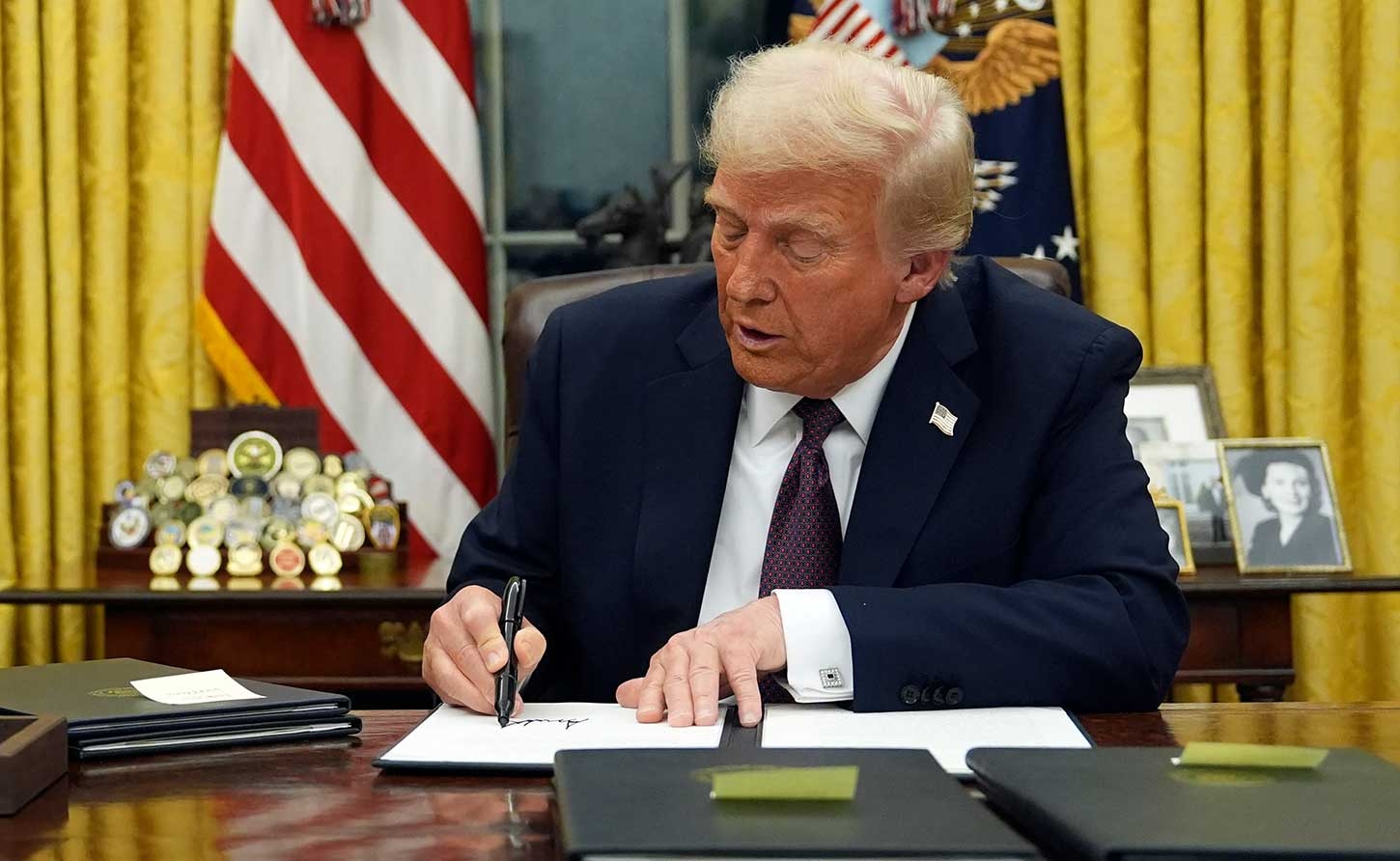
United States President Donald Trump
With Venezuela subjugated, Iran bombed, and Cuba squarely in his sights, Donald Trump has declared himself the sheriff of the Western Hemisphere. The question CARICOM can no longer defer is this: who gave him the badge?
KINGSTON, Jamaica March 6, 2026 - There is a phrase Donald Trump keeps reaching for, and it tells you everything you need to know about the world he is building. When asked why he ordered the military abduction of a sitting Venezuelan president, transported him in chains to a New York courtroom, and then pivoted to strangling Cuba into submission, Trump’s answer was essentially this: because I can.
“Cuba is gonna fall pretty soon,” he told CNN on Friday, with the breezy confidence of a man describing a restaurant he plans to take over. “After 50 years,” he said, as though seven decades of Cuban sovereignty were merely an inconvenience awaiting his personal resolution.
This is the world Caribbean people now inhabit. Not the post-colonial world their founding fathers bled and argued and dreamed into existence. Not the world articulated at Chaguaramas in 1973 when CARICOM was born, or the world enshrined in the 1986 Contadora principles that declared this hemisphere a Zone of Peace.
The world Trump is building is a far older one — the world of 1823, when President James Monroe told Europe to stay out of the Americas and Washington assumed the right to decide what happened in every nation between Alaska and Tierra del Fuego.
The ‘Donroe Doctrine’ — Monroe Resurrected with Military Teeth
Trump has named his policy himself — the “Donroe Doctrine.” The branding is almost admirable in its arrogance. He has not just revived Monroe’s 19th-century claim to hemispheric dominance; he has militarised it, monetised it, and draped it in the language of law enforcement.
His Justice Department has now formed a working group to develop federal criminal charges against Cuban government officials. The US Attorney’s Office for the Southern District of Florida — the same office overseeing prosecutions of Biden-era officials Trump considers political enemies — will lead the effort.
Let that sink in. American prosecutors are preparing to indict officials of a sovereign nation for actions taken within their own country, under their own laws, answerable to their own people — not the United States Congress, not the United Nations, not any international court with jurisdiction over Cuba. The legal architecture being constructed is breathtaking in its implications: that American law extends to every corner of the globe wherever Washington decides it does, and that American military power is the enforcement mechanism.
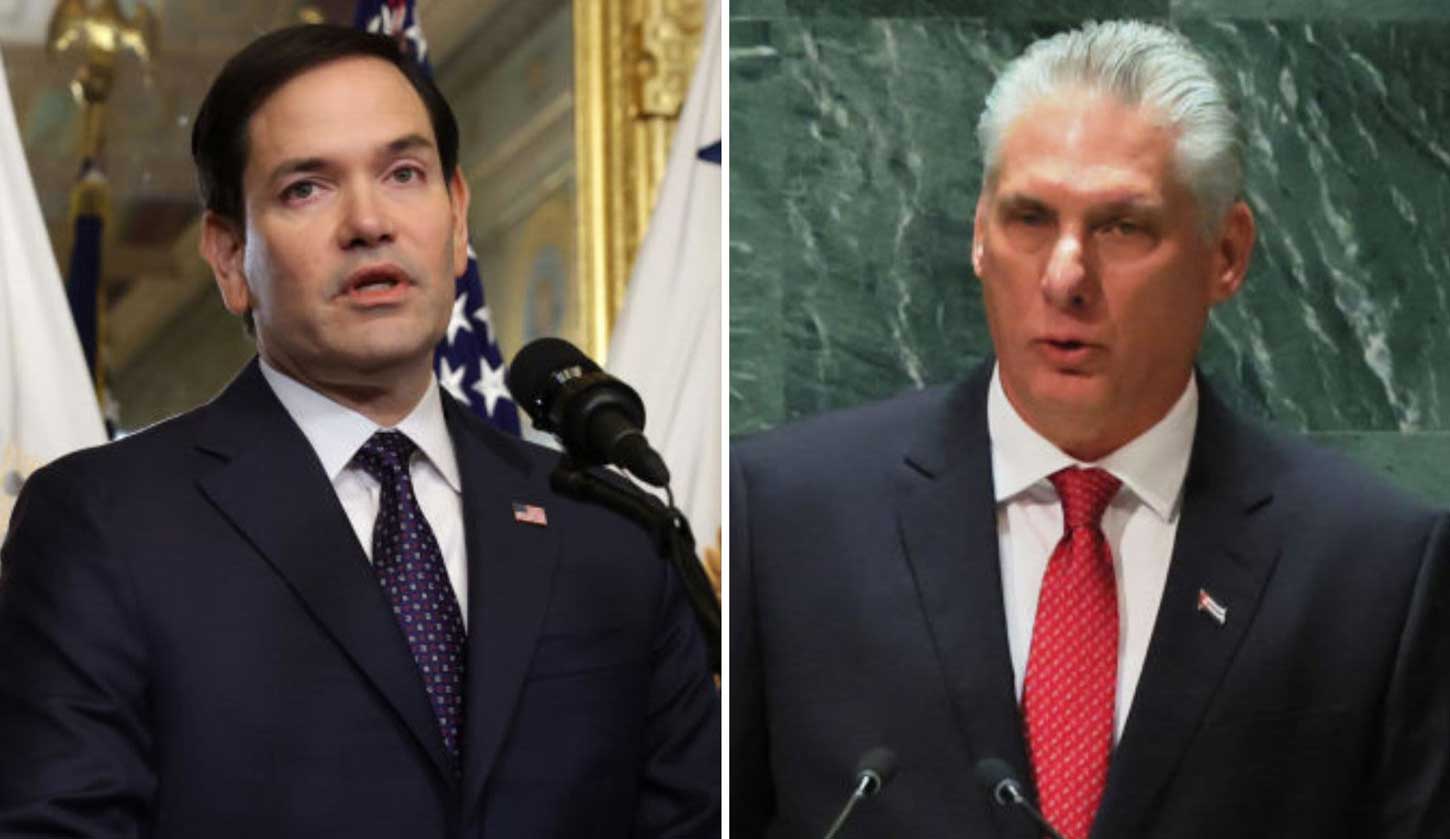 US Secretary of DState Marco Rubio and Cuban President Miguel Díaz-Canel BermúdezThe Maduro Precedent — Kidnapping Dressed as Law Enforcement
US Secretary of DState Marco Rubio and Cuban President Miguel Díaz-Canel Bermúdez
On January 3, 2026, the United States launched what it called Operation Absolute Resolve. In the predawn darkness over Caracas, American forces bombed Venezuelan infrastructure, breached the presidential compound, and abducted Nicolás Maduro and his wife, Cilia Flores.
Thirty-two Cuban soldiers — men who had been stationed there at the request of the Venezuelan government — were killed in the assault.
Maduro was transported to New York to face narcoterrorism charges originally filed in 2020 by the same administration that now held him captive. There was no UN Security Council resolution authorising the use of force.
There was no extradition treaty invoked, no international arrest warrant executed through the International Criminal Court. There was a US federal indictment, and there was the most powerful military in human history. That was the entirety of the legal basis.
The New York Times called it “dangerous and illegal.” The UN warned of humanitarian collapse. Cuba declared two days of national mourning for its fallen soldiers. And the world — including most of CARICOM — largely fell silent. That silence was not neutrality. It was permission.
The Extraterritorial Lawfare — Washington as Judge of All Nations
There is a word for what Trump is doing, and it is not “law enforcement.” It is extraterritorial lawfare — the weaponisation of domestic legal instruments to govern the conduct of foreign states and their officials. American narcotics statutes were never designed to prosecute foreign heads of government for policies adopted within their own sovereign borders. American sanctions laws were not drafted with the intention of starving 11 million Cubans into regime collapse.
Yet here we are. Cuba’s electricity grid is failing. The United Nations has warned of an imminent humanitarian collapse. Trump has imposed tariffs on any nation that supplies oil to Cuba, effectively turning American trade law into a siege weapon against a Caribbean neighbour.
Meanwhile, Rubio’s State Department is in discussions at a “very high level” about a “friendly takeover” — a phrase that strips the mask entirely from the enterprise. There is nothing friendly about a takeover. There is nothing legal about one sovereign nation absorbing another.
CARICOM’s Uncomfortable Silence — A Region That Must Choose
In late February, Marco Rubio flew into St. Kitts and Nevis to attend a CARICOM summit. He sat at the table of 15 independent Caribbean nations and told them, without apology or apprehension, that his country was better off having removed Maduro, and that the region was too.
Caribbean leaders, many of whom had privately objected to the legality of the operation, received him politely. Some were more than polite: Trinidad and Tobago’s Prime Minister Kamla Persad-Bissessar, who had already aligned her government with Washington’s narrative on Venezuelan drug boats, met Rubio warmly.
When pressed on whether CARICOM was being asked to facilitate Cuban regime change, the bloc’s chairman was, by one account, “at first evasive.” He eventually said: “Caricom has not involved itself in any discussion of such nature.” That is a sentence carefully constructed to say nothing at all.
Jamaica’s Prime Minister Andrew Holness, though no longer CARICOM chair, offered the most measured warning: “A prolonged crisis in Cuba will not remain confined to Cuba. It will affect migration, security and economic stability across the Caribbean basin.”
He is right. But warning of consequences is not the same as naming the cause. The cause is an American president operating on the doctrine that might automatically makes right, and that the Caribbean is his backyard to arrange as he sees fit.
Cuba’s Caribbean Bonds — What the Region Stands to Lose
CARICOM and Cuba have shared more than geography for more than five decades. In 1972, Guyana, Barbados, Trinidad and Jamaica defied American pressure to accord Cuba diplomatic recognition — a declaration of Caribbean foreign policy independence that echoed across the Cold War.
Cuban doctors staffed Caribbean hospitals when no one else would. Cuban teachers went where Caribbean governments could not reach. Whatever one thinks of the Castro government’s domestic record, Cuba’s contribution to Caribbean development is not abstract. It is stitched into the region’s institutional memory.
Now that same Cuba — already reeling from a 64-year American embargo — is being economically strangled into submission, while the Trump administration shops for a pliant successor government. If this is allowed to succeed without meaningful regional protest, what principle of Caribbean sovereignty survives?
If a sitting Venezuelan president can be seized by foreign military forces and flown to an American prison, and if Cuban officials can be indicted in Florida for governing their own country, then sovereignty in this region is not a right. It is a privilege Washington extends at its pleasure.
The Icing on Whose Cake?
Trump called Cuba “the icing on the cake” — the small, sweet final act after Iran and Venezuela. To the 11 million people currently experiencing blackouts, fuel shortages, and food insecurity because an American president decided their government was inconvenient, that framing is obscene.
To the 15 member states of CARICOM watching a neighbour be dismantled without international legal sanction, it should be terrifying.
The question is not whether CARICOM endorses Cuba’s government or defends its human rights record. The question is whether 15 independent Caribbean nations — sovereign states, every one of them — are willing to stand on the principle that no country has the right to overthrow another’s government without a UN mandate, without international legal authority, without the consent of the governed.
That principle is not about Cuba. It is about Barbados. It is about Belize. It is about every small state in this region that lacks the military capacity to resist the same treatment should Washington one day find its government inconvenient.
Henry Kissinger, that old architect of American imperialism, was famously blunt: nations do not have friends, only permanent interests. Trump has been equally blunt about what his permanent interests are in this hemisphere.
The only question left for Caribbean leaders is whether they have the courage to articulate theirs — and whether the region’s founding commitment to sovereignty means anything at all when the cost of defending it becomes real.
-30-
