JAMAICA | BOJ Governor Byles Warns Caribbean Boards: Chasing Profits Without Governance is a Trap
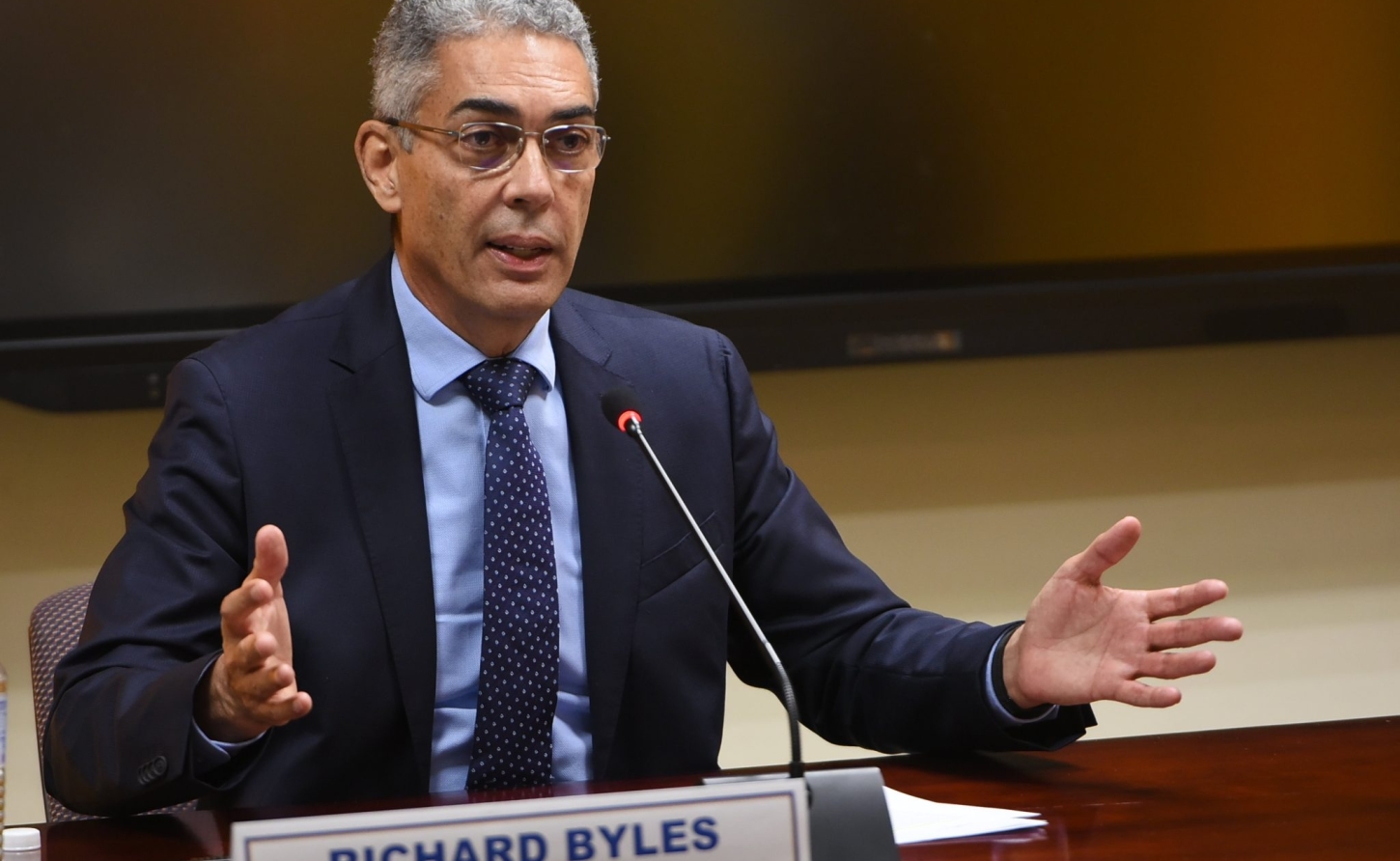
Governor of the Bank of Jamaica Richard Byles says Weak corporate governance, leads directly to the erosion of public trust, higher funding costs, capital strain, and in the most serious cases, regulatory intervention.
Speaking at the Caribbean CFO Conference, Bank of Jamaica Governor Richard Byles delivered a pointed message to the region's financial leadership: sustainable profitability demands risk discipline and governance reform — or the next shock will break what the last ones merely bent.
Calvin G. Brown | Caribbean Finance |
There is a particular kind of warning that lands hardest not when it comes from critics or opposition politicians, but from the custodian of a country's monetary system. When Bank of Jamaica Governor Richard Byles stood before chief financial officers at the Caribbean CFO Conference on March 24 and told them that boards are chasing profits in ways that undermine the very institutions they are supposed to steward, it was not a suggestion. It was a diagnosis.
Byles put it plainly: it is sustainable, risk-adjusted profitability — not headline returns — that forms the true foundation of resilience. In an era of compressed margins, heightened competition, and relentless performance pressure, the temptation to push returns beyond an institution's risk capacity is real and constant. The BOJ Governor's message was that giving in to that temptation, however briefly, erodes stability in ways that no quarterly earnings report will capture until it is too late.
The Cost of Weak Governance
Byles did not speak in abstractions. Weak corporate governance, he said, leads directly to the erosion of public trust, higher funding costs, capital strain, and in the most serious cases, regulatory intervention. These are not theoretical outcomes in the Caribbean — they are documented ones. The SSL Investment fraud case in Jamaica, which devastated thousands of retail investors, stands as the region's starkest recent testament to what happens when oversight structures fail or are ignored.
The Governor's prescription is structural: boards must include a strong presence of independent directors free from conflicts of interest, with members skilled in accounting, finance, technology, and law. Audit, risk, and governance committees must be headed by independent members. These are not cosmetic requirements — they are the institutional architecture that separates boards capable of catching problems early from those that discover them in the headlines.
“Short-term earnings that exceed an institution’s risk capacity may appear attractive, but erode stability over time.” — BOJ Governor Richard Byles
Melissa, COVID, and the New Permanence of Shock
Byles anchored his argument in lived regional experience. The COVID-19 pandemic and Hurricane Melissa — which struck Jamaica in late 2025 with devastating force — are not anomalies to be planned around. They are proof, the Governor said, that volatility is now a permanent feature of economic life. The question for Caribbean boards is not whether the next shock is coming, but whether their institutions are structurally prepared to absorb it without becoming liabilities to the wider system.
On that front, Jamaica's macro position offers some credible ground to stand on. Foreign reserves have been built to record levels. The national debt has been reduced. A well-coordinated financial system stability framework is in place. These are genuine achievements, and Byles acknowledged them. But they are also the floor, not the ceiling — the minimum buffer that buys time when things go wrong, not a substitute for the institutional governance that determines how quickly and cleanly a firm can recover.
What Comes Next: Twin Peaks and Resolution Architecture
The policy landscape is shifting to match the rhetoric. Byles confirmed that legislation is being advanced to facilitate the resolution of failing financial institutions without recourse to public funds — removing the implicit taxpayer backstop that has historically cushioned the consequences of poor governance. Simultaneously, planning is underway for a more robust “Twin Peaks” supervisory architecture that will govern financial institutions across the region's interconnected conglomerate structures.
The significance of that interconnectedness cannot be overstated. Caribbean financial conglomerates operate across multiple jurisdictions, business models, and cultures. Weakness in one institution does not stay contained — it transmits. That is the central risk that Byles is trying to build defences against, and why he framed this not merely as a corporate governance conversation, but as a regional stability imperative.
The Accountability Question
What Byles said matters. Whether Caribbean boards hear it is another question entirely. The region's financial sector has a long history of governance reform conversations that produce polished frameworks and limited structural change. The BOJ Governor's speech was unusually direct — a central banker naming the failures, naming the consequences, and naming the tools required to fix them. That directness is itself a signal that the era of gentle nudges may be ending.
The incoming resolution legislation and Twin Peaks architecture will, over time, create real consequences for governance failures — not just reputational ones. When the safety net of public funds is formally removed from beneath failing institutions, boards will have to decide whether disciplined governance is a compliance exercise or a survival strategy. Byles is betting it will concentrate minds.
The Caribbean cannot afford for him to be wrong.
-30-
| Word Count: 762 | WiredJa | wiredja.com
